
Yevgeny Nikolayevich Erokhin
Born in 1958 in Orenburg. Graduated from the Orenburg Art College in 1982.
Works in collections
Works are in private collections in Russia, Spain, France, Germany, Switzerland, and Poland.
Exhibitions and auctions
1989 Orenburg Artists Exhibition. Ufa, Russia;
1989 Exhibition of the Polish Foundation of Contemporary Art. Warsaw;
1990 Soviet Painting Exhibition. Madrid;
1990 Ost-West. Munich, Germany;
1991 ART MYTH 2. Moscow International Art Fair. Central Exhibition Hall 'Manezh', Moscow;
1992 1st exhibition of the 'STANBET' gallery. Hall of the Exhibition and Auctions Division of the International Culture Foundation. Moscow;
1993 Exhibition of the 'STANBET' gallery. Mikkeli, Finland.
Author about himself
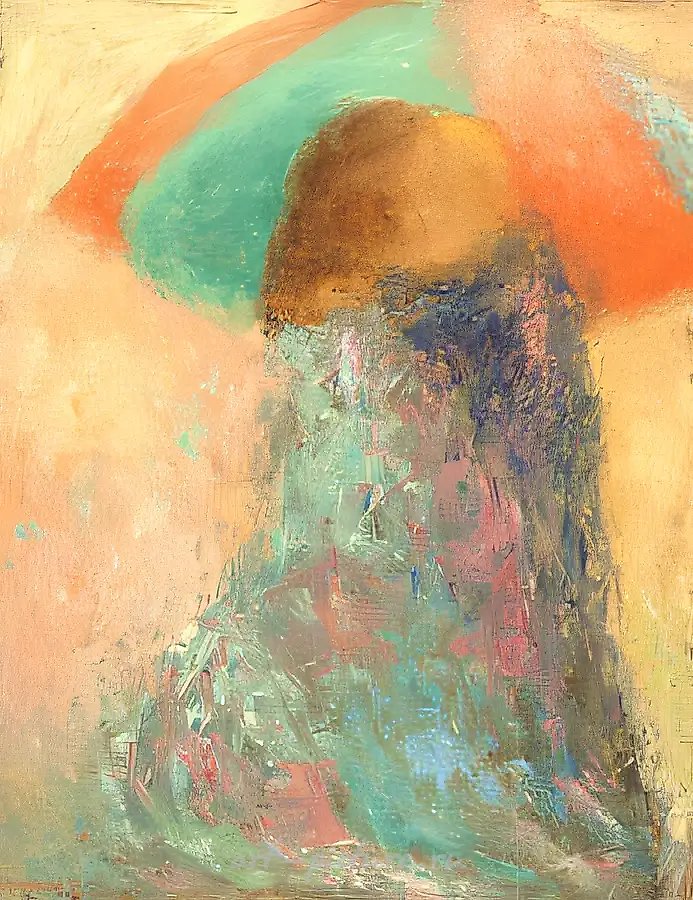
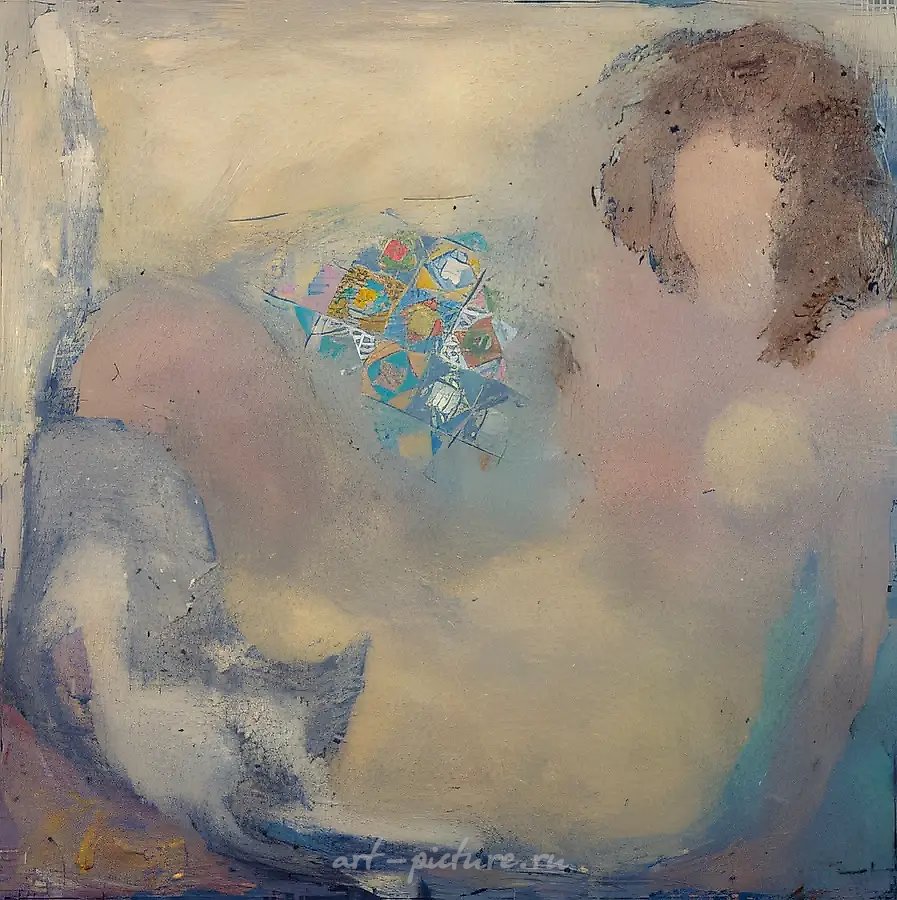
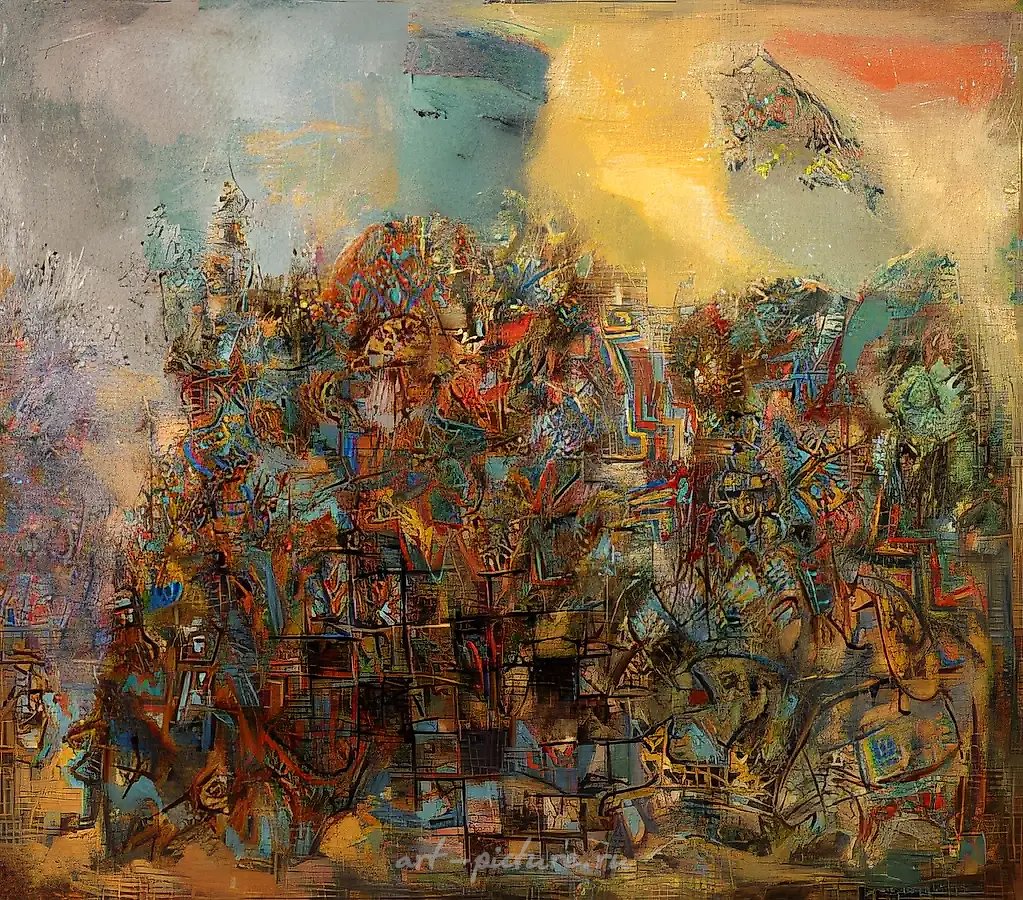
My first amazement was the cave paintings in Bashkiria, which I saw on a trip with my father. The rock, moss, and delight of touching them. Everything started from the sensation of beauty, from the feeling of its eternity and multilayeredness. Then, I looked through art books and albums, and the desire arose to create the illusion of an old wall. Primitive culture merged with a sense of modernity. I wanted to create an image of this merging.
My first teacher was my father. He is a realist painter in the fullest sense of this traditional concept in our visual arts. He traveled extensively in the Far East and Central Asia, and I traveled with him... For six years, I painted only from nature and intensely studied the works of the classics... Formally, I graduated from the Orenburg Art College plus two workshops: my father’s and Gennady Glakhteev’s. The latter’s influence can be traced in my early works.
When I became more independent, I was greatly influenced by a book devoted to the history of writing, calligraphy, and the theory of signs and codes. But painting itself was always the foundation; the signs and codes remained "behind the scenes."
I am concerned about the multifaceted nature of life. I do not limit myself to just one or two genres. For me, "the painting as entrance" is important. I distinguish three such "entrances": first, I see the painting from a great distance, and it should attract the viewer regardless of how far away they are, like color music. Next is the middle stage, usual, like in a hall—one or two meters from the surface of the canvas. The third is unusual—very close (10-15 cm). I call this stage the moment of enjoyment, when everything is visible, down to the brushstroke, down to the foundation. The main thing is, with all these entries into the painting, the viewer should not be disappointed...
Critic
See bibliography
Bibliography
Catalog 'L ECOLE DORENBOURG', Odissud, Blagnac, 1991, France;
V. Meyland, 'Pleasant Art', Ogonyok magazine, N19-20, 1993;
Brochure of the 'STANBET' gallery, 1992, Moscow.
Works 6