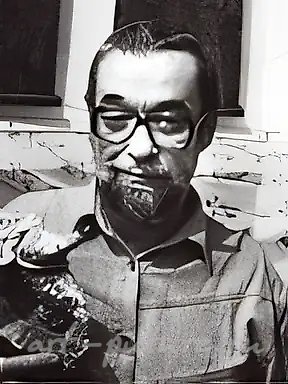
Kononenko Yuri Ilyich
Born in 1938 in Irkutsk.
Graduated from the Irkutsk Polytechnic Institute in 1962.
Studied at the Leningrad Institute of Theater, Music, and Cinematography named after N.P. Akimov in 1964.
Works in collections
His works are housed in the State Museum of Fine Arts in Tbilisi, Georgia; the State Central Theatre Museum named after A.A. Bakhrushin in Moscow; the State Museum of Theater and Musical Art in St. Petersburg, Russia; the Semipalatinsk and Novosibirsk art galleries; the Gallery-Museum Center in Zagreb; the 'Russ' gallery in Helsinki; and private collections in Russia, USA, Japan, United Kingdom, Germany, France, Canada, Austria, Denmark, Finland, Venezuela, Australia, Yugoslavia.
Exhibitions and auctions
1969 Personal exhibition. Novosibirsk, Russia;
1978 Personal exhibition. Tbilisi, Georgia;
1980 One-day personal exhibition. Artists' House, Moscow;
1981 Personal exhibition. Editorial office of the magazine 'Decorative Art of the USSR'. Moscow;
1984 Personal exhibition. Leningrad, Russia;
1985 Personal exhibition. Scientific Center, Noginsk;
1986 Personal exhibition. Akademgorodok, Novosibirsk;
1987 Personal exhibition. Editorial office of the magazine 'Young Guard'. Moscow;
1988 Personal exhibition. Moscow;
1989 Seminar. Copenhagen;
1989 First auction of Soviet artists. Gallery-Museum Center of Zagreb, Yugoslavia;
1990 Personal exhibition. 'Russ' Gallery. Helsinki;
1991 Exhibition of contemporary Soviet art. CENTURY Gallery. London;
1992 Personal exhibition. 'Raisa' Gallery. Erfurt, Germany;
1992 Still Life at the End of the 20th Century. 'Moscow Palette' Gallery. Moscow;
1992 Still Life: Museum and Workshop. 'Ark' Exhibition Hall. Moscow;
1993 Personal exhibition. 'Art Modern' Gallery. Moscow;
1993 ART MYTH-93. Moscow International Art Fair. Central Exhibition Hall 'Manege'. Moscow;
1994 Exhibition at the Indian Embassy. Moscow;
1994 'Nude.' 'Moscow Palette' Gallery. Moscow;
1995 Personal exhibition. Central House of Artists. Moscow.
Critic
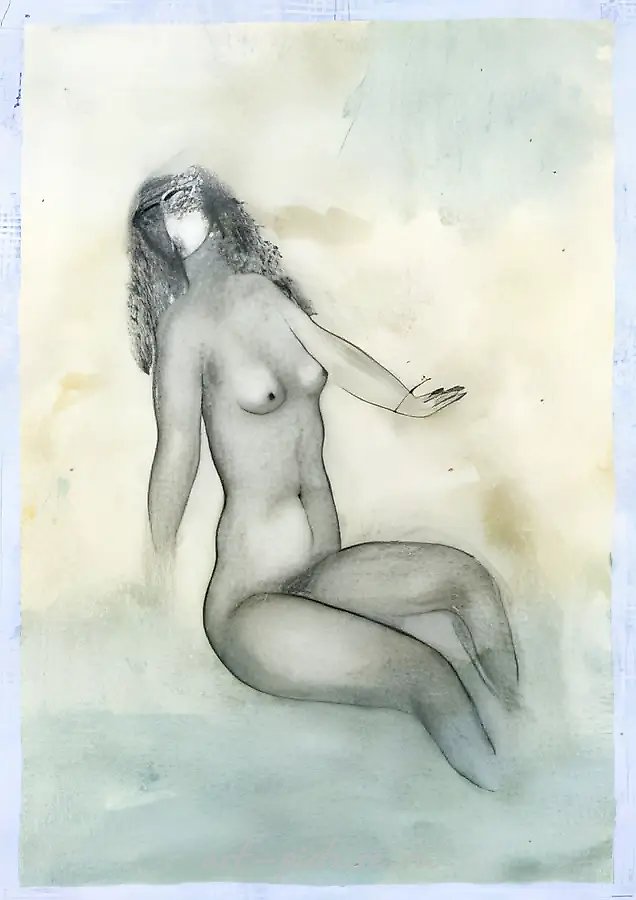
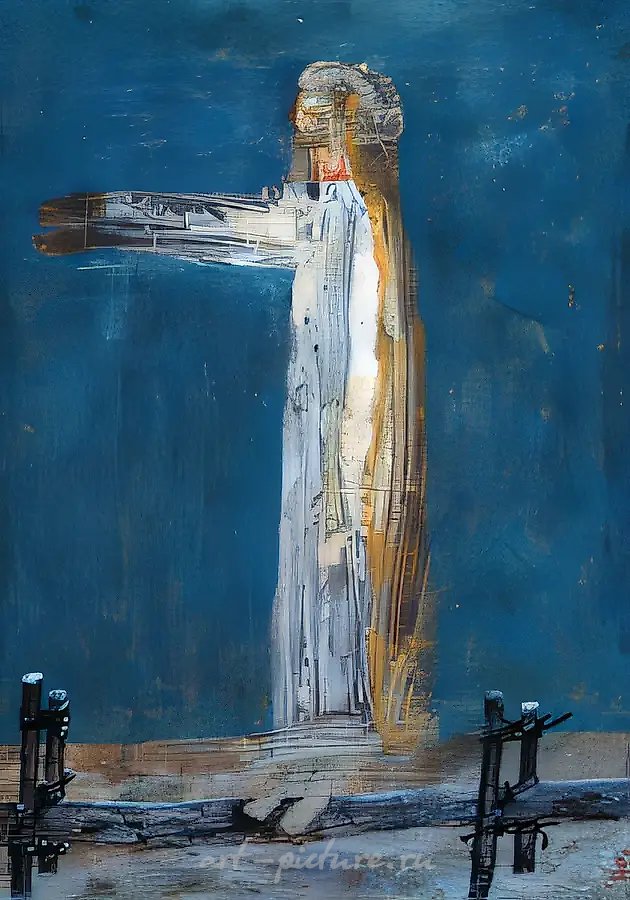
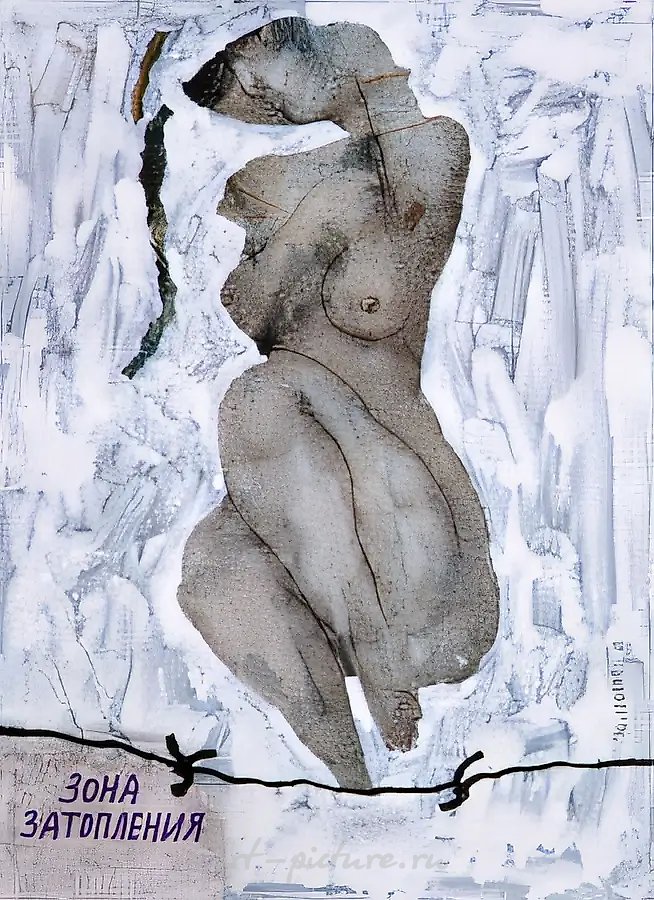
For those who cannot treat art as entertainment or a way to make money, there are two paths: inward and upward, merging in the creative experience into a single vertical. Here lies a field of conflict: for this experience is opposed by everything around—and also by the 'longing of endless plains,' which everyone living in Russia carries in their soul. Yet if a person in Yuri Kononenko's world is deprived of comfort, he is homeless not socially, but ontologically. There is nothing around him that civilization has at times forcibly bestowed upon us. He recognizes himself amidst a space whose landscape is extremely laconic. Earth and sky, sun or moon, water, stone, boat, pile—are the eternal companions and symbols of existence.
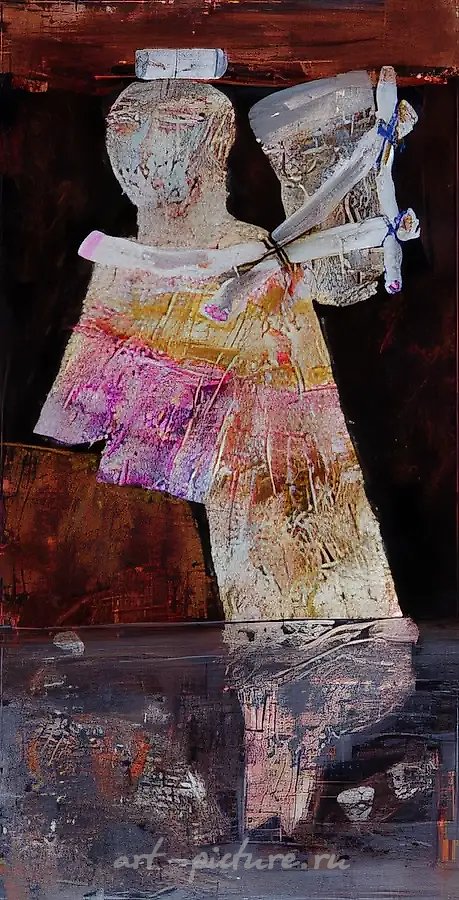
Another theme is 'liks' (faces). This is how the artist calls images that were once called portraits in a previous life. Now they are free from likeness and psychologism. What remains is the mobile substance of subtle soul movements... One can notice how the hands' brushes approach the form of wings, how each eye has two pupils, and how a color glow surrounds the contour of the head. Probably, the possibilities of graphics, as opposed to transparent, multi-layered, but still more substantial painting, allowed for the expression of this light breathing...
N. Lichtenfeld
Bibliography
Catalog of the personal exhibition. Moscow, 1988;
Documentary film about the work of Yu. Kononenko. Novosibirsk TV studio;
Catalog of the personal exhibition. Lucerne, Switzerland, 1994.
Works 9