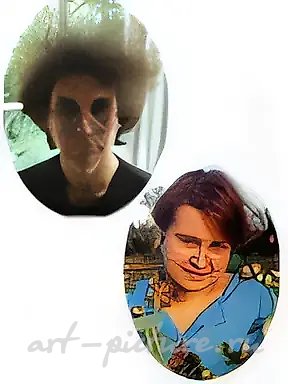
Alekseev Alexander and Dober Tatyana
ALEKSEEV Alexander Nikolaevich
Born in 1965 in Moscow
1987 Graduated from the Moscow Polygraphic Institute
Since 1991 Member of the "International Club 1/1"
DOBER Tatyana Vladimirovna
Born in 1963 in Moscow
1987 Graduated from the Moscow Polygraphic Institute
Since 1991 Member of the "International Club 1/1"
Works in collections
Silkscreen Workshop of the former USSR Artists' Union Creative House "Senezh"
Sevastopol Art Museum (T. Dober)
Rutgers Center for Innovative Printmaking, New Brunswick, USA
KAOS service company, Italy (A. Alekseev)
V. Salnikov, Moscow
A. Ponomarev, Moscow
Phil Orenstein, USA
Georgy Ryabov, USA (T. Dober)
Exhibitions and auctions
SOLO EXHIBITIONS (A. Alekseev and T. Dober)
1987 Slide-performances at the Hermitage Center, Moscow
1989 Exhibition in the concert complex "Independent Musicians - South Africa" (art director - A. Alekseev), Youth Palace, Moscow
1992 "DISCOVERY" (action). Gymnasium of School No. 1272, Moscow
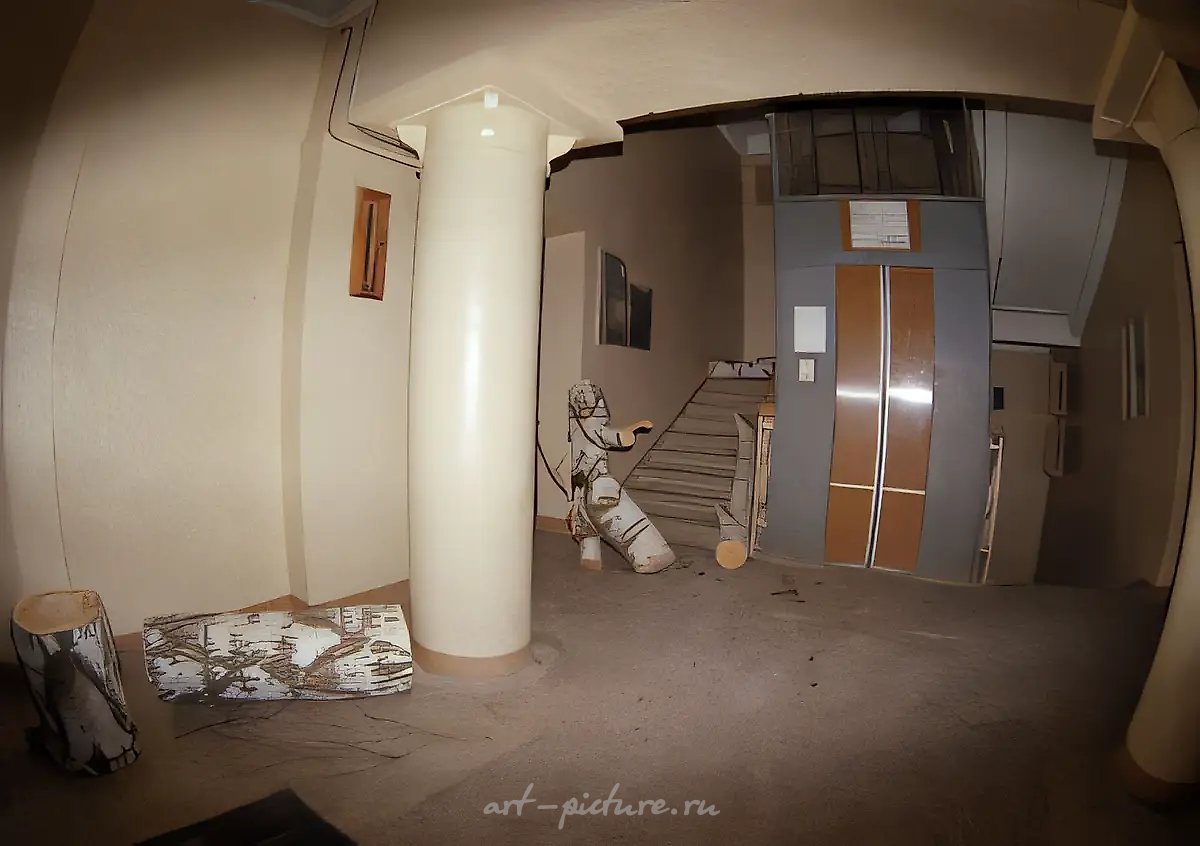
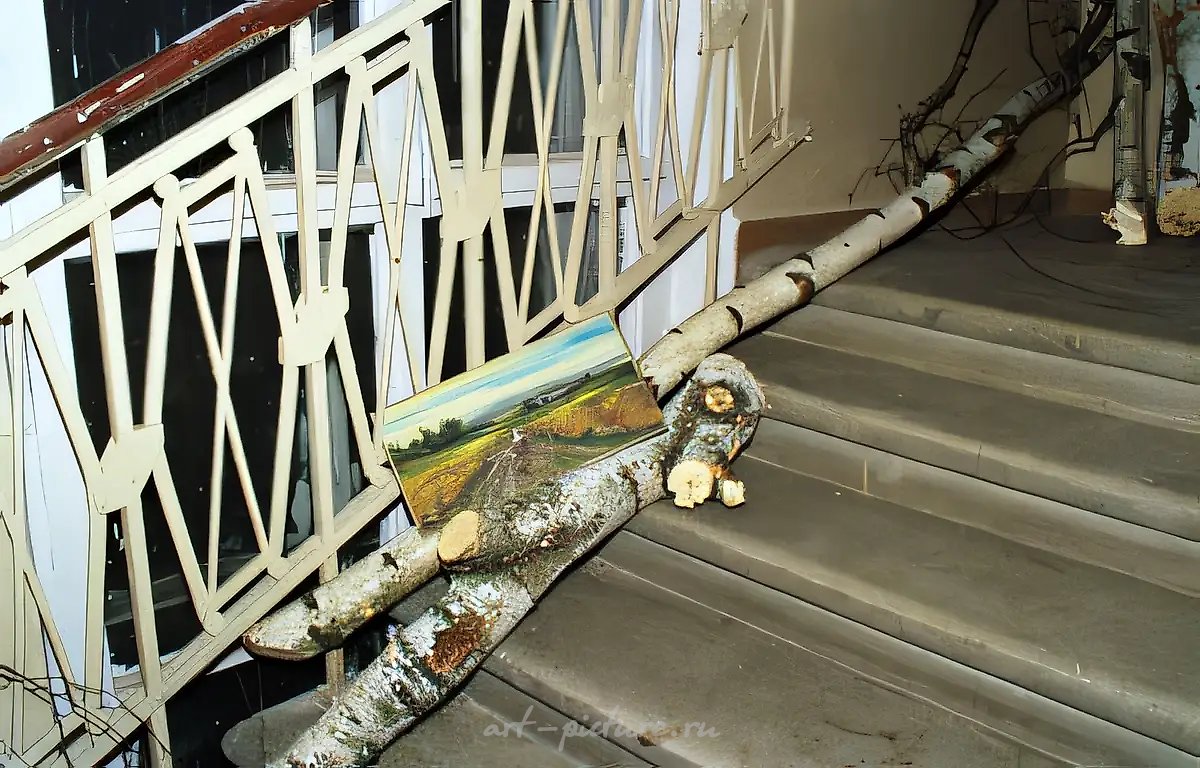
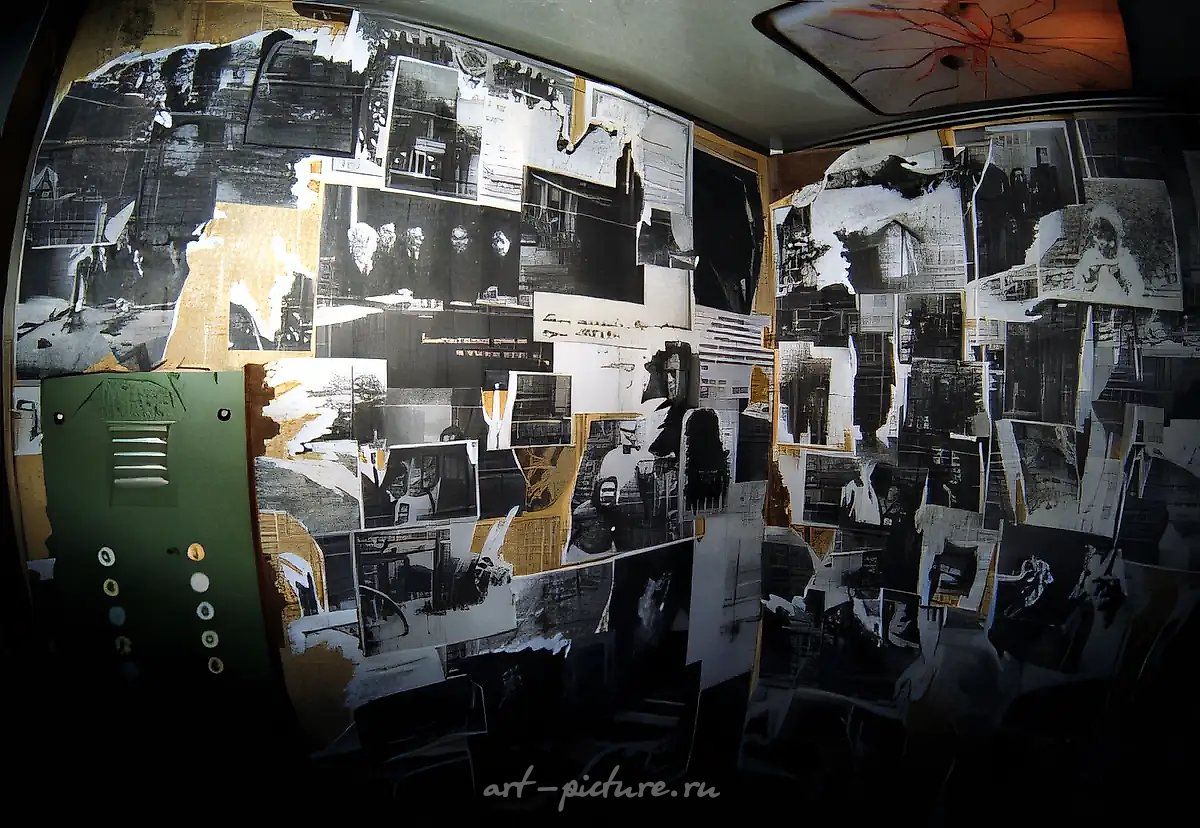
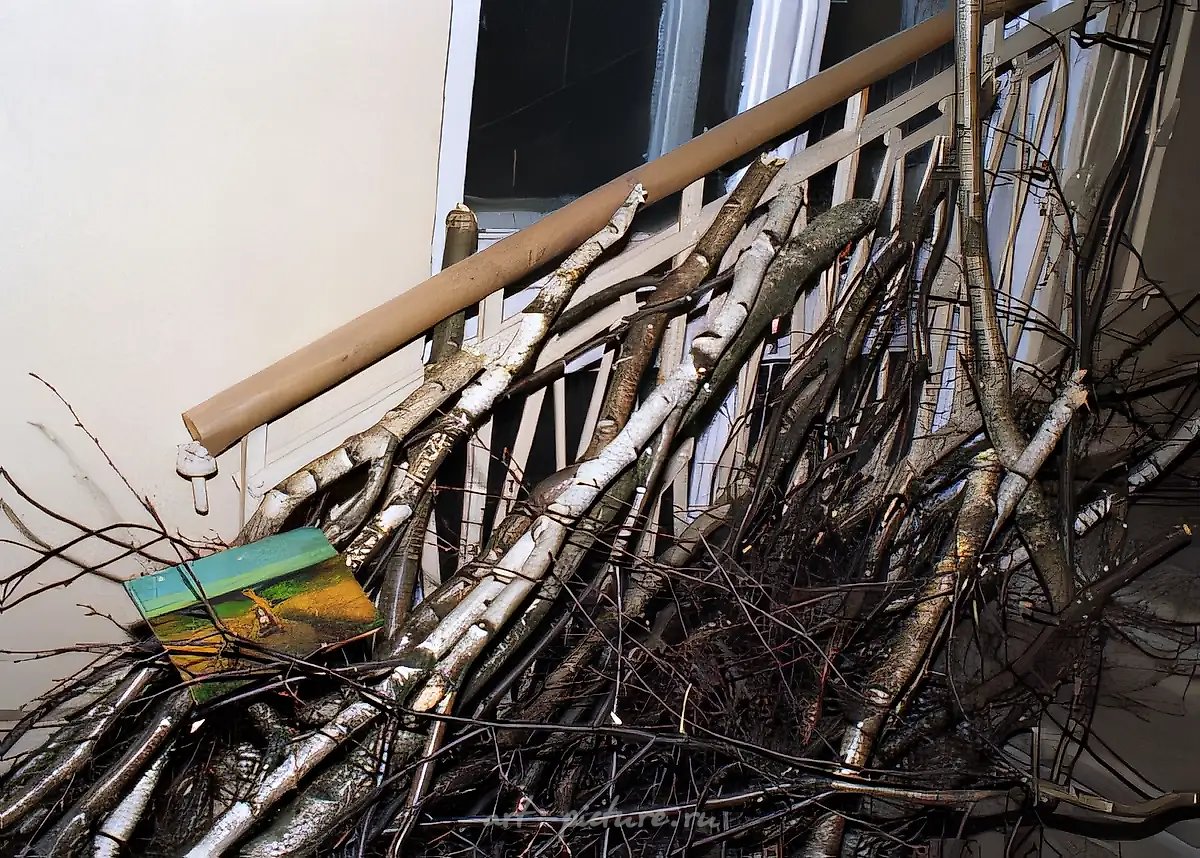
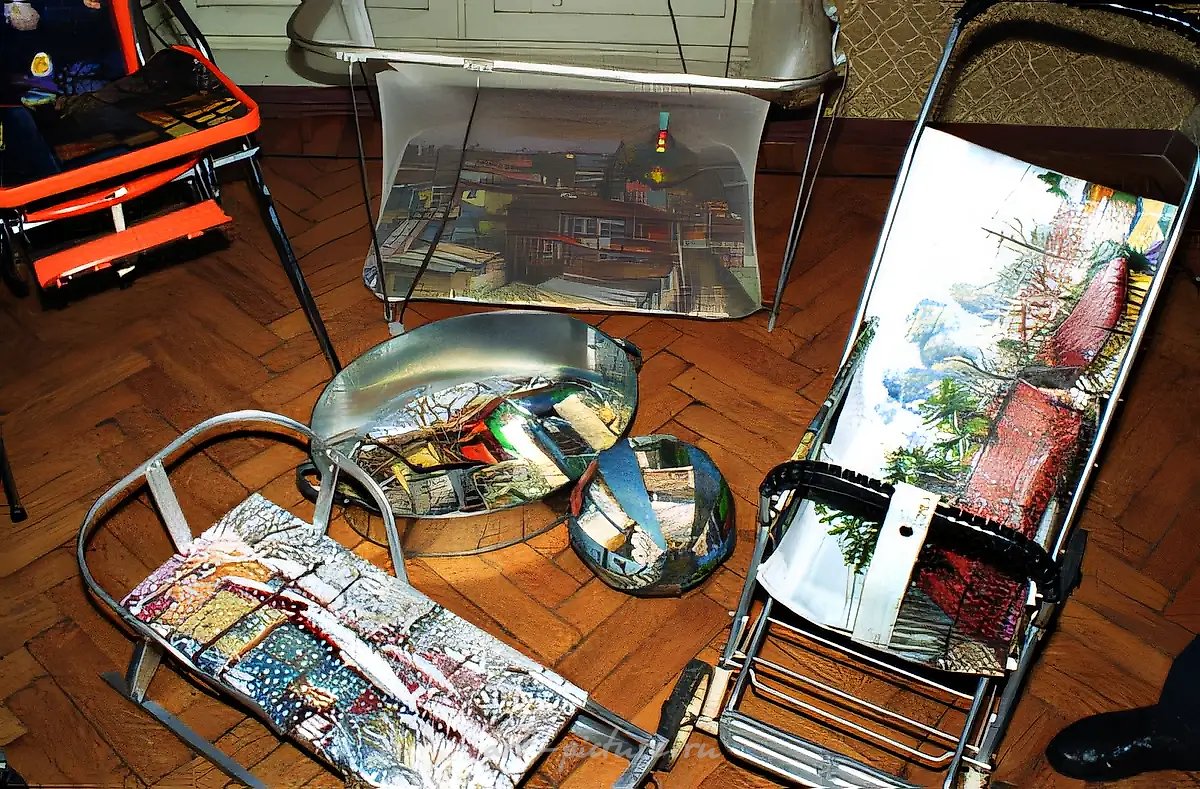
1993 "Entrance No.1". Installation on the floors of an apartment building and in the artists' apartment, Moscow
1993 Slide-performances. School of Visual Arts, New York; Rutgers University, New Brunswick, USA
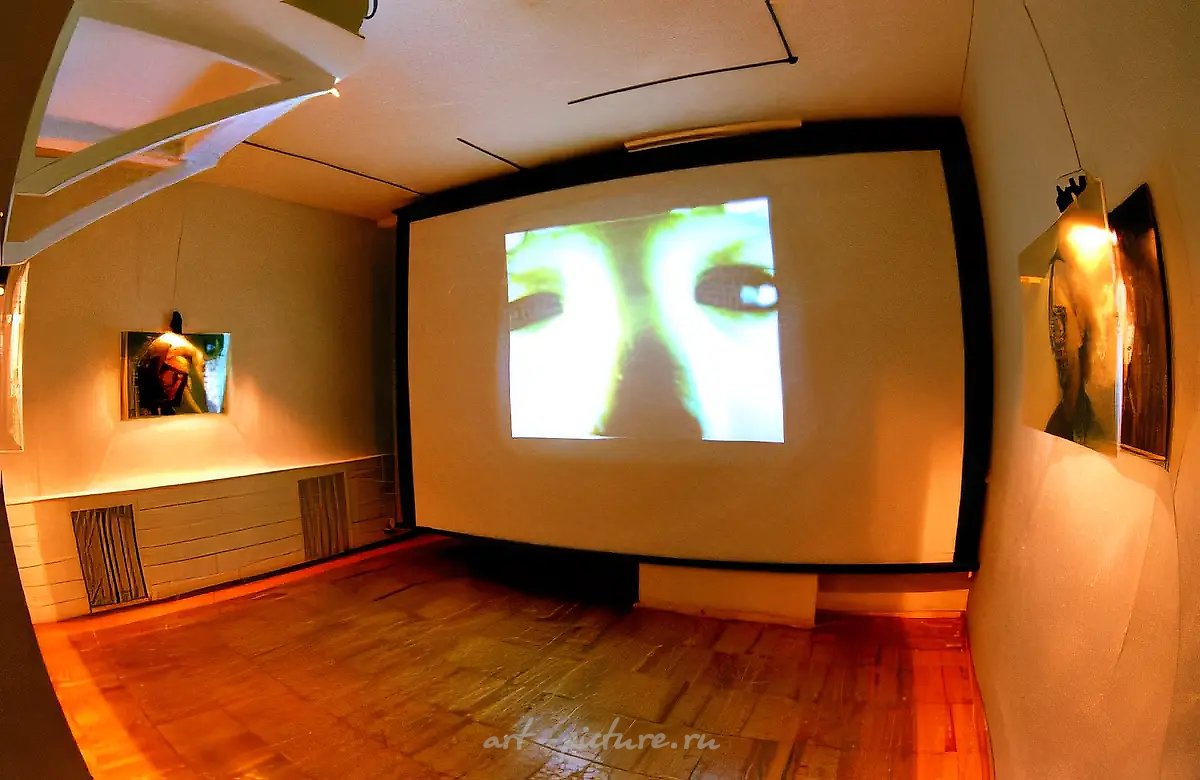
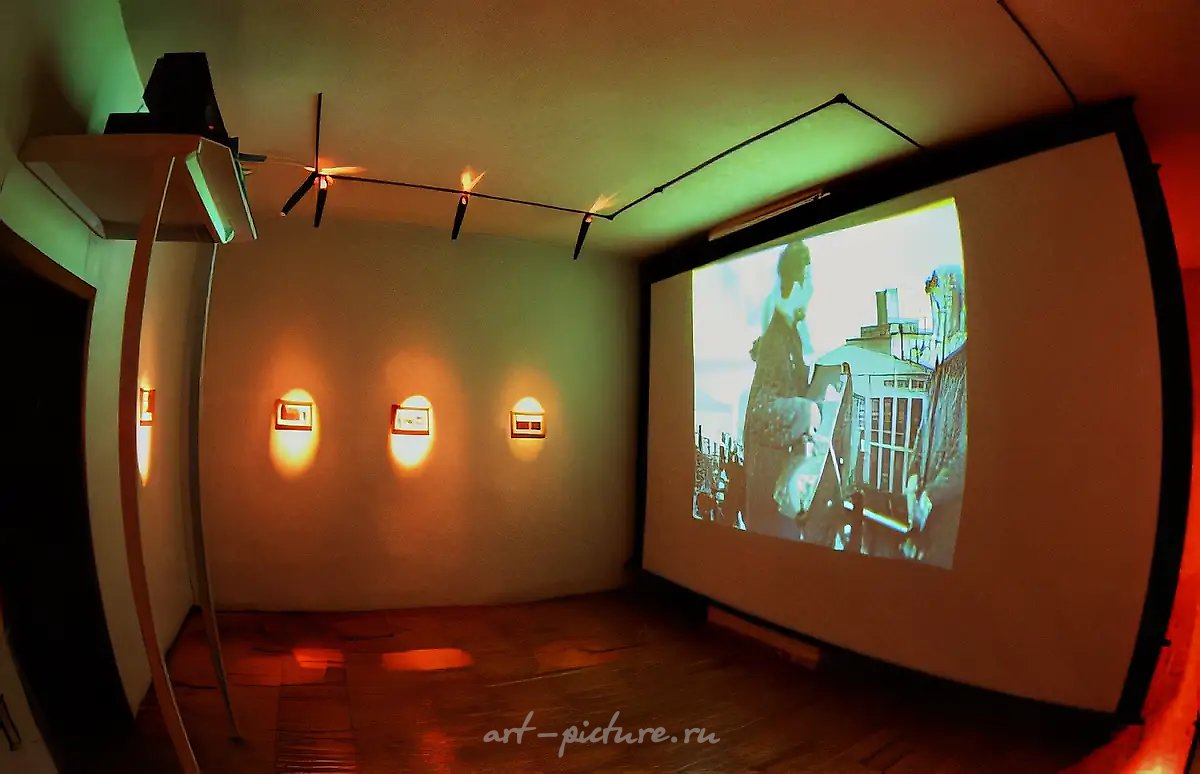
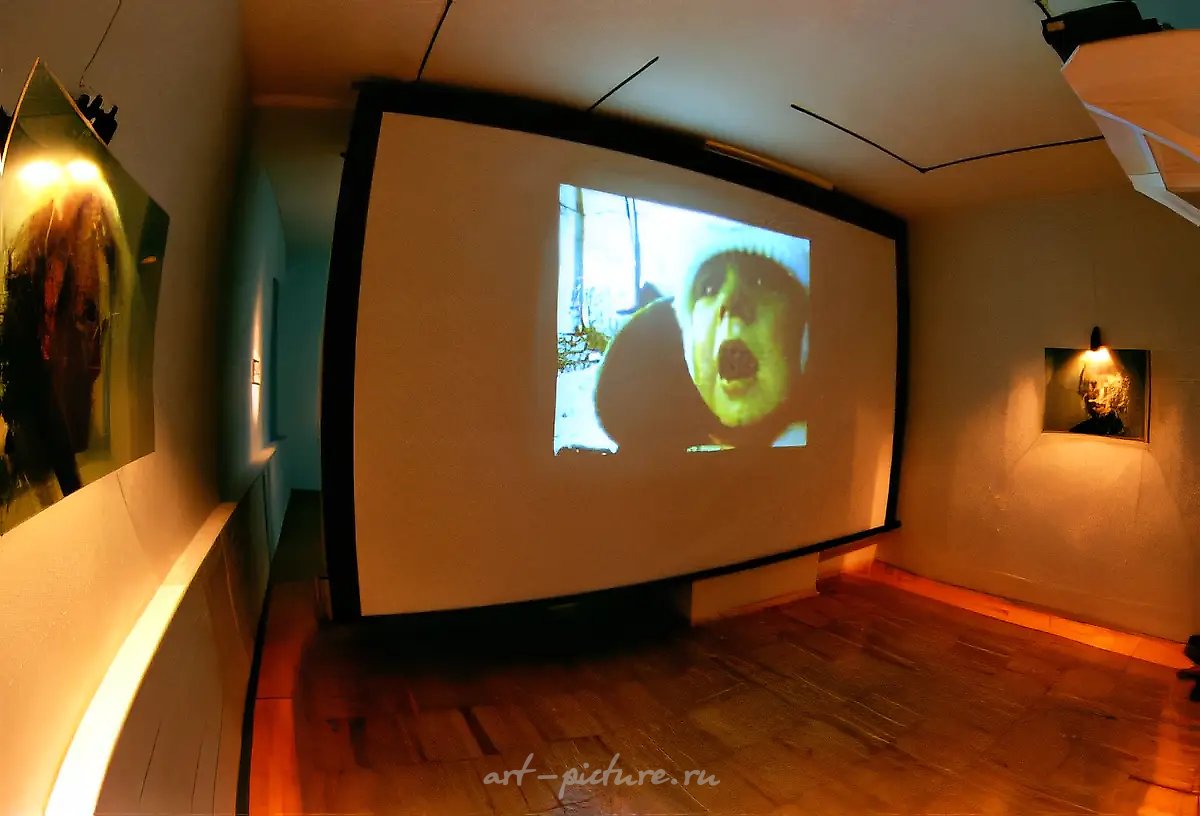
1994 "Light of a Distant Star". Gallery "Shkola" (School), Moscow
1995 "Restitution". Gallery 1.0, Moscow
1996 "Discovery-2". Gallery "Palto", Moscow
1996 "Fragments of Four Projects". Moscow City Duma, Moscow
1997 "Schizoromantics". Gallery "Palto", Moscow
GROUP EXHIBITIONS
1985 "Graphics in the City" (presentation of author's slide-films). Workshop of Applied Graphics (Nemirovich-Danchenko St., 5/7), Moscow (A. Alekseev)
1986 XVII Youth Exhibition. House of the Artist at Kuznetsky Most, Moscow (A. Alekseev)
1987 All-Union Youth Exhibition (slide-performance) (jointly with P. Maslov, B. Mamonov, "Asphalt" group). Manezh, Moscow (A. Alekseev)
1987-88 participation in expositions and cultural programs of the Book Artists' Club. Central House of Artists, Moscow
1988 XVIII Youth Exhibition. Manezh, Moscow
1988 "Graphics of Moscow Artists: To the City and the World". Central House of Artists, Moscow
1989 "Out of Genre". Youth Palace, Moscow
1991 XIX Book Artists Exhibition. House of the Artist at Kuznetsky Most, Moscow
1991 "Malaya Gruzinskaya". Manezh, Moscow (T. Dober)
1991 "Hallucinations" (A. Alekseev, T. Dober, Maslov, within the "Vatican" program of the International Club of Artists 1/1). Revolution Museum, Moscow
1991 "ART MYTH 2". Manezh, Moscow
1991 "International Club 1/1". Kalinin Museum, Moscow
1992 XX Youth Exhibition. House of the Artist at Kuznetsky Most, Moscow (T. Dober)
1993 "Russian-American Exchange". Granary Books; Susan Teller Gallery, 568 Broadway, New York, USA
1993 "Two Museums". Sala Communale, Rome, Ciampino, Velletri, Italy
1994 Presentation of the Visual Anthropology Workshop (curators and authors of the exposition together with V. Miziano). Center for Contemporary Art (CCA), Moscow
1995 "Game" (project). United Artistic Studios, CCA, Moscow
1995 "Ergebnis". Galerie am Marstall, Berlin, Germany
1995-1996 "Results". Marstall Gallery, Berlin, Germany
1996 "Results". CCA, Moscow
1997 "Credo", "Material World", "Letter". Russian Cultural Foundation, Moscow
Author about himself
T. Dober and A. Alekseev - the creation of a creative union has long ceased to be either new or particularly characteristic. Unless, of course, one considers that this is a married duet.
The familial, private, and personal becomes truly important during another revaluation of all values, typical at the end of a century. The authenticity of the autobiography is perhaps the only thing that for you is absolutely reliable.
Many reliable autobiographies make up history.
History has no hierarchical structure, no vector directions. The perception of history resembles the observation of a surface constantly changing due to the mutual shifts and overlaps of various layers and strata.
There are also no rigidly fixed boundaries in the outlines of disciplines, visual art, or, say, philosophy. Special interest arises when there is a paradoxical, amazing combination of completely different events, seemingly accidentally coinciding in the latest movement of the surface layers of history.
An artist perceiving history from our time occupies a certain point of view. Unlike the point of view strictly assigned to an artist in the Cartesian era, the modern position is mobile and subject to self-reflection. If we imagine autobiography in a linear temporal form, we can turn our gaze to the past because we have already been seen by a melancholic observer from the future, our daughter.
Artist-observers undoubtedly describe their own behavior. The difference is in the intonation. For us, sentimental is undoubtedly preferable to directive, and gentle humor always beats brutal satire.
The interdisciplinary problems in our projects are manifested due to the natural desire to fix the contemporary technology of thought in visual form.
Critic
Domestic artists have always been in an oppressed position regarding the philosophy of art and philosophy in general, because despite the silver and golden ages, there has not really been any particular philosophy among our native willows. The only relevant productive philosophical doctrine was the Marxism of the 1920s productionists. For the most part, artists have had to retrain themselves as philosophers, as Malevich or Kandinsky did. The philosophizing artist became a typical figure in the Soviet underground, and conceptualism of the seventies was art instead of philosophy. This situation arose by accident, not as a programmatic or principled stance.
Original philosophy and methodology of art appeared in the workshop of Ilya Kabakov and the apartment of Andrey Monastyrsky, later materializing in the persons of Boris Groys, Viktor and Margarita Tupitsyn, and Mikhail Ryklin. This is not the place to list the mental debris from which art studies then arose, but it was the aforementioned thinkers who gave it a quite presentable and convergent appearance. The most pessimistic thinkers, like Evgeny Barabanov, generally deny the possibility of transliterating Western models, reproaching young critics for eclecticism and skimming the surface.
In the situation of art 'after philosophy', a Russian critic is forced to construct at home a DIY analytical apparatus, screwdriver-assembled, allowing at least some understanding and ability to describe what is happening. This is still better than being frustrated about the impossibility of statements and the crisis of discourse.
But, alas, due to social circumstances, conceptualism preferred proud self-isolation, and so all subsequent art remained 'art without philosophy'. However, a ray of hope is already visible. Get up, Count, great deeds await you. Artists have discovered the ideal and universal philosopher, ready to dote on them like little children and set them on the right path. Valery Podoroga turned out to be such an ideal guru, and after about a year of non-stop wordplay in the Laboratory of Post-Classical Studies and energetic seminars at the Center for Contemporary Art, he attuned new adept-artists to feeling and perception. But predominantly, Valery Podoroga's mentoring resulted in a new art theodicy—the artists received confirmation that everything they do fits into some global paradigms of thought. And there is nothing to be sad about.
In the booklet for the exhibition at the "Shkola" gallery, Tatyana Dober and Alexander Alekseev state that for two years they "engaged with contemporary thinking practice"—one assumes, with that same post-classical laboratory. And so they decided to share discovered treasures with the artistic community, which "is very interested in contemporary philosophy." Art finds itself as a sort of philosophy for the illiterate and is indirectly regarded as a servant of philosophy, called upon merely to illustrate the Text. A fundamentally new formulation of the old problem has arisen—"philosophy instead of art" ("We conceive our path in art as a method of cognition; the methods cross the borders of art and reach out into interdisciplinarity").
According to the prescribed approach of illustration for the illiterati, the installation was constructed according to the laws of gallery practice, although the theme was chosen as a philosophical problem of time. But the body, consciousness, and subconscious of the artist—their personal time and space—are the only reality given to their perceptions; at once object and subject, reflected and reflection, signified and signifier. Therefore, for the study of time, both Alexander Alekseev and his father, who appeared in Pyryev's film "The Light of a Distant Star", were used. The father seems to show through the son, causing suspicion of an endless succession of ancestors and precedents, hidden in the haze of time. The son only slightly modernizes the storyline of the old film with its straightforward and reflective Soviet neorealism hero, playing with the only tangible segment of time (both the father's lyrical hero and the future artist were born in 1965).
The moral of the story: "If you were born an artist, then be an artist," paraphrasing Kozma Prutkov's instruction regarding the Tatar face. And, even more tediously, interdisciplinarity and interactivity are the Scylla and Charybdis of contemporary art. There is nothing sillier than becoming Gustave Doré. Art is not exactly bad philosophy, but it is something in itself.
A. Kovalev. "Art for Philosophy, or Philosophy for Art?" - Today, November 16, 1994.
Works 15