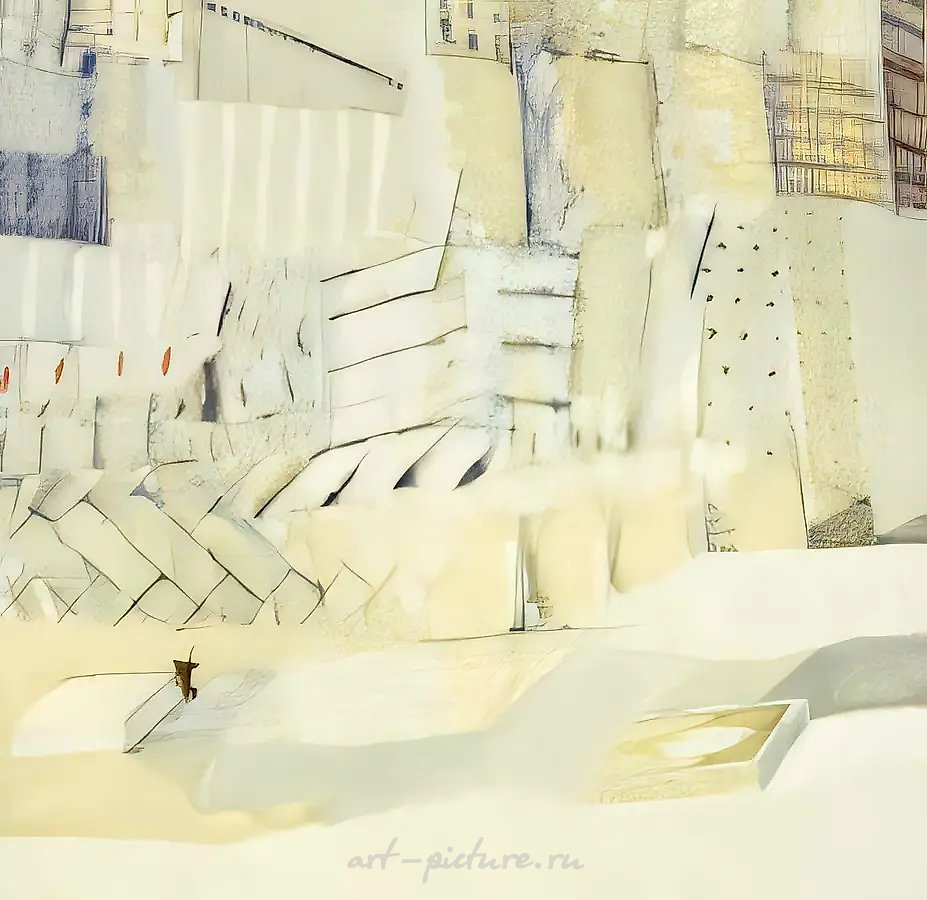

Andrievich Nikolai Valentinovich
Born in Moscow in 1944. Studied at the Moscow Polygraphic Institute from 1963 to 1965. Began working at the Workshop of Advertising, Applied, and Industrial Graphics ('Promgrafika') in 1967. Produced first abstract and serial graphic works from 1983 to 1985. Has incorporated color into his works since the late 1980s.
Works in collections
State Tretyakov Gallery, Moscow
Pushkin State Museum of Fine Arts, Moscow
Yekaterinburg Museum of Fine Arts
I. Krasilshchik, Moscow
S.G. Kazovsky, Israel
Exhibitions and auctions
SOLO EXHIBITIONS
1983 Personal one-day exhibition at 'Promgrafika', Nemirovich-Danchenko St., Moscow
1992 'Graphic Series', 'Moskovskaya Palitra' Gallery, Central House of Artists, Moscow
1993 'Moskovskaya Kollektsia' Gallery, Karetniy Ryad, 3, Hermitage Garden, Moscow
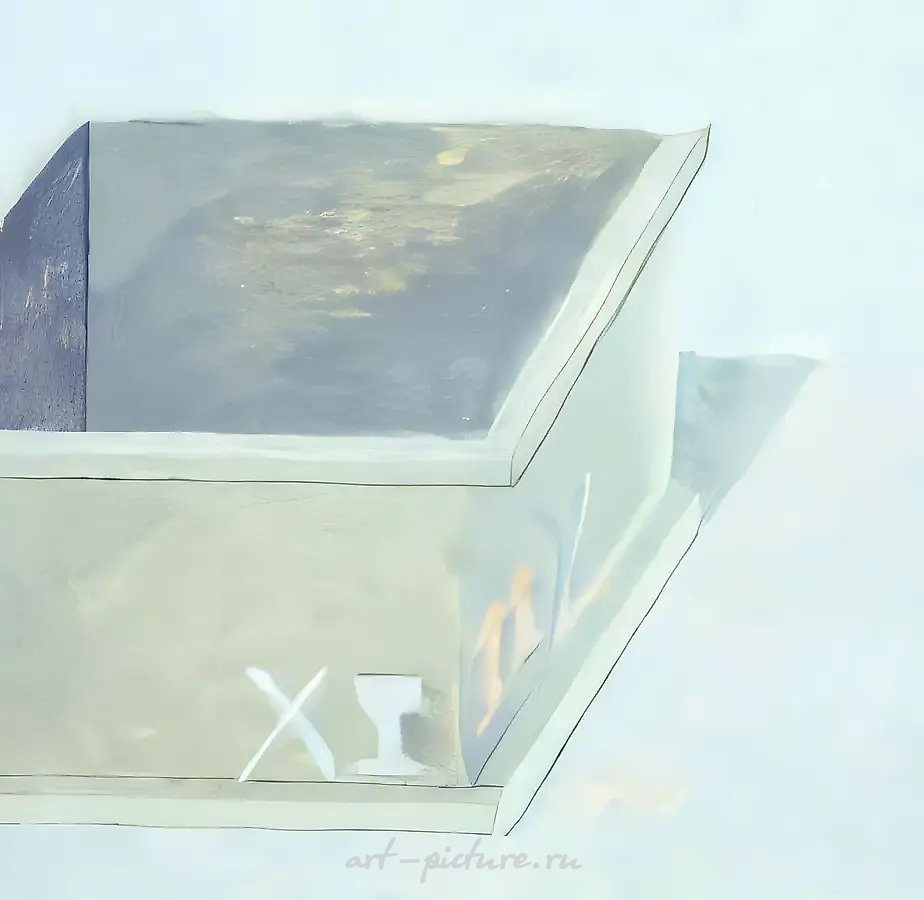
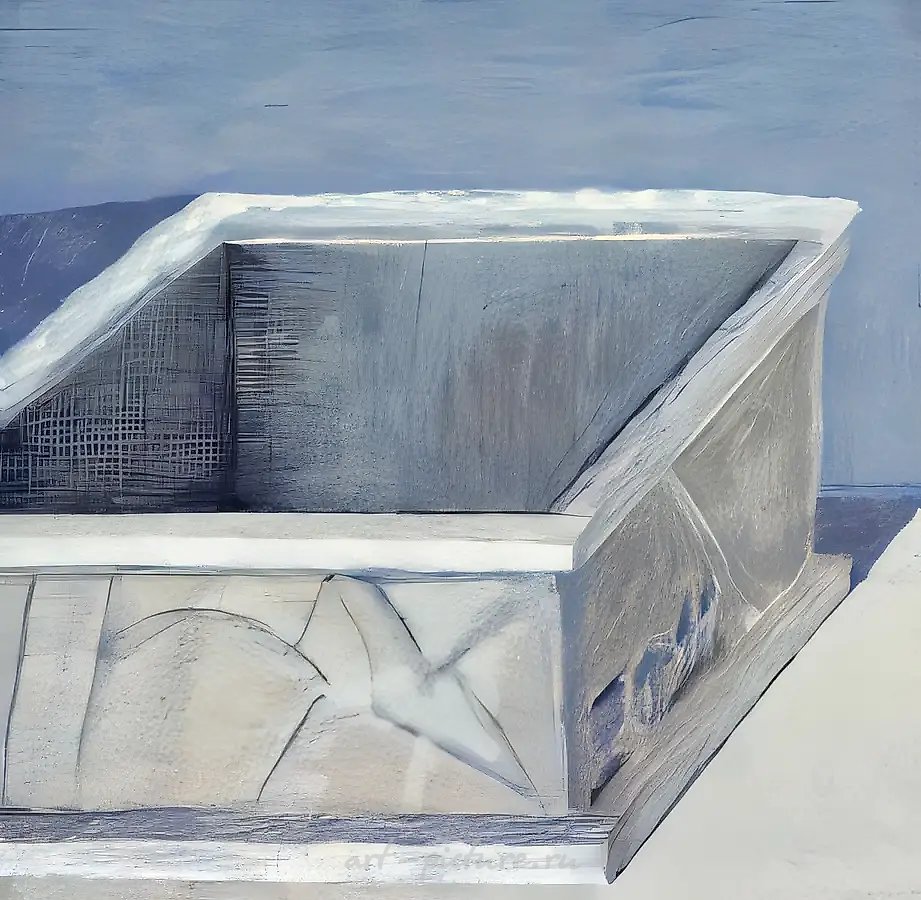
1995 '...boxes, archeologies, dumps...', 'Moskovskaya Palitra' Gallery, Povarskaya St., 35/28, Moscow
1995 '...boxes, archeologies, dumps...', 'Moskovskaya Palitra' Gallery, Moscow
1996 'Paper, Mixed Media' (with A. Krasulin), 'Manezh' Gallery, Moscow
1997 'Tabaki', Moscow
1997 'Artist in an Open Society', Open Society Institute (Soros Foundation), Moscow
1997 'Running Line', Moscow
GROUP EXHIBITIONS
1975 'Preliminary Apartment Viewings for the All-Union Exhibition', Moscow
1976 'Exhibition of Works by Moscow Artists', VDNKh, Pavilion 'House of Culture', Moscow
1977 Painting Exhibition, Malaya Gruzinskaya, 28, Moscow
1987 'Visual Artistic Culture', Hermitage Union, Profsoyuznaya St., 100, Moscow
1987 'Retrospective of Moscow Artists' Creativity. 1957-1987', Hermitage Union, Profsoyuznaya St., 100, Moscow
1975-1987 'Habitat', Hermitage Union, Profsoyuznaya St., 100, Moscow
1988 'Graphics of Moscow Artists: To the City and the World', Central House of Artists, Moscow
1992 'Still Life at the End of the 20th...', autolithography exhibition, 'Moskovskaya Palitra' Gallery, Moscow Architectural Institute, Moscow
1993 'ART MIF 3' ('Moskovskaya Palitra'), Manezh, Moscow
1993 'ART MIF 3' (auction), Manezh, Moscow
1993 'Sewing and Tailoring Courses' (author lithographs exhibition), 'Moskovskaya Palitra' Gallery, Berlin, Germany
1993 'Sewing and Tailoring Courses' (author lithographs exhibition), 'Moskovskaya Palitra' Gallery, Ost-West Club Initiative, Osnabrück, Germany
1993 'Still Life at the End of the 20th...', autolithography exhibition, 'Moskovskaya Palitra' Gallery, Berlin, Germany
1994 'Drawings from Russia', 'Moskovskaya Palitra' Association, Albertina Museum, Vienna; 'Moskovskaya Palitra' Gallery, Moscow
1995 'Entgegen der Schwerkraft', Galerie 'Raissa', Erfurt, Germany
1995 'Entgegen der Schwerkraft', Galerie 'Raissa', Erfurt, Germany
1996 'Kaliningrad – Königsberg', Third International Biennale of Easel Graphics, Kaliningrad Art Gallery, Kaliningrad
1997 'Reverse Perspective – Russian Minimalism' for the Days of New Russian Art in Rzhev
1997 'Olga Khlebnikova Gallery', CDH, Moscow
1997 'Assorti', CDH, Moscow
Author about himself
My interests revolve around the object and space (the object and its constitutive spaces; the object and the space it resides in; the habitat of the object, its constructions and structures). However, it should be noted that for me, the concept of an object is very broad. A sign, a spot, a thing – for me, these are all objects. Seriality, repetition – this is my desire to fully express my admiration for the object. I try to solve my artistic goals using traditional plastic means.
Critic
The graphic works of Nikolai Andrievich, even at first glance, can safely be called 'avant-garde' in the commonly understood sense. However, from the overwhelming stream of contemporary anti-traditionalist art in which they are now compelled to exist, they are distinguished by the fact that they are avant-garde in essence as well: by employing the possibilities of graphics, Andrievich implements in them a consistent aspiration to analyze the nature of artistic activity, probing and overcoming its known boundaries. In his studio works, without much noise or special declarations, he has found not just a new combination of techniques and forms, but his own way to problematize the image.
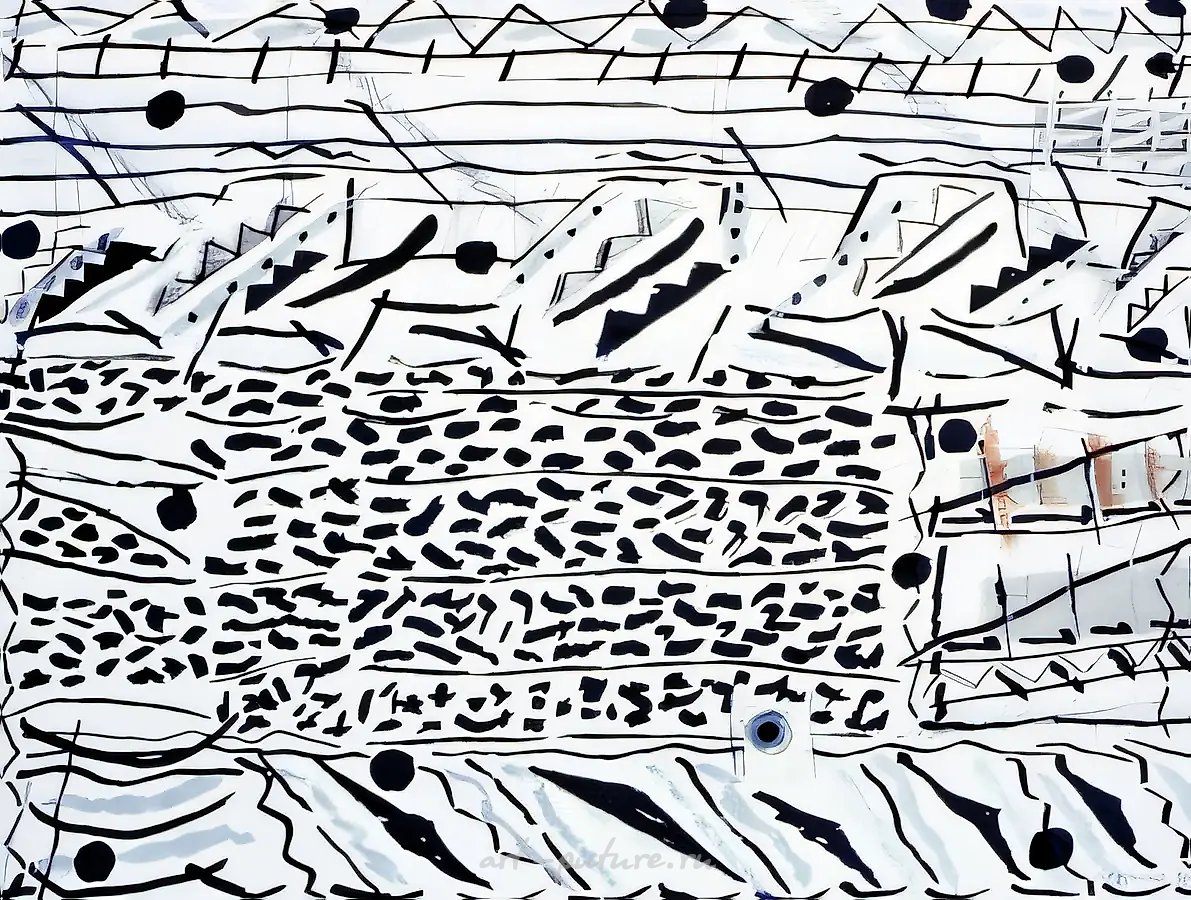
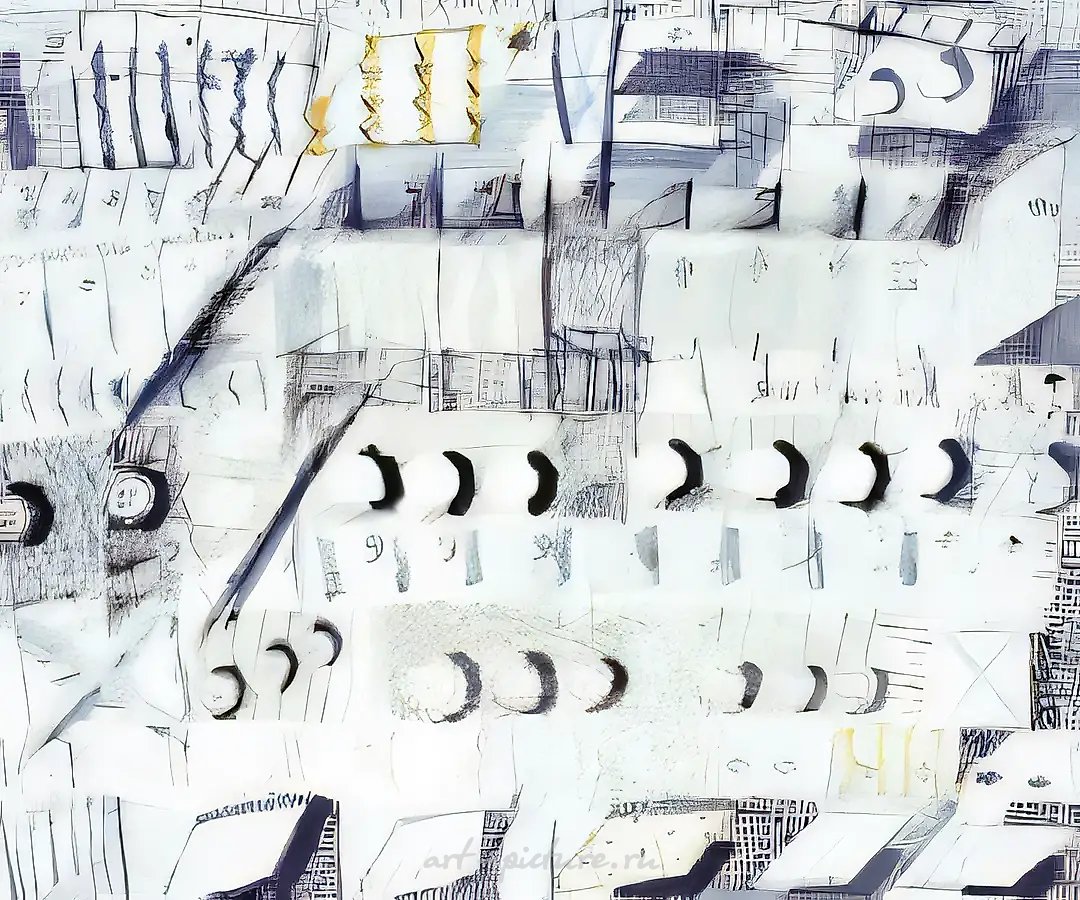
Turning to a frank, 'untrained' gesture means that in the manner of many of Andrievich’s sheets (despite the clearly embodied starting point of analysis and self-awareness), there is often initially an irritating childish negligence, incompleteness, external roughness, behind which only later does one discover subtle observation and an unmistakable rhythmic precision. The reminiscence of 'academic' (or perhaps amateur) setups in his early series is, of course, no accident. He seems to be rebuilding the very concept of drawing from scratch, discarding familiar notions of professional pen and brush mastery and delving into the primal, elementary nature of drawing – a technique in which the relationship between material and ground is the most straightforward, sometimes demonstrative, dialogue.
Listening in on this dialogue does not force the artist to slow the movement of his hand, but leads to an enlargement of the very elements, those 'graphemes' that make up the image, which fundamentally transforms the structure of the drawing itself. This enlargement of the elementary structure is a strategy that prevents romanticizing the image as a magical mirror reflecting a world 'filtered through the prism of the artist's temperament.' Instead, it recreates the effect of a magnifying glass, familiar to those who have studied old engravings: the characters in sacred history are characterized carefully and lovingly in detail, but, peering closer, one sees only a well-designed grid of strokes. Andrievich's drawings seem to 'include' this magnifying glass within their internal mechanism; we perceive both the object (if something is indeed depicted) and the abstract logic of the graphic structure that forms it. The enlargement does not allow the structure to be 'blurred' with some conventional masterful technique and only serves to accelerate the pace of its delineation – this certain haste in executing the considered plan, leading to individual irregularities and roughness, possesses a vibrant energy that substitutes for mastery here. The object, as it were, is merely 'remembered' within the independently existing construction of lines – the plastic relationship between them is reminiscent of designation in language, serving as its subtle figurative equivalent. It costs the artist nothing, in some fragment of a series, to 'weaken' this memory of the subject (for example, in some sheets of 'Swamp' separate graphemes cease to depict anything in themselves and the 'residual' meaning continues to be maintained by the rhythm of the abstract pattern), or in another series to make it only associative. Thus, the subject turns into a 'theme' conveyed by a free composition of conventional and concrete signs, and the theme of such a composition more and more often becomes not some circle of objects (for instance, 'Sewing and Tailoring Courses') but a certain type of designation, a way of pictorial or conditionally graphic encoding.
E. Kantor. From the introductory article to the exhibition catalogue 'Graphic Series', 'Moskovskaya Palitra' Gallery, Moscow, 1992.
Works 13