
Bashlykov Vladimir Ivanovich
Born in 1943 in the village of Kamenka, Khmelnitsky region, Ukraine.
1961-62 studied at the Moscow Art School in Memory of 1905 (Theater and Scenography Department).
1970 graduated from Moscow Textile Institute (Faculty of Applied Arts).
Since 1977 member of the Artists Union of the USSR.
Works in collections
State Tretyakov Gallery, Moscow.
The Pushkin State Museum of Fine Arts, Moscow.
Ekaterinburg Museum of Fine Arts, Ekaterinburg.
Kemerovo Regional Museum of Fine Arts, Kemerovo.
Art Gallery, Sayany.
Ryazan Regional Art Museum, Ryazan.
"Moscow Palette" Gallery, Moscow.
V. Orlov, V. Dyakov, E. Manevich, V. Meiland, G. Yelshevskaya, V. Silaev, A. Zavolokin, E. Ulanova, P. Kiselev, M. Tukacheva, Moscow.
A. Zinschtein, Saint Petersburg.
M. Geyko, Kiev.
E. Peshler, Zurich, Switzerland.
K. Novikowski, Vienna, Austria.
E. Fine, New York, USA.
Li Su Kane, Seoul, South Korea.
E. Degov, Paris, France.
Private collections in the USA, Switzerland, France, Germany, Austria, United Kingdom, Italy, Israel, Denmark, Poland, Bulgaria.
Exhibitions and auctions
SOLO EXHIBITIONS
1981 One-day exhibition. Artist's evening. The House of Artists at Kuznetsky Most, Moscow
1990 "100 Sheets of Graphics". Central House of Artists, Moscow
1993 "Biblical Cycle by V. Bashlykov". "Moscow Collection" Gallery, Moscow
1995 "Paraphrases. Relict Space". "A 3" Gallery, Moscow
1995 "Vladimir Bashlykov. Graphics". "Moscow Palette" Gallery, Moscow
1995 "Autonomous Art". "Le Chat" Gallery. Central House of Artists, Moscow
1996 "Kaliningrad – Koenigsberg". Third International Biennale of Easel Graphics. Kaliningrad Art Gallery, Kaliningrad
1996 "Galleries in Gallery". State Tretyakov Gallery, Moscow
1996 "Artoteca", National Centre for Contemporary Arts. Central House of Artists, Moscow
1997 "V. Bashlykov. Painting". "Manezh" Gallery, Moscow
"Human Space". "A-3" Gallery, Moscow
1998 "Fragments". "Velta" Gallery, Moscow
GROUP EXHIBITIONS
1968 VIII Youth Exhibition. Moscow
1987 "Retrospective of Moscow Artists' Works. 1957-1987". "Hermitage" Society, Profsoyuznaya 100, Moscow
1989 "Nuova Realta". Pinacoteca Communale Loggetta Lombardesca, Ravenna, Italy
1989 "Rassegna Grafica di Artisti Sovietici". Associazione Italia-URSS, Trieste, Italy
1989 "28 Moscow Artists". Riverside Artists’ Group, Riverside Studios, London, UK
1989 Jointly with V. Sveshnikov. Ost-West Galerie, Zurich, Switzerland
1989 "Graphics, Painting, Decorative Arts". MOSKH Exhibition Hall, Vavilova St., Moscow
1990 Exhibition from the collection of "Art Modern" Cultural Center. Istanbul, Turkey; Zurich, Switzerland
1990 "The Russian/Swiss Touring Exhibition and Sale of Modern Russian Art". Jerusalem, Paris, London, Zurich, Antwerp, New York, Tokyo
1991 "ART/London-91". Culing Gallery, London, UK
1991 "ART MYTH 2". Manezh, Moscow
1991 "Drawing-91". Central House of Artists, Moscow
1992 "Letter to Bulgakov". Central House of Artists, Moscow
1992 "Kennen Sie diese Namen?". Galerie Raissa, Erfurt, Germany
1992 "Le Printemps de Moscou". Espace du temps, Brussels, Belgium
1993 "ART MYTH 3". Manezh, Moscow
1993 "Contemporary Graphics of Russia". Central House of Artists, Moscow
1994 III International Triennale of Graphics (miniprint). Châtellerault, France
1995 "Autonomous Art". "Le Chat" Gallery. Central House of Artists, Moscow
1997 "V. Bashlykov. Painting". "Manezh" Gallery, Moscow
1997 "Human Space". "A-3" Gallery, Moscow
1998 "Fragments". "Velta" Gallery, Moscow
Author about himself
Can it be assumed that questions about the essence of creativity can have at least somewhat satisfactory answers?
Something emerges. Can it be explained? The interpretation of the perceiver of what has emerged captivates and draws in accordance with the presence and degree of his intellectual-poetic talent, and it itself, as a result of the creative act, becomes another new emergence.
Is not an artist's work only an expression of a certain, perhaps the most important, part of his being—deeply contradictory, lonely, wandering in the dark depths of his internal mysterious and incomprehensible—an expression brought to some harmony by the necessity of preserving connections within the space of human communication? And what is the correlation here between the signs of hidden conditions and the evidence of piercing revelations?
What is filled with beauty represents an approach to its source. The eternal inexhaustible source is in the bottomless depth of everything filled by it and beyond, containing all fullness within itself.
The creator, in his involvement in the emergence of harmony at every moment his heart touches it, approaches everything and his own nascent self.
V. Bashlykov, 21 Questions
- Is it possible in creativity to gain freedom for a short time, to cleanse oneself from dirt, to rise to the heights? Or are we, even in creativity, slaves to passion?
- If true life is in spirit, does it mean, that through its projection into the visible world, the artist, through the visible, comprehends the invisible?
- How much effort does it take in drawing to later avoid them, following the natural movement of the world?
- Does a drawing emerge by the same laws as a tree, a sea wave, a cloud?
- Is a drawing natural if it contains evidence of violence against its nature?
- Is the artist so callous as to take credit for rare relative successes that occur in creative movement? Are not gifts sent to him?
- How long does one have to wander blindly and chase phantoms to finally return to oneself?
- Does art have a purpose? Is it really self-expression? Is the goal of art spiritual ascent, or is it a spontaneous movement, not motivated by a goal?
- Is it possible for an artist to realize his intention, or is an intention a glass barrier on the path of a flying bird, which shatters on the glass?
- Can one ultimately overcome the inertia of the indifferent plane of paper?
- Is it easy to give up the "skill" of drawing, to start again, returning to ignorance, learning to see?
- Does drawing move the artist along the path of Love?
- Prayer and creativity liberate the spirit. Is it so?
- Can one reach perfection in drawing, and is it needed?
- Are drawings one of the means of confidential communication?
- Freedom of choice in creativity. Is this choice really so great? To be sensitive to the voice of the heart and conscience—what else? And what is reason here? An obstacle or a helper, or both?
- Can the artist have any driving force other than Love?
- Is a drawing dead if it does not contain a mystery?
- If creativity is not revelation, what is it?
- Is everything really meaningless? Then why does a plant sprout, why a spring, the rustle of wind, the movement of mother and child toward each other arise?
- Can beauty save the world?
Critic
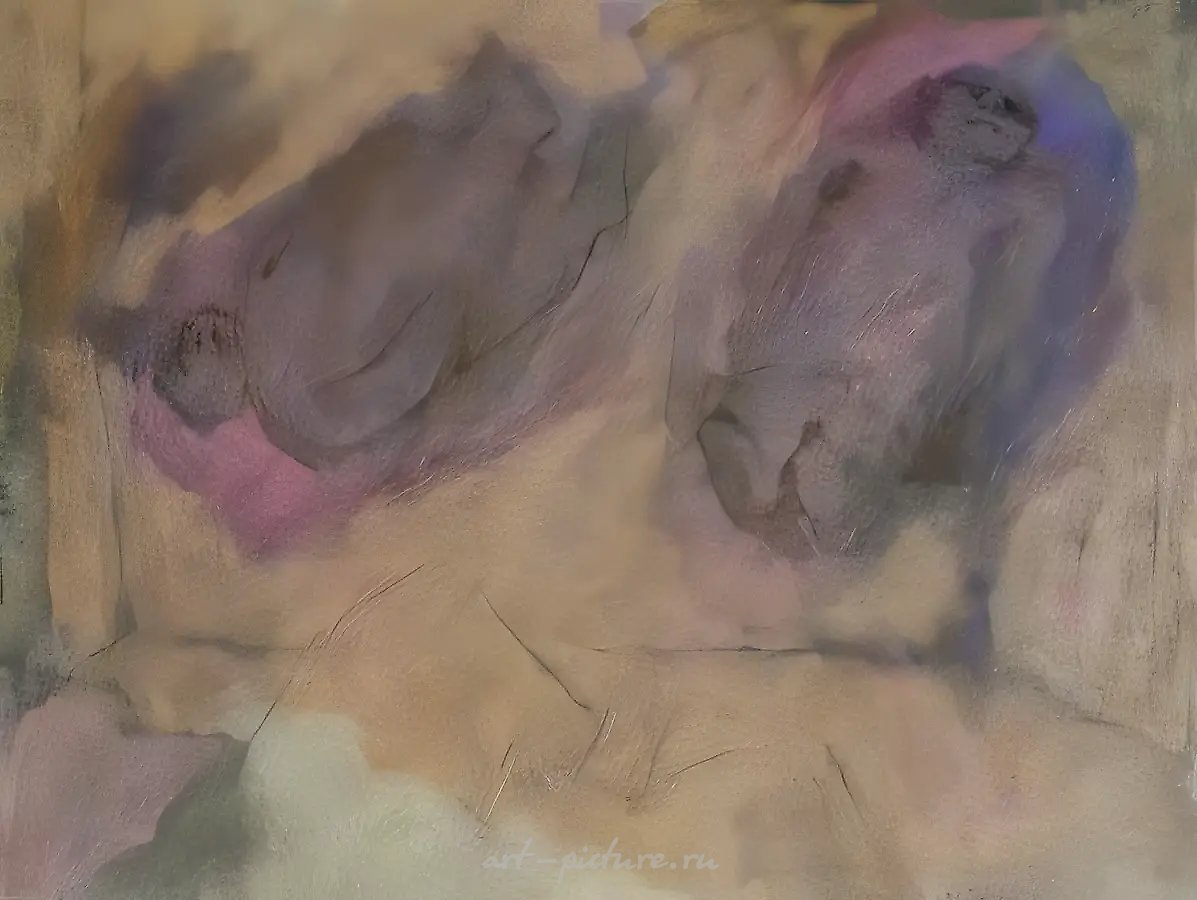
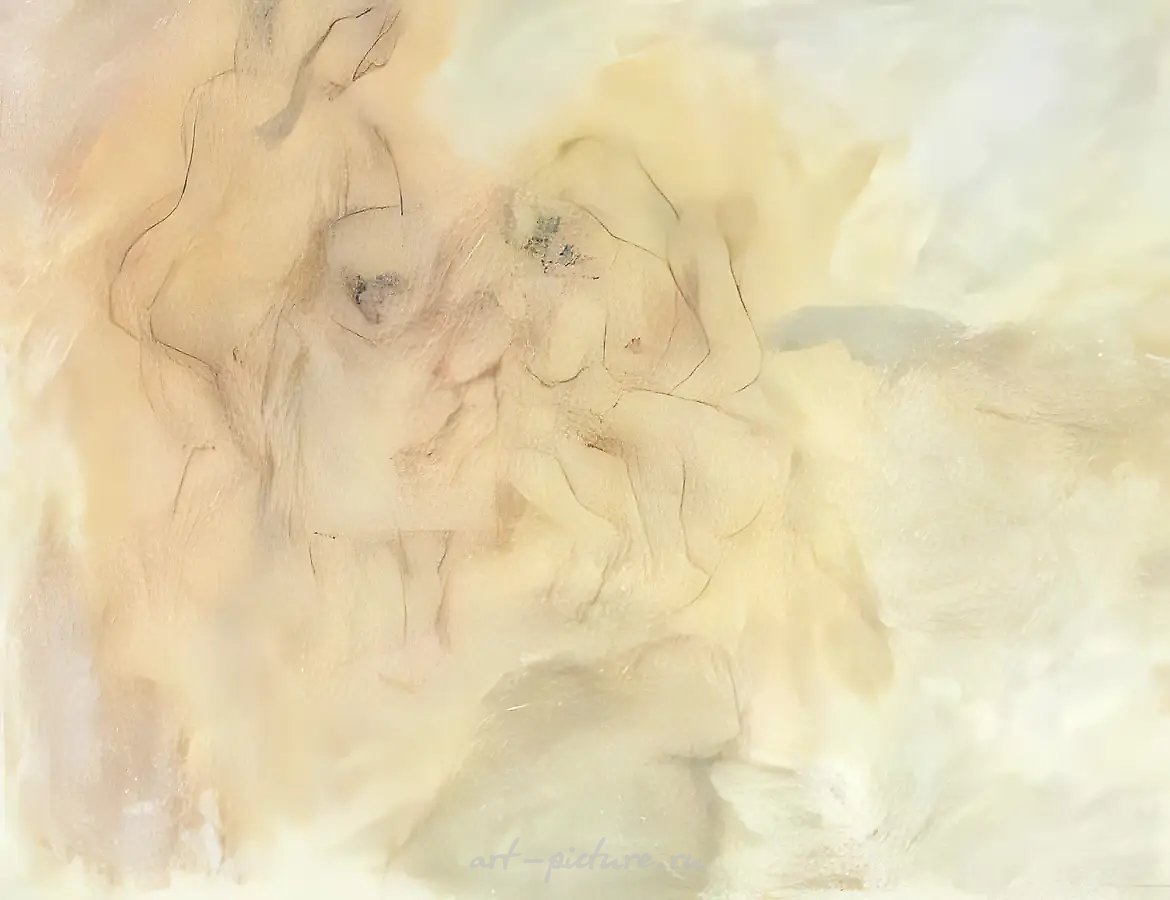
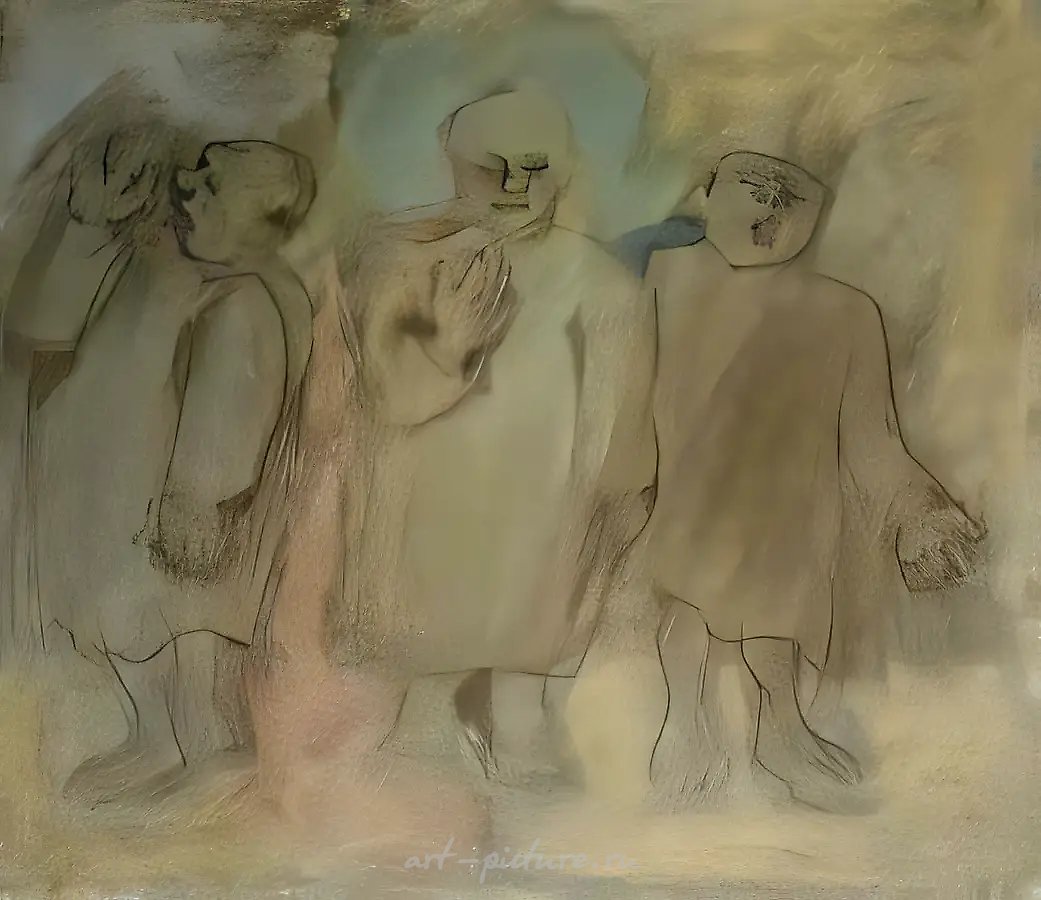
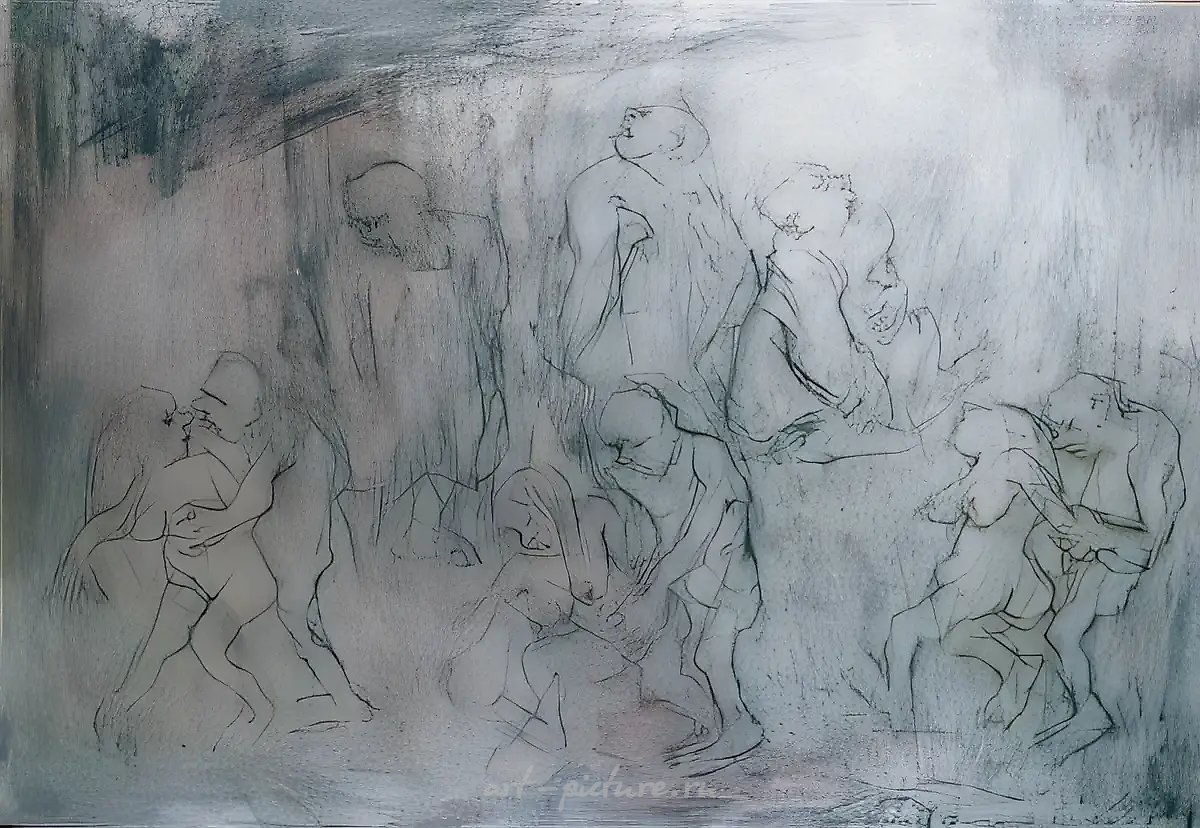
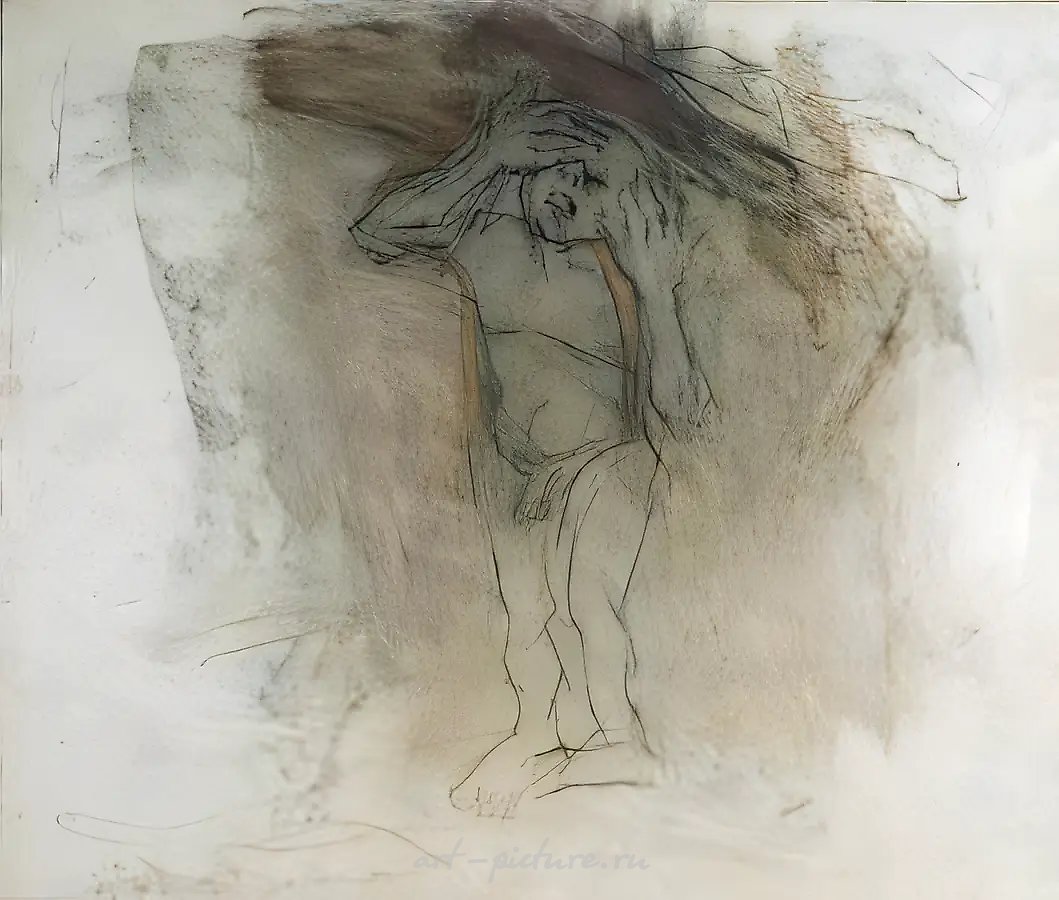
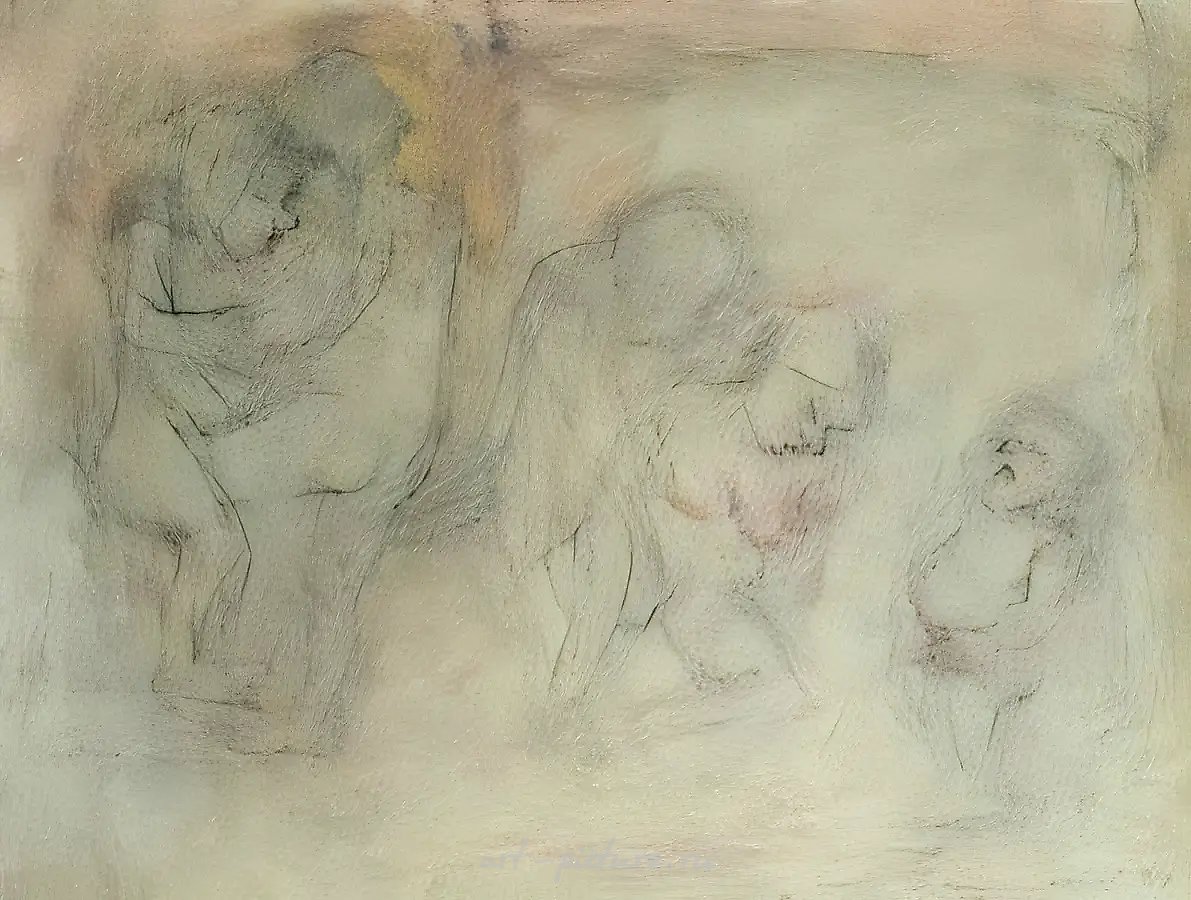
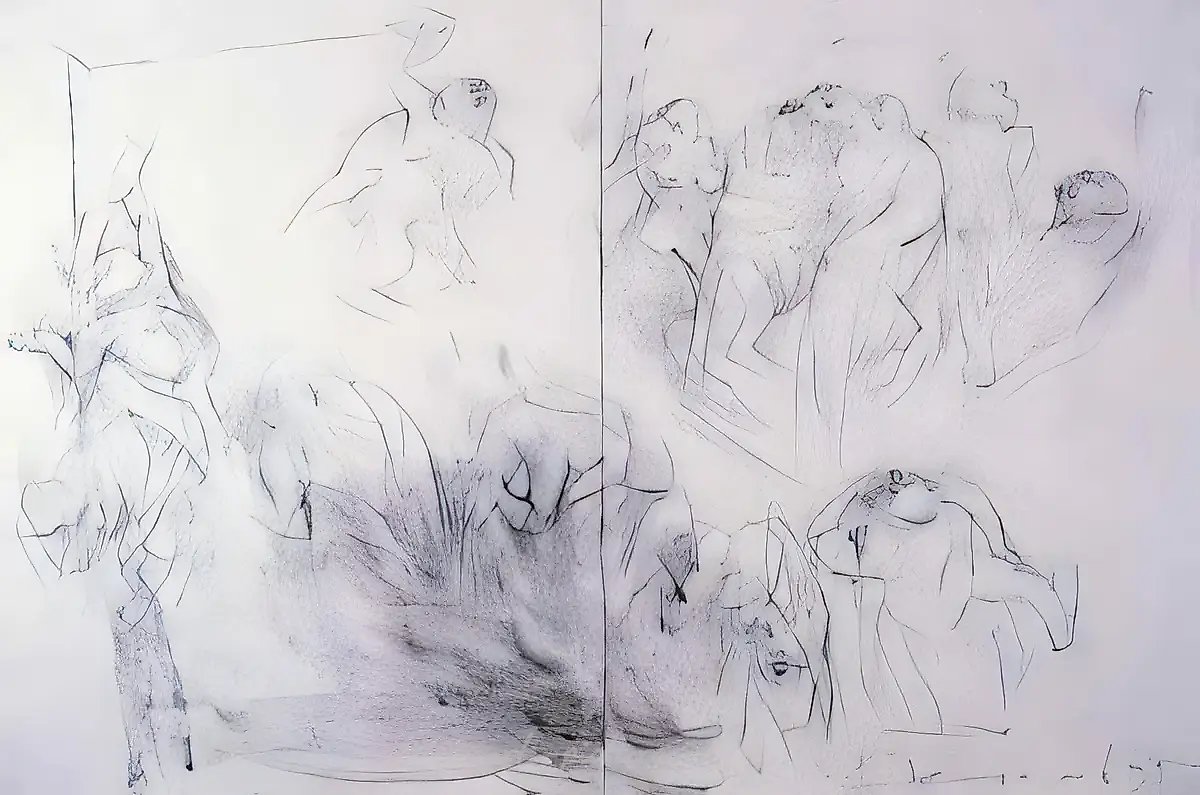
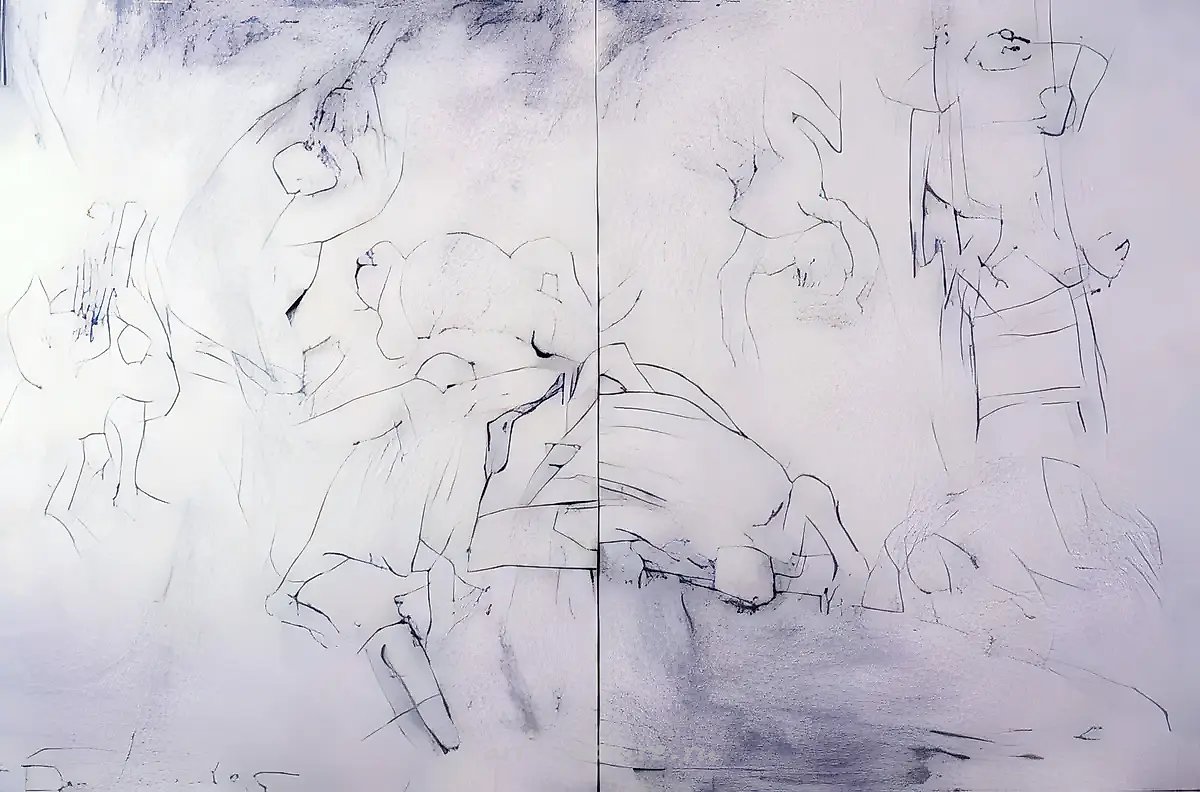
Vladimir Bashlykov is currently considered one of the most valued "pure" graphic artists. He is not an avant-gardist, not a radical, not a socialite; he simply draws, and his drawings represent a holistic artistic space.
A working definition of the psychological difference between postmodernists and modernists: the former 'choose a strategy', while the latter 'hear a call' and 'present a world.' Bashlykov's work certainly fits the modernist paradigm. However, in an odd way, the world he presents as the true one is entirely built on doubt—on doubt of its actual existence, on the impossibility of signifying the vaguely felt, of capturing it into a rigid linear framework. The state of this world is loneliness and sadness, lack of freedom and integrity. Irrational life, accidental gesture—only by passively surrendering to the flow can one chance upon essence. The vibrating contour, flickering color, unguessed outlines—a dreamlike or visionary reality: no other is given. Biblical subjects are not distinguished from other, conditionally speaking, life-based ones—the same silent people of the many, with 'no' faces, are here called Christ or Judas, and in their 'performance' the sacred story is deprived of any original cultural gloss.
The pastels and drawings of this cycle, as well as the "paraphrases" (based on half-recognized motifs of Velazquez, Cranach, and others) have appeared at Bashlykov's hand recently. It might seem—an influence of the "time of quotations," but in these sheets a completely modernist type of creativity is revealed: a volitional approach to chosen material, self-expression through "working with sources." Sources lose their clarity, dissolving in the self-movement of the graphic matter, becoming vague traces of some unconscious existential drama. Perhaps this is the drama of incomplete incarnation: as is known, a thought once uttered is a lie.
G. Yelshevskaya, "Art Magazine", 1996, No. 8
Bibliography
"New Album of Graphics," Moscow, 1991, pp. 90-91, 148-149;
E. Peshler, "Drawings from Moscow Studios," Paris, 1989, pp. 25-33;
Catalog "Russian Artists at Raissa Gallery," Erfurt, 1993, pp. 32-33;
Anthology "Soviet Graphics," Moscow, 1984, pp. 78-84;
Journal "Creativity," No.7, 1989, pp. 21-22;
Journal "Literary Review," No.11, 1991, p. 103;
Catholic Bulletin "Truth and Life," No.10, 1993, pp. 63-64;
Journal "Wolgan Misool," No.11, 1990, Seoul, pp. 106-109;
Brochure "Biblical Cycle by V. Bashlykov," Moscow, 1993.
Works 19