Sergei Mikhailovich Bordachev
Born in 1948 in Moscow. In 1964, he graduated from a vocational technical school (specialty: auto mechanic). Since 1968, he worked at VKhPO, the Decorative and Design Art Combine. From 1976, a member of the City Committee of Graphic Artists, a regular participant in exhibitions as part of the '21' group. Since 1990, a member of the International Federation of Artists (IFA). Since 1993, President of the Club of Abstract Improvisation under the Union of Musical Figures.
Works in collections
State Tretyakov Gallery, Moscow. Contemporary Art Collection of the State Tsaritsyno Museum-Reserve, Moscow. M'ARS Gallery, Moscow. 'Karat' company, Moscow. Nancy and Norton Dodge Collection, Zimmerli Art Museum, Rutgers University, New Brunswick, New Jersey, USA. L. Talochkin, E. Nutovich, T. Kolodzei, A. and V. Rusanov, Moscow. G. Kostaki, Athens, Greece. J.S. Ford, USA. K. Schrammayer, R. Singer, Germany. V. Sychev, A. Glezer, Paris, France.
Exhibitions and auctions
SOLO EXHIBITIONS: 1988 'Sergej Bordatsiov. Worken op papier'. Brinkman Gallery, Amsterdam, Netherlands. 1989 'Painting, Graphics, Objects'. Palace of Youth, Moscow. 1993 'Painting, Graphics, Objects'. M'ARS Gallery, Moscow. 1996 'S. Bordachev. Painting, Graphics, Objects'. Profsoyuznaya, 100, Moscow. 1997 Nikor Gallery. VDNKh, Moscow. GROUP EXHIBITIONS: 1979 Group exhibition. City Exhibition Hall, Kolomna. 1989 'Exhibition of Unfinished Works'. K. Zvezdochetov's Studio. Furmanniy Lane, Moscow. 1989 'Furmanny zaulek'. Dawne Zaklady Norblina, Warsaw, Poland. 1990 'Towards the Object'. 'Kashirka', Moscow. 1990 'Naar het object'. Stedelijk Museum, Amsterdam, Netherlands. 1990-91 'Other Art. Moscow 1956-1976'. Moscow Collection Gallery. GTG, Moscow; GRM, Leningrad. 1991 'Search for Abstraction'. Profsoyuznaya, 100, Moscow. 1991 'Contemporary Artists for Malevich'. GTG, Moscow. 1991 'Malaya Gruzinskaya, 28'. Manege, Moscow. 1992 'Moscow Romanticism'. Central House of Artists, Moscow. 1993 'Sign and Symbol'. Club of Abstract Improvisation. Central House of Architects, Moscow. 1994 '20 Years of the Bulldozer Exhibition'. Belyaevo Gallery, Moscow. 1994 'Sign and Symbol'. Club of Abstract Improvisation. Central House of Architects, Moscow. 1995 'Myth and Archaic' (painting exhibition). Club of Abstract Improvisation, Belyaevo Gallery, Moscow. 1995 'Kunst im verborgenen. Nonconformists Russia 1957-1995'. Contemporary Art Collection of the Tsaritsyno Museum-Reserve. Wilhelm-Hack Museum, Ludwigshafen am Rhein; Documenta-Halle, Kassel; Staatliches Lindenau Museum, Altenburg, Germany. 1996 'Painting in Russia at the End of the 20th Century. Realities and Perspectives'. CHA, Moscow. 1996 'Glezer Collection at the Museum of Private Collections'. Pushkin State Museum of Fine Arts, Moscow. 1997 'The Collector's World. A Contemporary's View' (from E.M. Nutovich's collection). Museum of Private Collections, Moscow. 1997 'Russian Art in 15 Biographies' (from the Contemporary Art Collection of the Tsaritsyno Museum-Reserve). Mucsarnok, Budapest, Hungary.
Critic
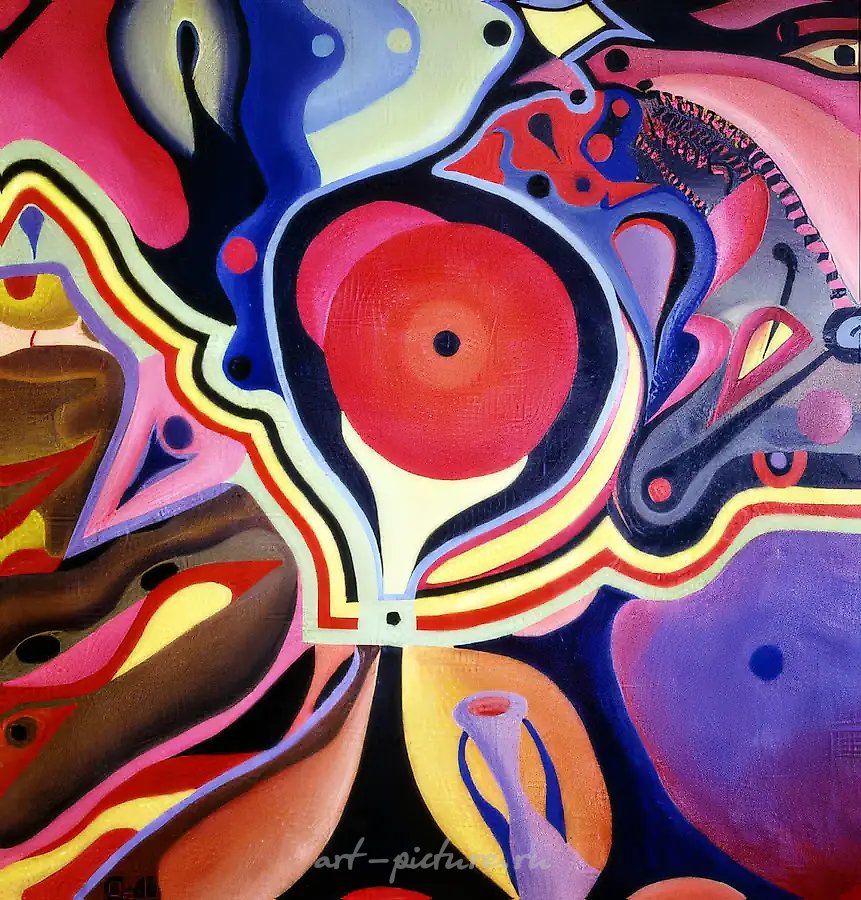
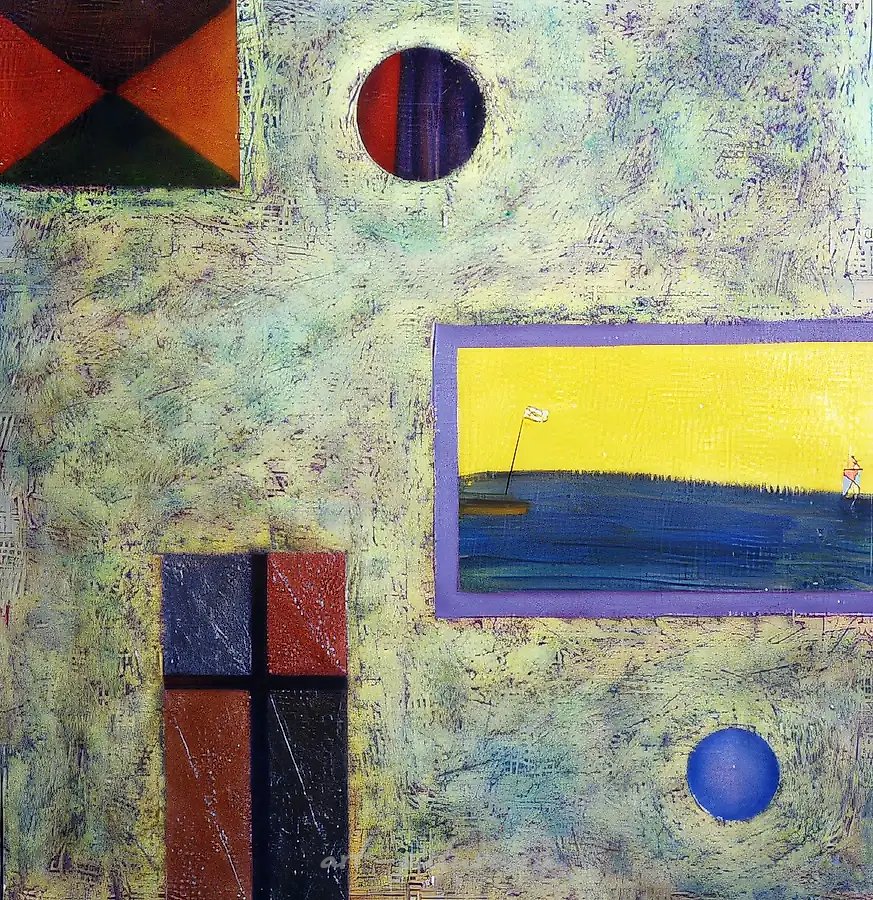
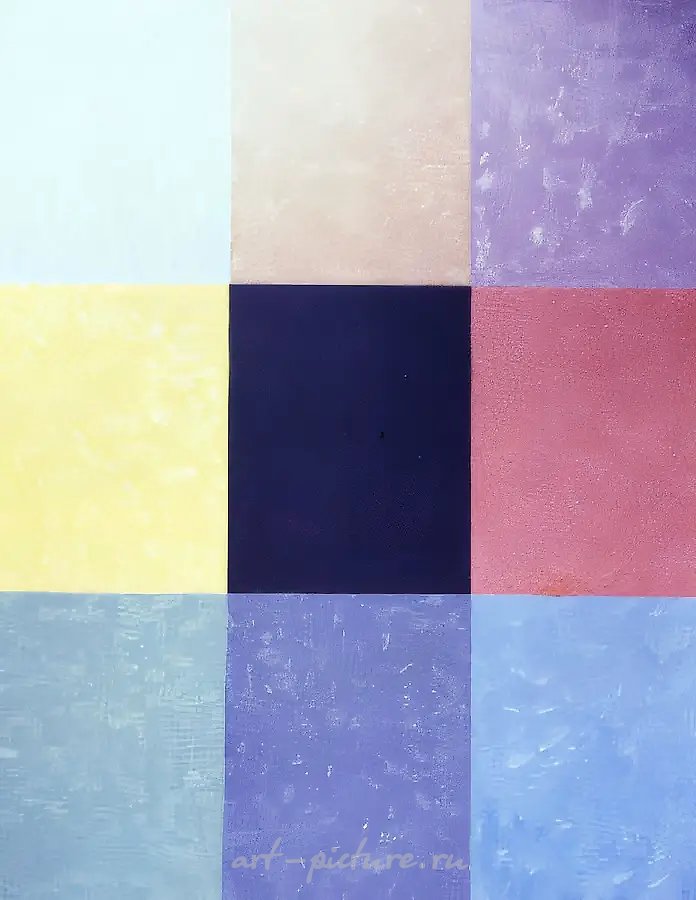
Around the mid-1960s, among a number of independent artists, there was a noticeable increase in interest in the tradition of geometric abstraction with elements of collage and free spatial manipulation. A vivid representative of this new wave of artistic experimentation, simultaneously employing the traditions of geometric and expressive-painterly abstraction, is Sergei Bordachev.
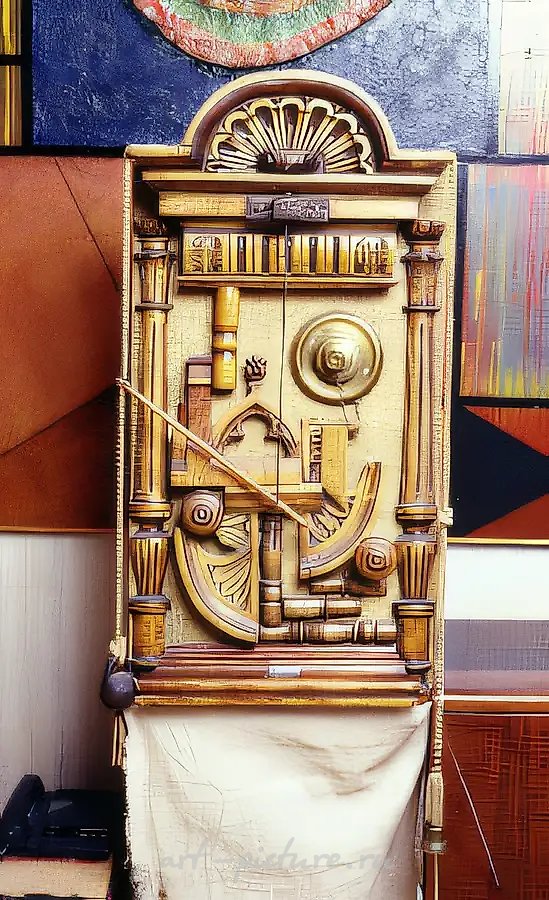
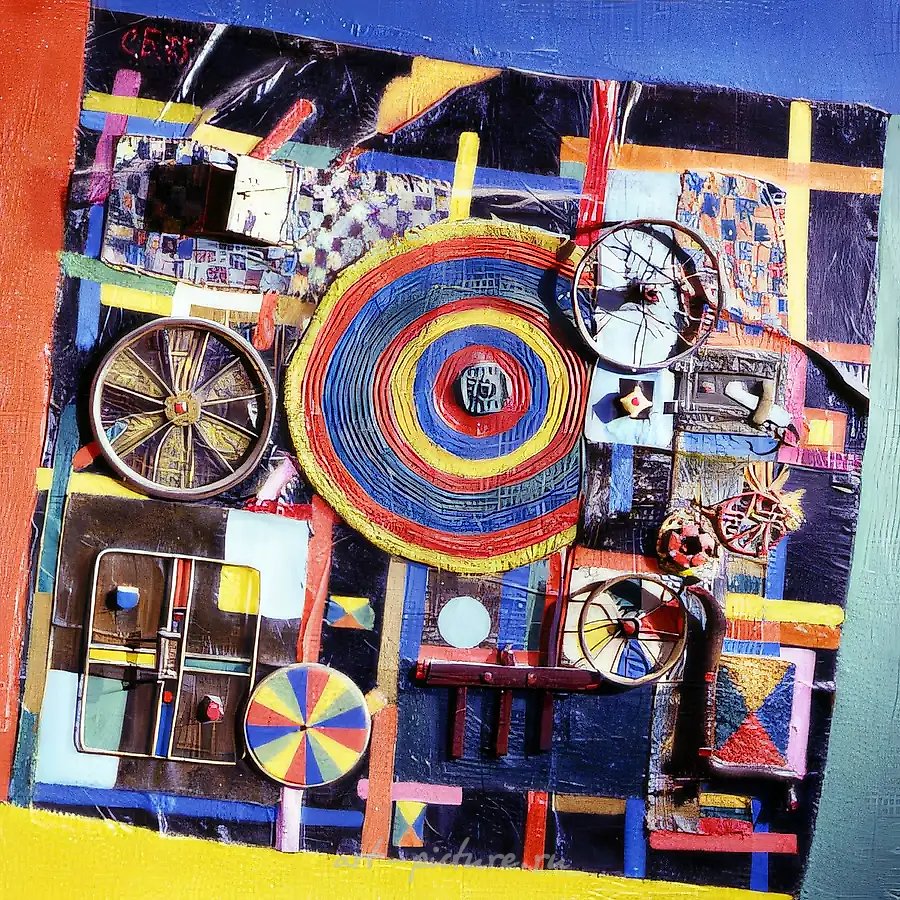
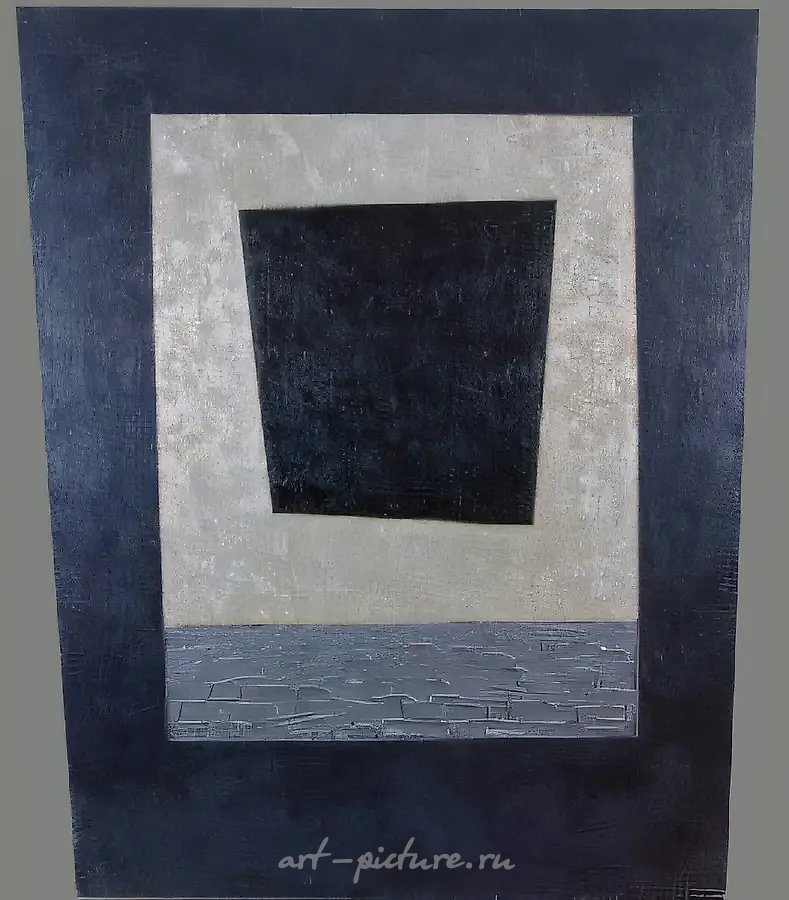
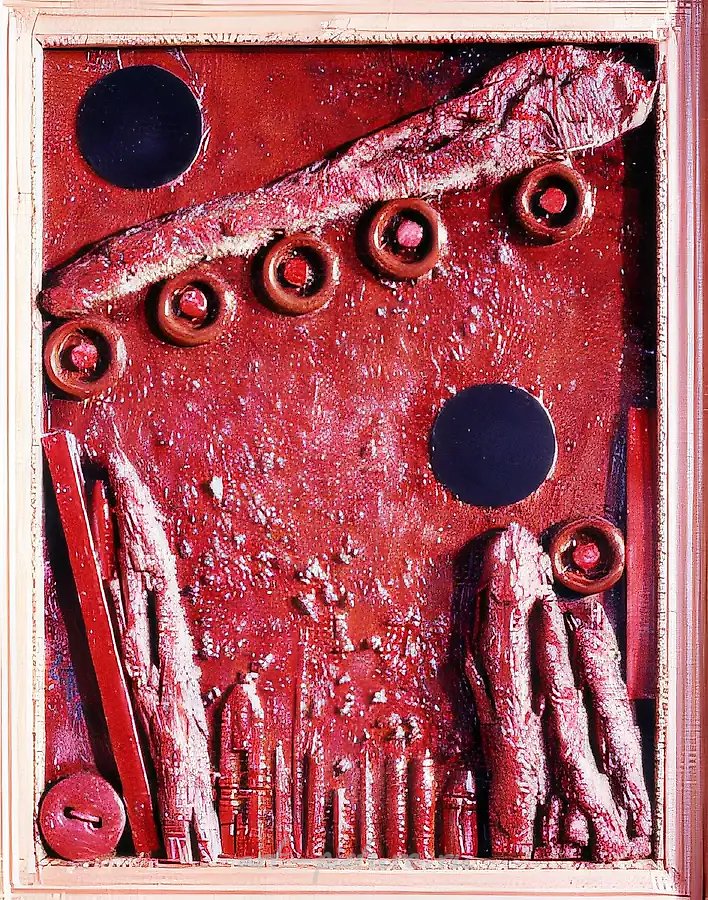
At a superficial glance, S. Bordachev's neo-abstractionism may seem like following the direction-setting principles of the 'geometry' of Russian Suprematism or the 'Style' ('De Stijl') group. The continuity of these schools' traditions is evident mainly at the level of the 'vocabulary' of artistic forms, that is, certain codes of form-making. Even in cases where the tradition of abstract form generation, artificially interrupted in Russia at the turn of the 1920s-1930s, seems to be renewed, Bordachev, despite respect for figures like K. Malevich and V. Tatlin, does not show an author's hypnotization by the idea of the purity of a monostyle. There is no categorical self-uniqueness of method, which was characteristic of the programmatic approaches of the avant-garde leaders of the past. On the contrary, there are departures from the progressive development of Suprematism, the ascetic minimalism of the 'Black Square' as the absolute 'nothing of peace' (K. Malevich). In Bordachev's geometrism, in his way of form-spatial manipulation, the element of play is clearly heightened: assertion neighbors with irony, the posing of a problem – with the quoted use of the multilingualism of the avant-garde heritage and the liberated authorial behavior regarding tradition. In Bordachev's collaged and object compositions, a spirit of mystery and surprise is felt, hiding behind the familiar shells of everyday objects. These are objects that long ago went out of any use, unattractive, rejected by the layman's system of values, neglected bits of everyday life, which the artist includes into a system of completely new interrelations. Objecthood here is something much greater than the material effect of collage technique. Bordachev's approach to objects and material fundamentally differs from the ethics of Constructivism and Functionalism of the 1920s. This selection and play with material fragments is close to K. Schwitters' aestheticization of waste, but would hardly have evoked sympathy from the members of 'UNOVIS' or 'LEF'.
In Bordachev's new abstraction, there is a greater traditionalism of expressive means compared to the radical avant-garde of the West. Most often this is a rectangular painting maintaining a flat surface, mainly using traditional materials. Collages and assemblages form a specific circle of Bordachev's works; in many abstractions, he clearly avoids any subject associations. The rectangular space is conceived as a zone of unrestricted freedom for manipulation with form, texture, and light, where the impossible can occur and seemingly incompatible realities can combine.
The result is a new plastic intrigue and effect of surprise, unexpectedness, which becomes a kind of rule of the game, driving the process of daring reinterpretation of familiar 20th-century art history structures. Such polystylism, however, does not lead to eclecticism thanks to the author's plastic sensitivity. The intrigue is achieved through a certain absurdization of established connections. Guesswork and suggestion, search – probably acquire greater importance than the pictorial perfection of the artistic object. Bordachev's serial principle of work prevails – individual compositions originally complement each other and simultaneously contrast with one another. Seriality gives a chance to perceive the very course of the creative process and reflect on the ways of varying a single formal theme. Bordachev's spatial and object constructs are untamed by the functional programming of design; they are emphatically non-utilitarian.
S. Kuskov, 'New Abstraction in the Context of Sergei Bordachev' (abridged). Exhibition catalog 'Painting, Graphics, Objects', Moscow, 1989.
Works 10