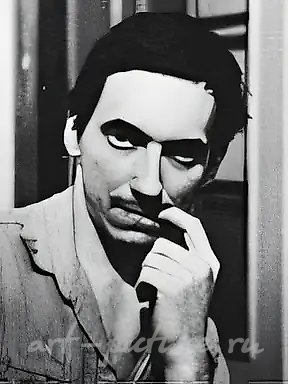
Dmitry Vladimirovich Vrubel
Dmitry Vladimirovich Vrubel (July 14, 1960, Moscow – August 13, 2022, Berlin) was a Russian and German artist, representative of the Sots Art style, best known as the creator of the graffiti “My God, Help Me to Survive This Deadly Love,” which became one of the symbols of reunified Germany. Since 2010, he lived permanently in Berlin.
Mother born in exile in Tyumen; his parents were engineers. Step-father: poet Igor Kalugin. One grandfather died in 1937, another worked in the NKVD system, including the Gulag. He studied in a history school, wanted to become a historian. At 15, painted his first artwork 'Pilate's Judgement.' Wrote poetry and organized exhibitions in youth. Studied drawing under Mikhail Epstein (1976), Andrey Panchenko (1977–78), Vladimir Ovchinnikov (1977–80), and attended Moscow State Pedagogical Institute (1979, Art & Graphics Faculty).
In the 1980s, member of Moscow Underground Club of Avant-gardists. Since 1983, member of the Union of Artists of the USSR. Organized Vrubel Gallery ('Quart-Art') in his apartment (1986–1996), actively staging underground exhibitions. Visited Paris in 1989. From 1990, periodically lived in Berlin; painted “My God, Help Me to Survive This Deadly Love” in 1990 on the Berlin Wall’s east side (first Soviet artists’ exhibition in GDR, organized by Alexander Brodovsky). Since 1993, member of the Union of Artists of Berlin. Since 1995, collaborated with wife Victoria Timofeeva. In 2001, released the calendar “Twelve Moods of the President” dedicated to Vladimir Putin.
Major 2008 project: 'Gospel Project' in Moscow—40 paintings, merging images from current events and Biblical quotes; criticized by the Perm diocese of the Russian Orthodox Church. Since 2010, resided in Berlin, working in an open studio Vrubel+Timofeeva within PANDA-Theater, Kulturbrauerei. In 2009, his Berlin Wall graffiti was removed during restoration, but Vrubel agreed to restore it. He stated his only income from the image came from 2009 reproduction rights, despite its use on souvenirs.
In recent years, developed VR-based exhibitions. In late June 2022, contracted COVID-19; placed in coma. Early August—heart surgery. Died at 62 in Berlin, August 13, 2022.
Personal life: First wife—Svetlana Popova; children: Mikhail (1981, film producer), Alexander, Natalya. Second wife—Victoria Timofeeva (b. 1969).
Works in collections
Berlin National Gallery, Berlin, Germany
P. Novitsky, Warsaw, Poland
W. Wittrok, Düsseldorf, Germany
P. Sprovieri, Rome, Italy
Exhibitions and auctions
SOLO EXHIBITIONS: (since 1996—jointly with V. Timofeeva)
2008 Gospel Project. Special display within Art Moscow fair. Central House of Artists
2007 '2007.' M. Gelman Gallery, ART Center 'Winzavod,' Moscow
2006 'Big People' project for NTV, Moscow
2005 Portrait of the Epoch. Federation Council, Moscow
Portrait of the Epoch. Kaliningrad
Portrait of the Epoch. Exhibition and auction for Beslan children. Moscow International House of Music
2004 From Dawn to Dusk, Moscow
Portrait of the Epoch. Vrubel Apartment Gallery, Moscow
2003–2004 VVPh12, Moscow
2002 Mr. Putin, Moscow
Putin and Black Square, Moscow
2001–2002 Twelve Moods of the President, Moscow
2001 Your Own—Others. Moscow
Mamut Visiting the Artists. Moscow
2000 Happy New Year, Mr. President! Moscow
1999 Orgy of Humanism, Moscow
Happy Birthday, Alla! Moscow
1997–2001 ‘Portrait as a Gift’ project series, Moscow
Red Circle. Velta Gallery, Expo-88 Gallery, Moscow
1996 Artist's Diary. The Gray Exhibition, Moscow
Home Album. Vrubel Gallery, Moscow
1994 “Dmitry Vrubel’s Biblical Project.” M. Gelman Gallery, Moscow
“Dmitrij Vrubel. Russische Gesichter.” B.A.T. Kunst Foyer, Hamburg
1992 ‘Mommy.’ M. Gelman Gallery, Moscow
'Dmitri Vrubel’s New Paintings,' Maya Polsky Gallery, Chicago
1991 'I Suspect You in Everything,' Manezh Gallery, Moscow
'Ich traue Dir alles zu,' Die Wohnmaschine Gallery, Berlin
'I Don't Know What To Do Next,' Vrubel Gallery, Moscow
1988 Moscow Power Engineering Institute House of Culture
1987 'Dmitry Vrubel.' Press House, Tallinn
GROUP EXHIBITIONS: (since 1996—jointly with V. Timofeeva, selected)
1997 Kalashnikov. Maslaev Gallery, Moscow
Third Contemporary Art Biennale, Cetinje, Montenegro
1996 Sotheby’s. Balchug Kempinski Restaurant, Moscow
KvartArt for Export, Vienna, Austria
No Man's Land, Nikolaj Contemporary Art Center, Copenhagen
Kunst im verborgenen. Nonconformists Russia 1957–1995, Wilhelm-Hack Museum, Ludwigshafen am Rhein; Documenta-Halle, Kassel; Lindenau Museum, Altenburg
Jenseits der Mauer. Kleine Humboldt-Galerie der Humboldt-Universität, Berlin
… and many others since 1980
Author about himself
My name is Dima Vrubel, I was born in 1960 in Moscow, my parents were engineers. I started painting at 15. I wrote poetry, published literary newspapers, organized exhibitions. I have three children: Misha, Sasha, and Natasha. My wife left me in 1986, and in that year, I realized my art and my life were one and the same. I began painting about myself, my family, and my relationships with others. I worked at home, alone, on paper.
In 1990, I came to Berlin, where I had to work in public for the first time, in front of hundreds of people. On the 'Berlin Wall,' I created a painting about love for a girl from Leningrad.
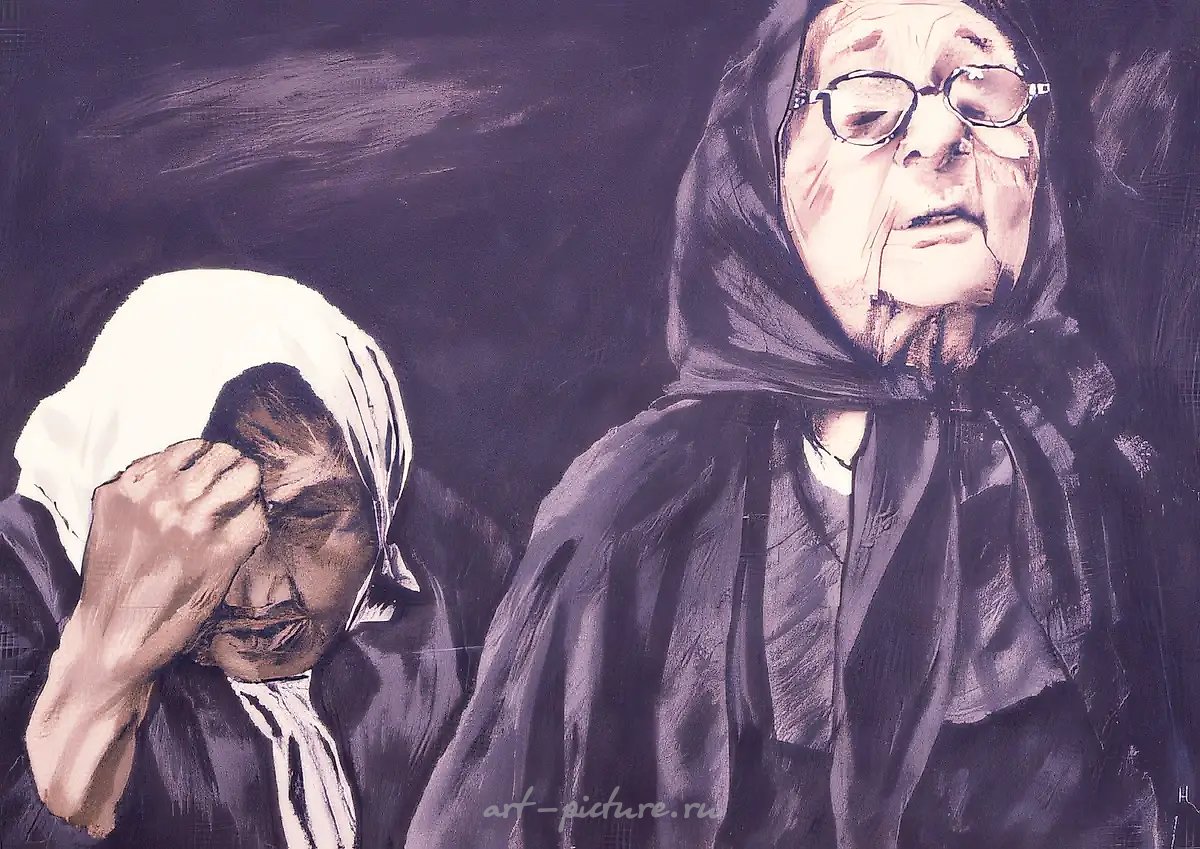
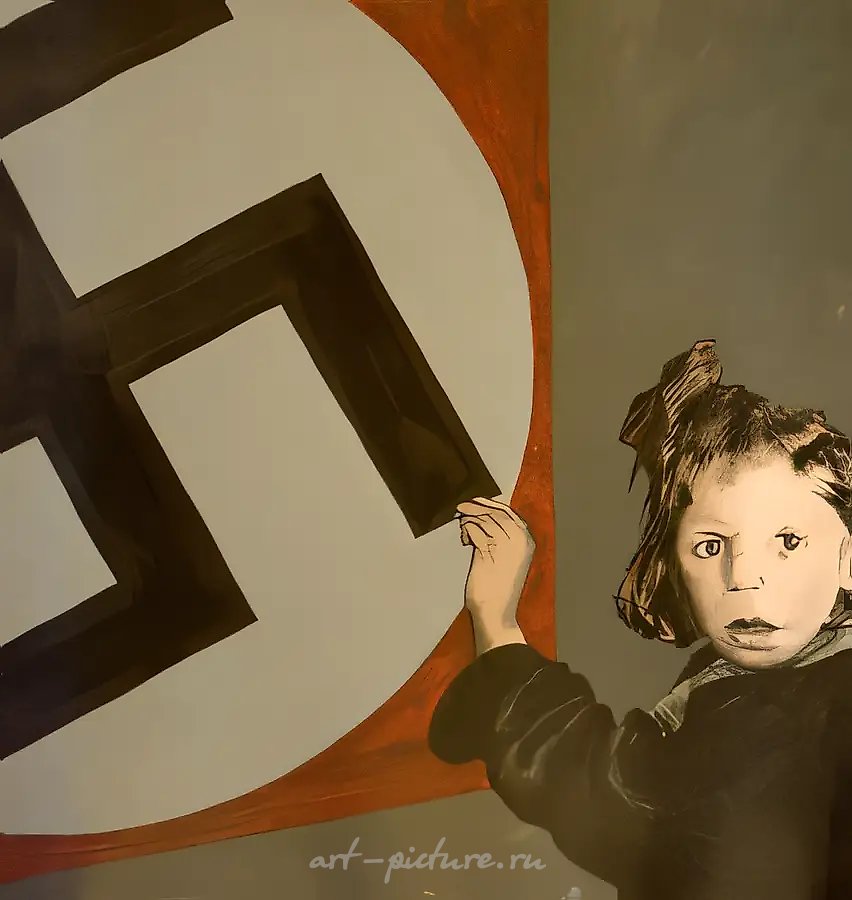
Most of my paintings are devoted to one subject: 'Russian people.' I love them very much, and I am very afraid of them. The same applies to myself: I can be kind and cordial, but I can also be evil and cruel. The people I depict are both executioners and martyrs at the same time. I do not know who among them killed, who was a victim.
When I think about my relationships with my children, my mother, my grandmother, I understand that I brought them much joy, much pain, much happiness, and much hardship. I am part of Russian history, and this history is part of me. Look at my paintings—at the old people, the children—and you will see Dima Vrubel, a 33-year-old Moscow artist looking into their faces.
—You used to paint politicians, but now more often paint 'gopniks.' Where does your interest come from?
'Politicians and gopniks are the people. A gopnik who follows one path remains a gopnik, on another becomes a politician. If you feed, dress, and care for a gopnik—he becomes a politician. They are all from the same yard, the same entrance.'
(from an interview)
Critic
Vrubel and Timofeeva use visual material supplied by international news agencies for illustrating gospel texts. This is quite justified since the word 'gospel' itself means 'good news,' or, more contemporarily, 'positive news.' In this sense, the gospel can be seen as a prototype for modern media. Yet, the greatest news the gospel delivered—and in turn generated modern mass media—is the news about the very nature of news: that only bad news is truly good news. Indeed, as “good news,” the gospel reports nothing good—the death of God, apostles tormented, the world’s state not simply sad but absolutely terrible, nearly apocalyptic. Where does gospel optimism come from? Clearly, it is not in the content but in the fact that there is news at all, the fact something new is happening. We live in a world that once believed in that news and still does. The works of Dmitry Vrubel and Victoria Timofeeva beautifully illustrate this structure of contemporary faith. (Boris Groys)
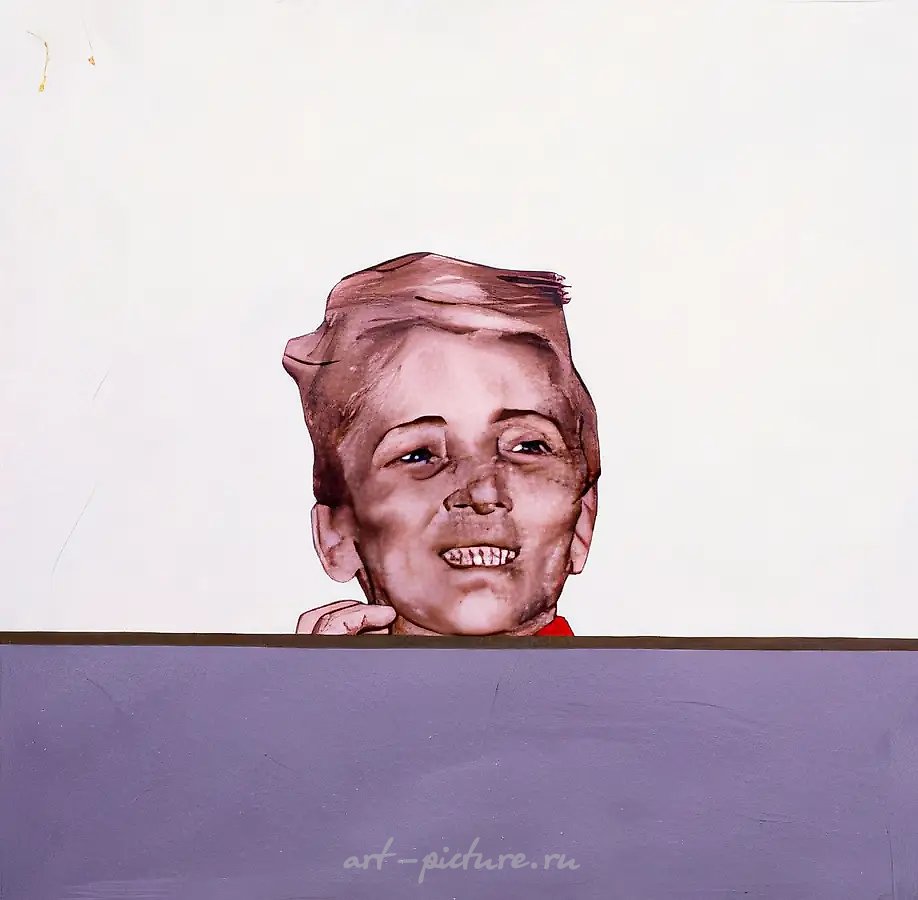
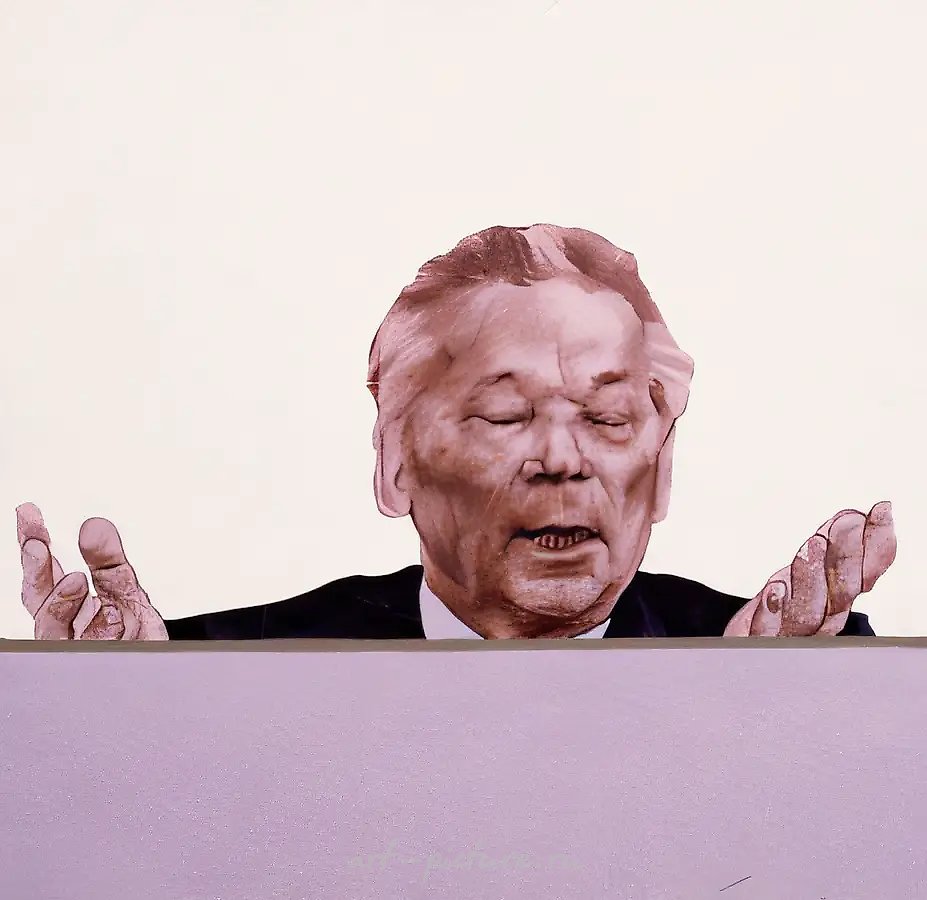
The subjects of Vrubel and Timofeeva’s paintings are well-known to everyone. They constantly appear in news media and look at us from the pages of newspapers and websites. These are people linked to politics, influential figures: Saddam Hussein, Vladimir Putin, Alexander Litvinenko, Mikhail Khodorkovsky, and so on. The ceremonial side of modern politics isn’t visually rich or diverse. Successive high-level meetings and receptions are only distant echoes of former monarchic parades and holidays. Each political event is mediated by several informational contexts, reinterpreted, and presented anew. Ultimate conclusions are impossible: variety of viewpoints denies us the option of dividing the world into ‘bad guys and good guys.’ Unlike court painters of the past, Vrubel and Timofeeva have no patron dictating plot; they are fascinated by the mediatic spectacle regardless of political content. The artwork “2007” may first look like infographics from annual political reviews, but it attempts to create a new, plotless historical painting from world events. The 'heroes' of “2007” are hardly related: a toothless smiling “gopnik” is the size of Putin. It becomes a painterly embodiment of the informational democracy of the era, when one’s image emerges by virtue of mere popularity. (Valentin Dyakonov)
To understand Dmitry Vrubel's character, his leanings toward publicity, exhibitions in embassies, political photographs turned into paintings, one should recall the heroes of Dostoevsky—afflicted with existential questioning and public confession. Although at first his portraits of politicians seem unrelated, his transformation of photos into paintings signals otherwise. Listening to him, he is apparently a monstrous conformist, a bard of conformity, wishing to please all. Vrubel asserts he is ready to do anything at work, hoping to be understood alike by a cleaning lady and a minister, in both China and Germany. His role models are champions of popularity Laktyonov and Ruslanova, and much works out for him: his “Mortal Love's Embrace”—the kiss of Brezhnev and Honecker on the Berlin Wall—became a symbol of an era. Even a short visit to America brought success in both sales and recognition, his work ending up on a poetry collection cover. Vrubel turned his studio into a gallery, promoting it widely, but it balances out since truly wonderful home exhibitions with a very human spirit are held there—the spirit of now-lost apartment art. His desire to be loved, which he calls conformity, is actually something else—and in fact is very human. Luckily for his art, he never lost his complexes, remains wild and slightly frightening, and his personality balances those he portrays, creating a subtle conflict—everything seems painted and clear, but it’s all disturbing and ambiguous: in short, very contemporary Moscow art. (E. Kurlandtseva, 1993)
Works 11