
Nikita Borisovich Gashunin
Born in 1956 in Moscow.
1975-76 studied at Moscow State Pedagogical Institute (Art and Graphics Faculty).
Since 1993, member of the International Federation of Artists (IFA).
Works in collections
State Tretyakov Gallery, Moscow
"M`ARS" Gallery, Moscow
Fine Arts Museum, Petropavlovsk, Kazakhstan
Regional Museum of Fine Arts, Nukus, Kazakhstan
Kelvingrove Art Gallery & Museum, Glasgow, Scotland
Kostaki Gallery, Athens, Greece
ZIG ZAG Venture Group Corporate Collection, New York, USA
In private collections in Russia and other countries.
Exhibitions and auctions
SOLO EXHIBITIONS
1991: "Segodnya" Gallery, Moscow
1992: Duets Program (with T. Novikov), "Dominus", Moscow Architectural Institute, Moscow
1994: "Recent Works", Maya Polsky Gallery, Chicago, USA
GROUP EXHIBITIONS
1977-85: Graphics Section Exhibitions, M. Gruzinskaya 28, Moscow
1981: "To the XVII Congress of the Komsomol" (All-Union Youth Exhibition), Manege, Moscow
1982: "Painting and Graphics by Young Soviet Artists", Cultural Center, Pleven, Bulgaria
1983: "Ung Sovjetisk Kunst", Sonderjyllands Kunstmuseum, Denmark
1988: XVIII Youth Exhibition, Manege, Moscow
All-Union Exhibition of Works by Young Artists, Manege, Moscow
"Young Artists from Socialist Countries", Manege, Moscow
"Graphics by Moscow Artists: To the City and the World", Central House of Artists, Moscow
1989: "Intersectional Exhibition of Painting and Sculpture USSR Union of Artists", House of Artists on Kuznetsky Most, Moscow
"Self-Portrait", House of Artists on Kuznetsky Most, Moscow
Exhibition from the Collection of "MARS" Gallery, Gorky "Let's Go...", House of Culture of Railway Workers, Leningrad "And We Dream...", House of Culture of Railway Workers, Leningrad "Out of Genre", Youth Palace, Moscow "New Classic and Trans-Avant-Garde", Cinema Center, Moscow "4th Exhibition of Contemporary Soviet Art", Kostaki Gallery, Athens, Greece "1st Collection", "2nd Collection", "MARS" Gallery, Moscow
1989-90: "Positions. Decorative-applied art of young artists from the USSR and GDR", Youth Palace, Moscow; Galerie am Fischmarkt, Erfurt, GDR
1990: "ART MYTH 1", Central House of Artists, Moscow
"Scientific-Technical Progress and Art", House of Artists on Kuznetsky Most, Moscow
Biennale of Contemporary Art, Expocentre, Leningrad
XIX Youth Exhibition, House of Artists on Kuznetsky Most, Moscow
"Fractures. Peintures sovietiques contemporaines", Banque Generale du Luxembourg, Luxembourg
"Soviet Contemporary Art 1990", Alpha Cubic Gallery, Tokyo, Japan
"Line. Spot. Colour", M. Gruzinskaya 28, Moscow
"Avant-garde-90", Manege, Moscow
1991: "ART MYTH 2", Manege, Moscow
"Artists of the MARS Circle", "MARS" Gallery, Moscow
"Paintings Return to Russia. Paintings Remain in Russia" (A. Glezer Collection), Central House of Artists, Moscow
1992: "Battle and Idyll", "Velta" Gallery, Moscow
"International Art Festival", Edinburgh, Scotland
"Moscow Apartment", "A3" Gallery, Moscow
"20th Century Russian Art", Nassau County Museum of Art, New York, USA
1993: "ART MYTH 3", Manege, Moscow
"National Traditions and Postmodernism", State Tretyakov Gallery (Krymsky Val), Moscow
"Chicago International Art Exhibition", Chicago, USA
"Conversion", Central House of Artists. M. Gelman Gallery, Moscow
1994: "Outsider Art Fair", New York, USA
"Outsider Art", Maya Polsky Gallery, Chicago, USA
"Chicago International Art Exhibition", The New Pier Show, Chicago, USA
"Kaliningrad - Konigsberg" (III International Biennale of Graphic Art), Kaliningrad Art Gallery, Kaliningrad
"ISEA'94". The 5th International Symposium on Electronic Art, University of Art and Design Helsinki UIAH, Finland
1995: "NETCOM", International Trade Center, Moscow
"A1, A2, A3", Municipal Gallery "A3", Moscow
"Einblicke" (Werkstatt Moskau II), Galerie im Marstall, Akademie der Künste am Hanseatenweg, Künstlerhof Buch, Berlin, Germany
Critic
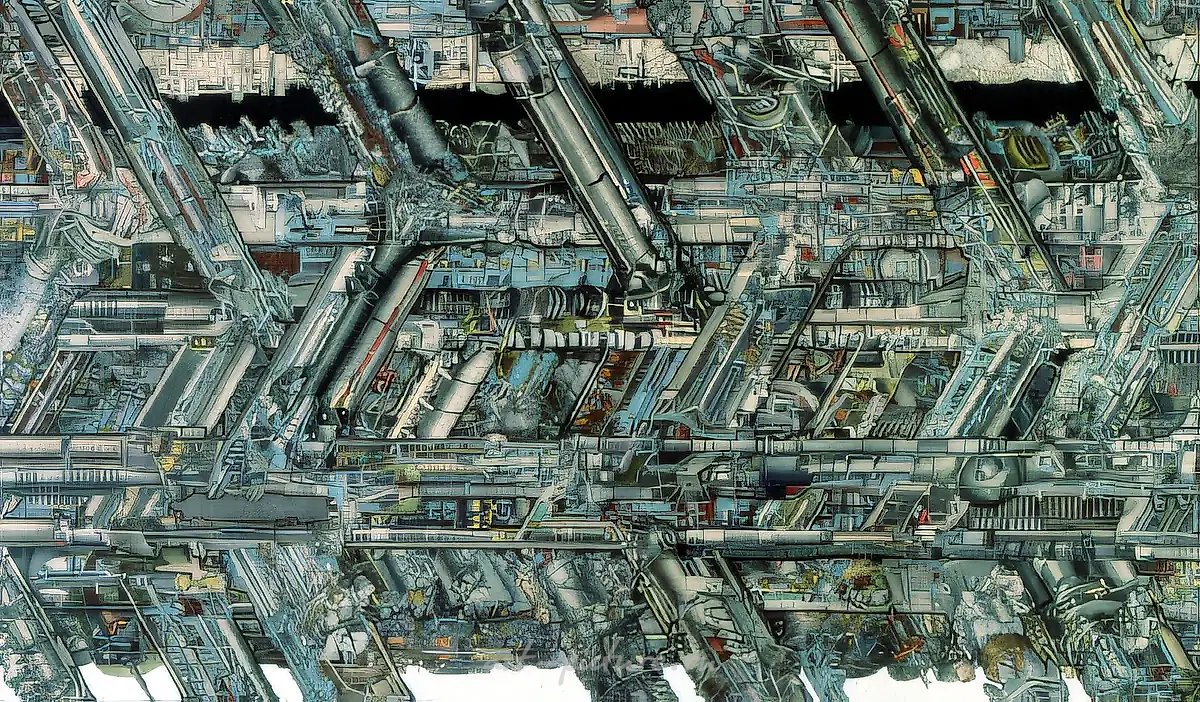
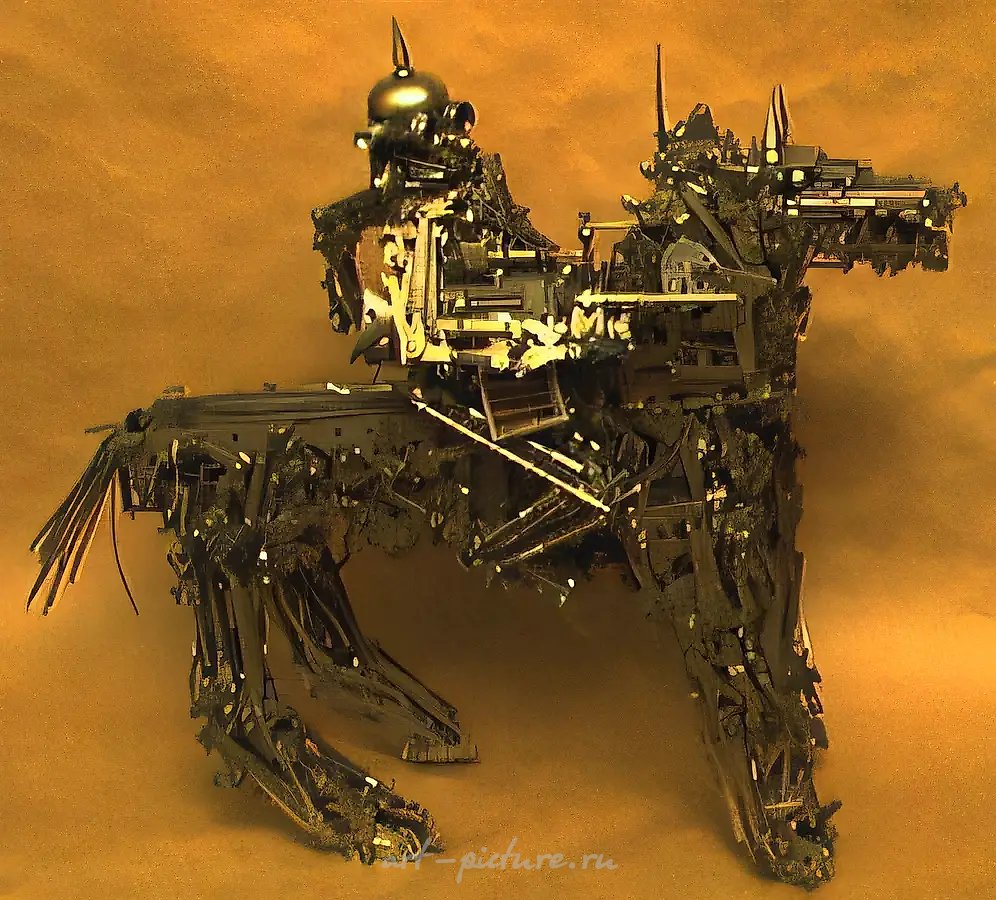
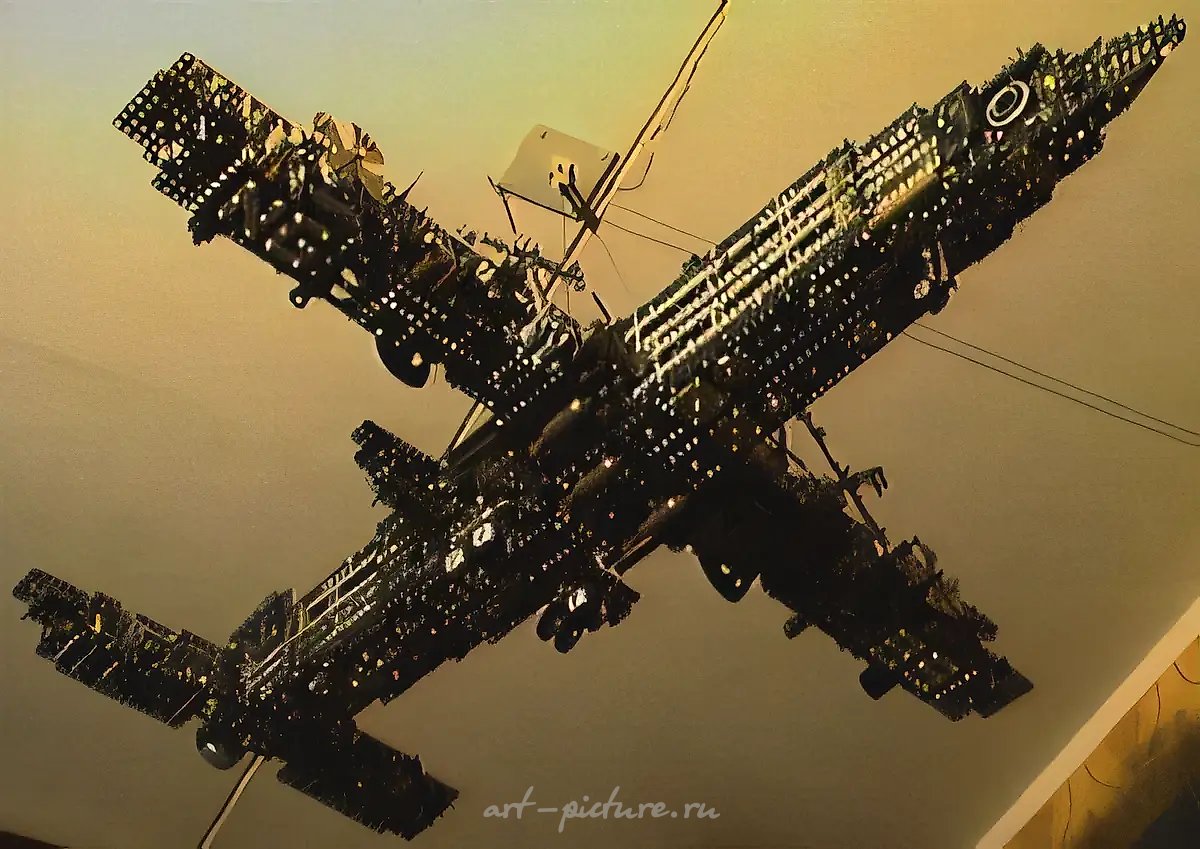
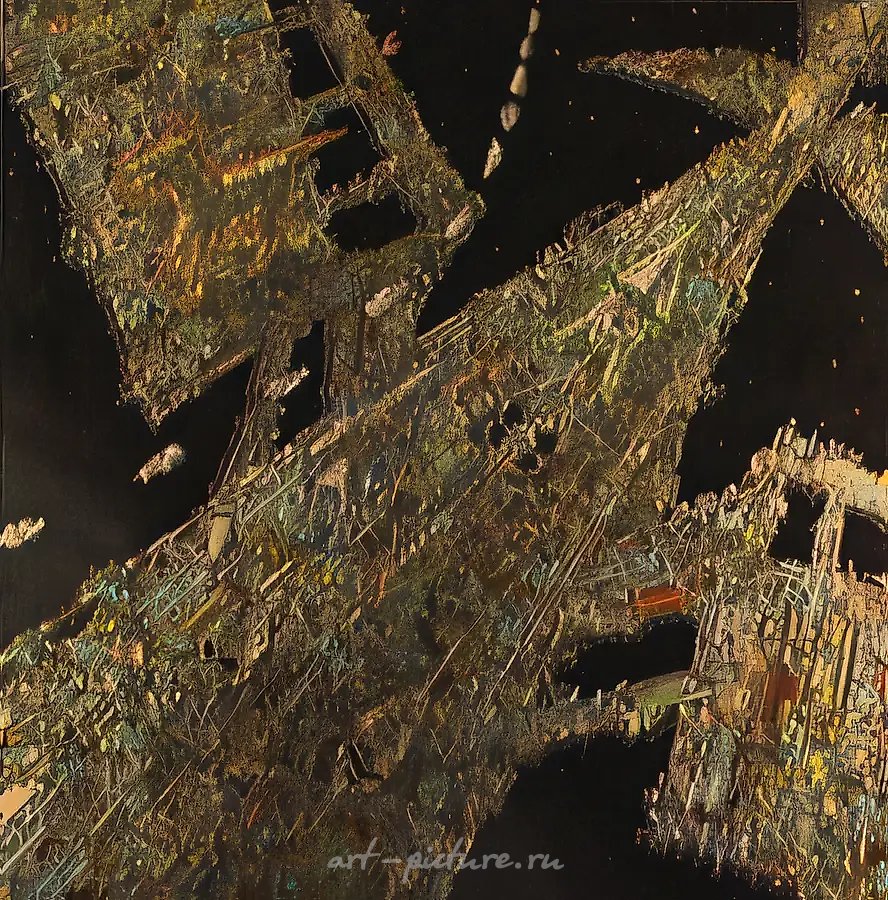
The works of Nikita Gashunin, both thematically and technically, demonstrate a search for possibilities to overcome the boundaries of traditional genres, exploring what lies 'beyond painting' ("Jenseits der Malerei," Max Ernst) and, we might add, beyond sculpture, graphics, and applied arts.
Constructor parts, cogwheels, bulbs, metal, wood, and glass are assembled into compositions that miraculously acquire full autonomy, become animated and begin to live their own independent life. There is a reminiscent irony towards the omnipotent machinery displayed by Dadaists (in the late 1910s–early 1920s), yet here the rebellious tendency to deconstruct is absent. On the contrary — these are careful, inspired assemblies out of what are essentially abstract (despite their concreteness) elements, which, individually, might seem meaningless, forming new mechanical creatures and beings. The object, thus, is the result of perfect combinatorics. The original context of the source material is transformed, turned upside down. Images emerge whose composition and origin seem completely explanatory, yet remain beyond the grasp of the viewer’s understanding. Spatial relationships and connections between elements are tested (when a single part is absorbed into the whole, while retaining its texture). A paradoxical transformation occurs — an appealing and remarkably beautiful, precious world arises where object-sculptures, mobiles, exist, immersed in their own metaphysical isolation.
N. Kurieva
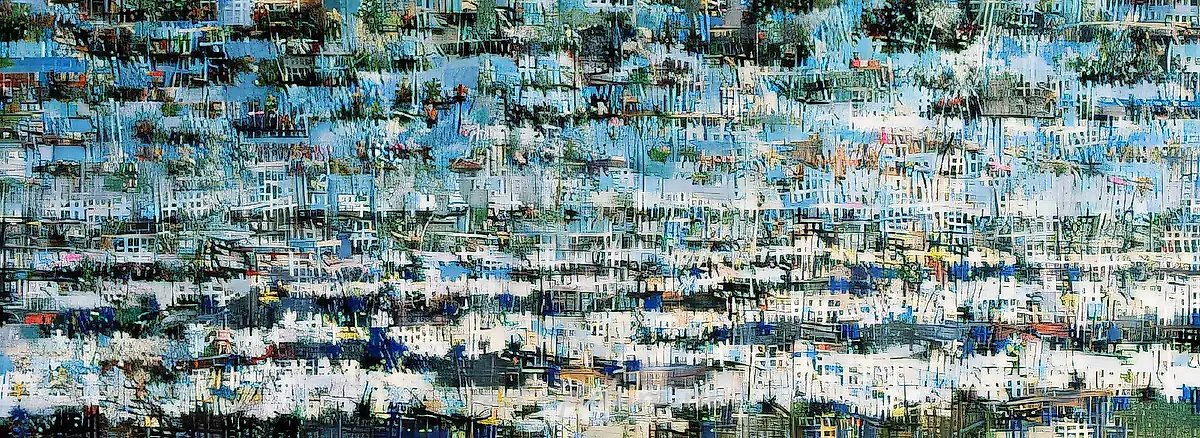
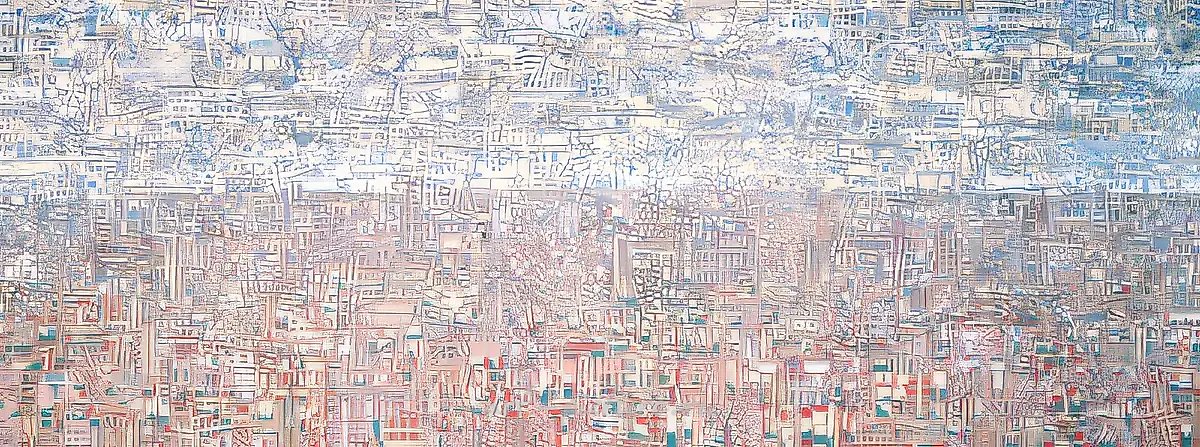
Nikita Gashunin engages in a kind of combinatorics — compositional-rhythmic structuring of a certain reality, a painstaking creation of the 'large' from the infinitely small. The scaly, chain-mail-like texture of his pencil drawings contains the flavor of a 'find the hidden' game — an invitation to discover figurative motifs within the amalgamated linear 'ornamentation'; even more prominent is this play in the grand collage panorama "View from My Window" where an endlessly fragmented ornament, constructed from fragments of technical diagrams and drawings, incorporates images of Moscow's architectural monuments, or in compositions with puzzle elements, which seem to attempt to apply their structural law to any image. But above all, he works with metal, creating astonishingly intricate toys, objects, or assemblages from it.
Gashunin feels the consistent penetration of technology into the depths of the world and the accompanying tendencies toward miniaturization, atomic division, but, while fascinated by the process, he simultaneously tries to constructively resist it. His artistic space is built on the contradictory feeling of any 'complexly articulated' form — it attracts with the rationality of its design and yet instills an existential terror (especially sharp when it comes to organic objects, particularly insects); the naturalist, entomological impulse to understand the logic of things (which is also childlike — to see what's inside, or, let's say, museological — to hide the studied exhibit behind glass or seal electronic clock debris in epoxy resin) clashes with the totality of the general world-structuring intent. The results of such multidirectional efforts are distinguished by a special kind of vital dynamism.
G. Elshevskaya
Bibliography
Ogonyok magazine, No. 35, August 1990;
Catalogue "The Second Collection", "M`ARS" Gallery, Moscow, 1990;
APN Bulletin "Around the Soviet Union", No. 15, January 1991;
Exhibition catalogue "Soviet Contemporary Art. Alpha Cubic Gallery", Tokyo, 1990.
Works 13