

Gorlova Lyudmila Alexandrovna
Born in 1968.
1984-88 Studied at the Moscow Art School in Memory of 1905 (Faculty of Pedagogy)
Lives and works in Moscow.
Exhibitions and auctions
SOLO EXHIBITIONS
1994
"Happy Childhood". XL Gallery. Maternity Hospital No. 67, Moscow
1995
"My Camp". XL Gallery, Moscow
1997
"How I Love". XL Gallery, Moscow
1998
"Quiet Don - 2". XL Gallery, Moscow
2001
"Happy End". XL Gallery, Moscow
2002
"Here, Love Is Not Joked With, or How to Get Out of Crisis", XL Gallery, Moscow
2005
"Dracula of Lyudmila Gorlova", XL Gallery, Moscow
2006
"The Hidden Threat", XL Gallery, Moscow
GROUP EXHIBITIONS
1988
XVIII Youth Exhibition. Manege, Moscow
1988
All-Union Youth Exhibition. Manege, Moscow
1989
XIX Youth Exhibition. Manege, Moscow
1990
"Youth of Russia". Central House of Artists, Moscow
"Out of Genre". Youth Palace, Moscow
1994
"Bold, Insensitive...". Regina Gallery, Moscow
"Artists Against AIDS". Exhibition-auction. Mayakovsky Club, Moscow
1995
"Ice Cream - Art". (exhibition-action). Moscow Ice Cream Factory "Ice-Fili", Moscow
"Russian Beauty". CCA, Moscow
"Turnkey Party". M. Gelman Gallery. Polytechnic Museum, Moscow
"Kyiv Art Meeting". XL Gallery. Ukrainian House Center, Kyiv, Ukraine
1996
"Anti-Fascism – Anti-Anti-Fascism". CCA, Moscow
"Non-Feminist Feminists". CCA, Moscow
"4th Biennale". St. Petersburg
1997
"History in Faces" (from the collection of the Contemporary Art Museum of Tsaritsyno). Yekaterinburg, Samara, Perm, Novosibirsk (catalogue)
International Art Fair ART-MOSCOW. Central House of Artists, Moscow
"It's a Better World". Secession Museum, Vienna, Austria; Art Forum Gallery, Merano, Italy (catalogue)
"To Uryupinsk with Love". Uryupinsk Regional Museum
"Own Cinema" (with P. Pavlov). Aidan Gallery, Moscow
"Space of Exultation" (with A. Alchuk). Shwule, Germany
Third Biennale of Contemporary Art. Cetinje, Montenegro
1998
"Position-Opposition". Riga, Latvia
1999
"After the Wall". Moderna Museet. Stockholm
Guarrene Arte`99. Guarrene, Italy (first prize)
2000
"After the Wall". Hamburger Bahnhof, Berlin
"Art Against Geography". Gelman Gallery, Marble Palace, Russian Museum, St. Petersburg
2001
Russian Madness. Bienal de Valencia. Valencia
Dream Team. XL Gallery, Moscow
The City. Gallery Wang, Oslo
2002
Attitudes. Contemporary Art Museum Kumamoto, Japan
Rosas XX. Palais des Beaux-Arts. Brussels
Yesterday Was Dramatic... but Today is Ok!. Marella Arte Contemporanea, Milan
Manifesta 4. Frankfurt am Main
Femme Art. State Tretyakov Gallery, Moscow
Davai-davai! Postfurampt, Berlin; MAK, Vienna
2003
Horizons of Reality. MUHKA museum, Antwerp
Liebe im Ausland. Metropolis Kino, Hamburg
XL Style. XL Gallery, Moscow
2004
I Don’t Know What to do with Myself. Marella Arte Contemporanea. Milan
Gwangju Biennale. Korea
Non Toccare La Donna Bianca. Fondazione Sandretto Re Rebaudengo. Turin, Italy
The Post Communist Condition. KunstWerke, Berlin
Oopsa! Contemporary Russian art. National Museum of Contemporary Art, Oslo
Russian Pop Art. State Tretyakov Gallery, Moscow
2005
No. 8.5. WAM Gallery. Moscow
2006
Let There Be Video. Central House of Artists. Moscow
The Origin Spacies. Museum of Modern Art. Toyota. Hiroshima City of Contemporary Art. Japan
2007
Double\Remake. National Center for Contemporary Arts. Moscow
History of Russian Video Art – Volume 1. Moscow Museum of Modern Art. Moscow
2008
I love you Vienna. Austria
2009
Get Connected. Künstlerhaus. Vienna
History of Russian Video Art. Volume 2, Moscow
And What About Love? Norilsk
Russia is still dangerous, Russia is still lovable. VIS. Vienna. Austria.
ACTIONS AND PERFORMANCES
1994 "Alley of Freedom". Embankment. Central House of Artists, Moscow
"Measuring the Temperature of the (Cultural) Body of Society". Swimming Pool "Moskva", Moscow
"Freedom of Choice". Patriarch's Ponds, Moscow
1995 "Suitcases". Kazan Railway Station, Moscow
"Artists Against Sex". Night Club "Manhattan Express", Moscow
Critic
The best, no matter what, comics maker
Here's the difference between plot and story. A plot, unlike a mere storyline, is truly present. A semifinished mix of collisions and situations, characters and interests – a hero-lover-superman, armed cyber-b...ds, some diamond, some shootout, someone's blood, someone's passion: it's easy, even not hard to imagine this is all part of a single story. About passion and blood; with shootings and diamonds; with a hidden, but always clear, threat: every panel, supposedly from a comic, is both plot and climax simultaneously; every frame cuts off an event that has just barely begun. Instead of speech bubbles, there are images of desire or action, immediately blunt: as soon as a character appears (and disappears), everything becomes crystal clear about them. What they want and all that. In each, you can see – let's not shy away from the word – a super-objective; besides that, in fact, nothing else is really visible; the relationships between characters are essentially clear – "this bastard and that bitch" – without being turned into "so-and-so did that to that one, so she later hanged herself or drowned." Clearly, someone did something to someone for some reason, they couldn't have done otherwise. Yet, it's still quite readable. Something between instructions for an adult construction kit and Pavic (if only Pavic's works featured cyberb...ds and other intel-inside). It's not Gorlova's first experience visually transforming literature. Last time, she brilliantly adapted the format of the female romance novel to comics: the dull boredom of soul searchings to and fro took on a certain humor through comic simplification and grotesque – an entire genre was, as Carlson would have put it, "brought low." However, the literature Gorlova now offers doesn't quite fit any particular genre – only generally: perhaps detective or something like that; eternal desires and intentions, which it's unclear why bother with in such simplicity. Besides the predictable message – from the first image, the first bubble – but what is that message?
Konstantin Agunovich
Afisha.ru, gif.ru 2006
The action in the maternity hospital could well fit into the recent tradition of provocative forays by artists into places least intended for art: prisons, baths, subways, if only it had even a drop of irony or playfulness, which had been primary components of previous experiments of this type.
Assessing the painterly quality of the exhibited canvases seems completely beside the point. For Lyudmila Gorlova, the theme is obviously more important than aesthetics. Her painting is rather visual agitation, a focus on realism directly addressing a young audience. And the critical pathos of the subjects recalls other, old, childhood complexes of Russian art.
M. Orlova "Nowhere to Hide from Contemporary Art" Kommersant DAILY, 1994, November 4
The aggression of contemporary art in the sanctum sanctorum can indeed shock, but the pathos of immediacy and pragmatism in statement is even less acceptable for conservative discourses. The aim of the action is social therapy. In the author's commentary to the project "Happy Childhood", it is stated quite explicitly, in manifesto-like language: about the trauma of birth; about the shock of first social encounter stuck in the subconscious; about delayed socialization; about the myth of happy childhood slogans; about the conservative repressive ideology of power as submission, etc. Even more indicative is the author's definition: "The goal of the project is to urge society to review its values and its attitude towards the individual." Life and poetry are one. The symbolic psychoanalytical session involves overcoming infantile frustration through viewing pictorial depictions of the forbidden.
F. Romer "Birth of a Citizen". Nezavisimaya Gazeta, 1994, November 11
Any "incorrect" subjects – such as "Stealing apples from the garden" and "Peeing on dad" – were meant to build up children's subconscious immunity to the inevitable future parental repressions.
This is one of the most successful art actions of recent times, if only because just taking part in it required some effort from viewers.
The cellophane on the paintings, as well as the gauze bandages, shielded us from a deeply and infinitely physiological space. There seems to be no place more actively negating everything individual about a person. Maybe only war. Thanks to Lyudmila Gorlova's action, we suddenly found ourselves facing emptiness – we have no "cultural" view of motherhood and childhood.
What Lyudmila Gorlova came up with is a dense adhesion of art to an unnamed (or rather, still unnamed) "reality".
L. Lunina "A Childhood That Won't Happen" Segodnya, 1994, November 5
In Gorlova's photos (which are remarkable on their own) – a creature of young age, female, with a strange appearance, a girl-monster like a character from Truman Capote stories or the film "The Exorcist," belonging to some exotic subculture of the Moscow industrial outskirts. A creature both beautiful and terrifying, if described in Brenner's absolutist rhetoric.
Gorlova's exhibition, as suggested by critic Milena Orlova, is titled "My Camp," referencing Susan Sontag's famous text "Notes on Camp" (1964). Camp, as Sontag writes, puts any concept in quotation marks; with Gorlova, we rather deal with a radical and rather harsh removal of those quotations. The photographs are very powerful and partially resemble the famous works of American Nan Goldin.
Like Goldin, Gorlova goes beyond style and taste and even battles with them a bit.
E. Degot "The Weather in the Art World: Clarity and a Western Wind". Kommersant-DAILY, 1995, September 15
With the exhibition "My Camp," XL Gallery opened its season, giving preference to projects at the intersection of art and politics. Usually, these are done by artists fascinated by Western left-liberal and neo-Marxist theorists' ideas. ...
It turned out the generation that grew up after socialism ignores any ideology, including "leftist" ones, as their whole "shock value" is merely another turn of fashion, eagerly exploited by various magazines for the "new Russians." Even drug addiction for them isn't social protest but "fashion," since the use of expensive drugs signifies belonging to the elite...
A. Badenkov "Gorlova Opens the Season at 'XL'"
Megapolis-Express, 1995, September 27
... Lyuda focuses on poster aesthetics... with its unambiguous and clear semantics, a specified audience, and the hypothetical functionalism of communication. Gorlova, a tireless fighter against conservative ideologies, has a trait that is criminally conservative from the postmodernist entropy discourse standpoint – sincere pathos. For her, left rhetoric serves... as a guide to action and a method of self-identification. Fabric-poster-strips, saluting... at the station, in nightclubs and other socially marked places, look like a virus of '68, brought to Moscow by a little female David.
F. Romer "Left March". Exhibition catalog "My Camp"
XL Gallery, Moscow, 1995
Works 15

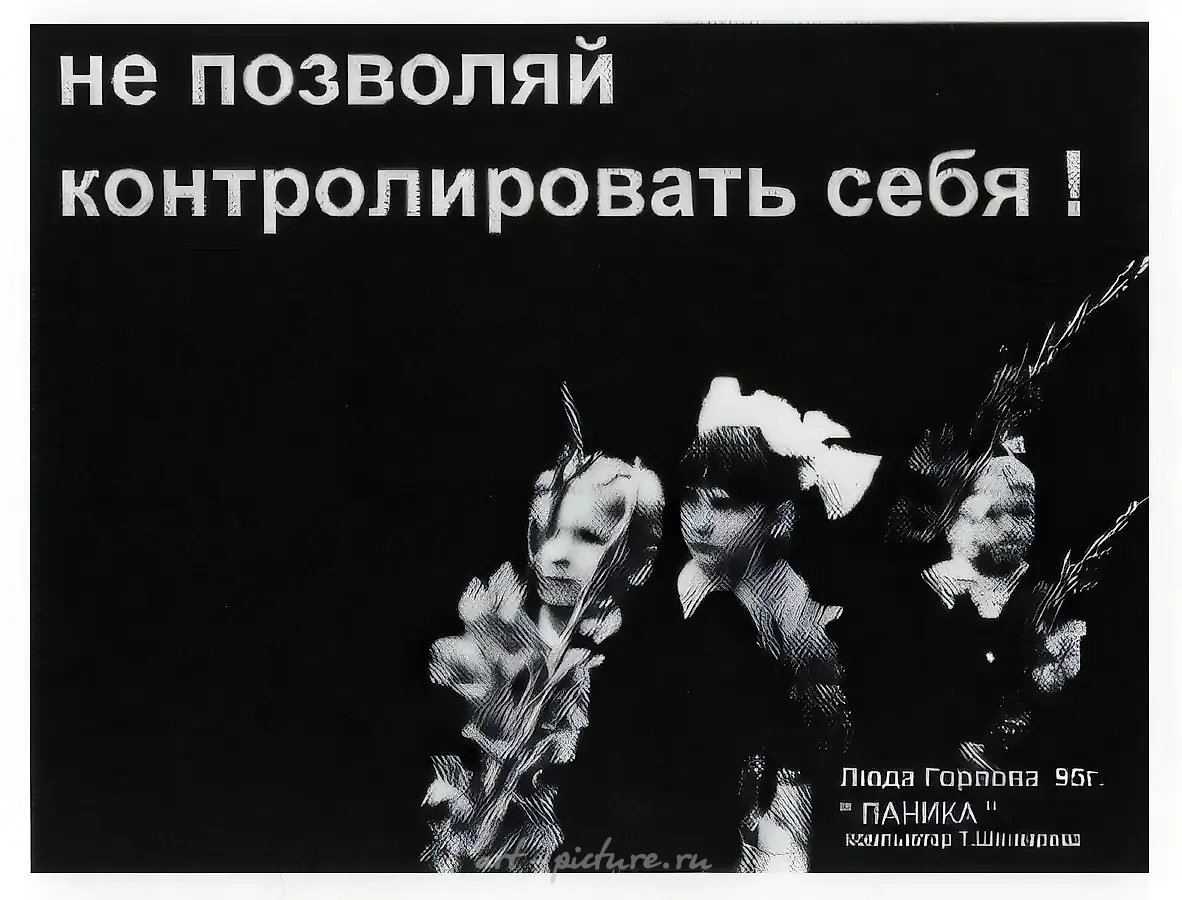


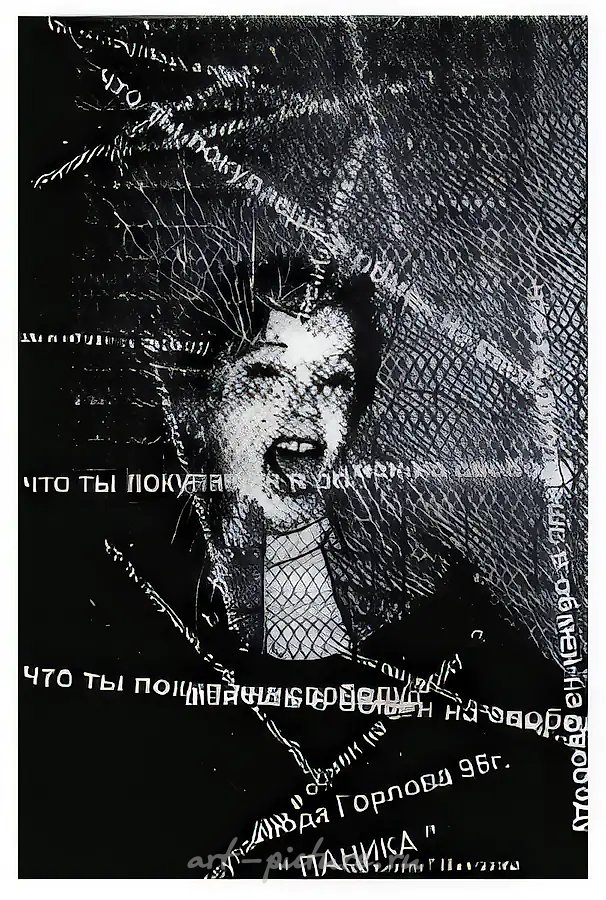
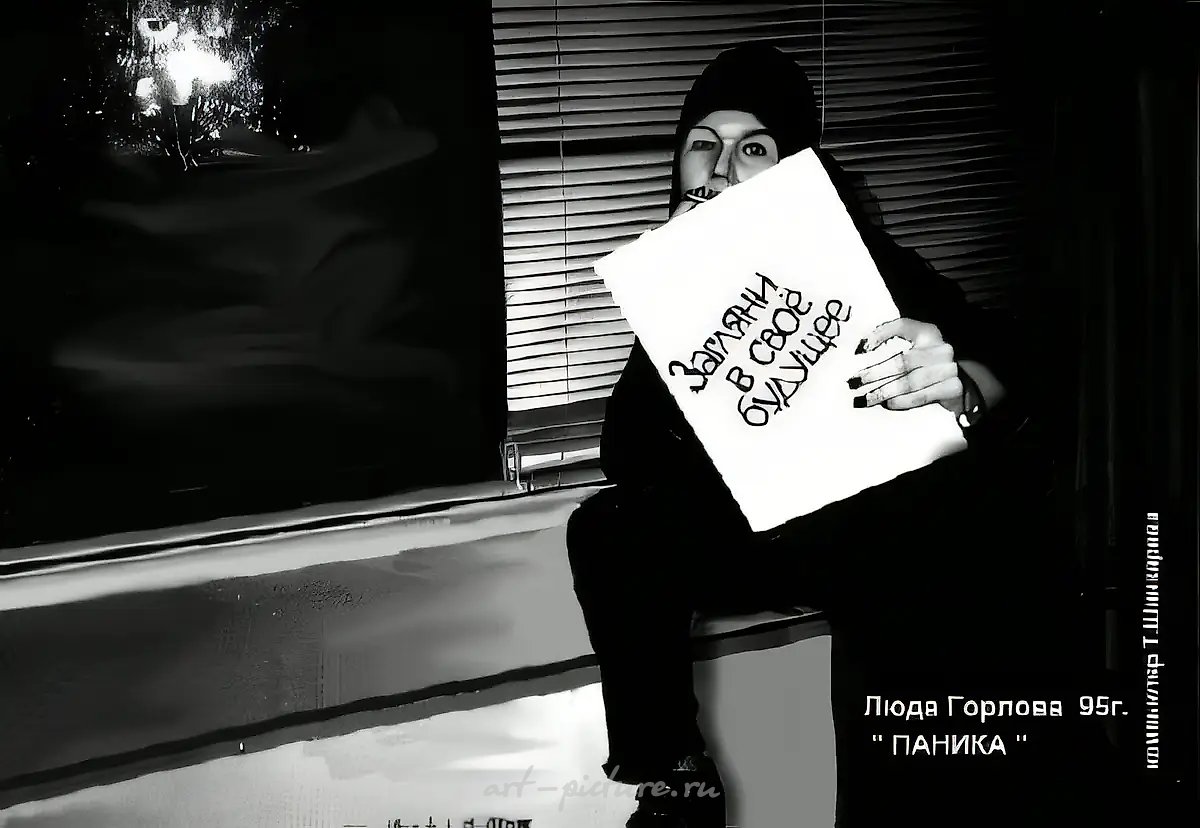

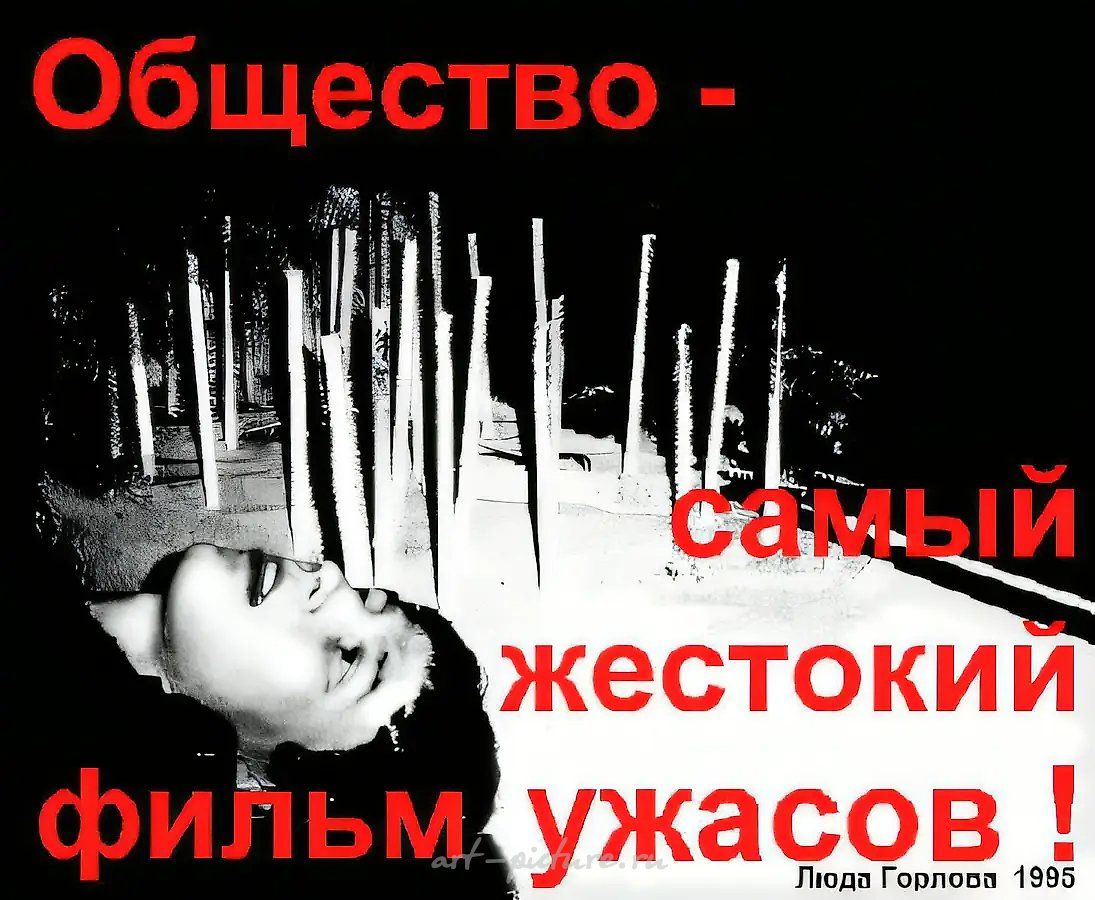

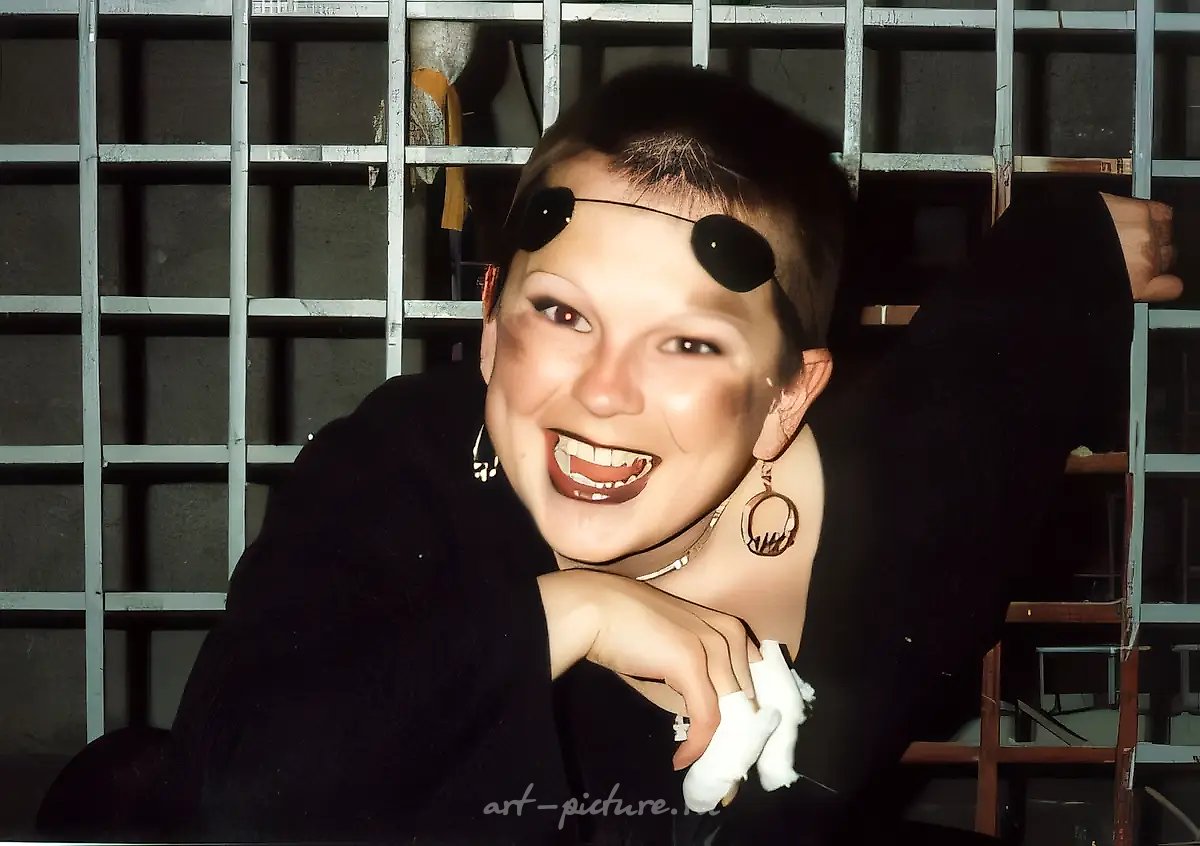
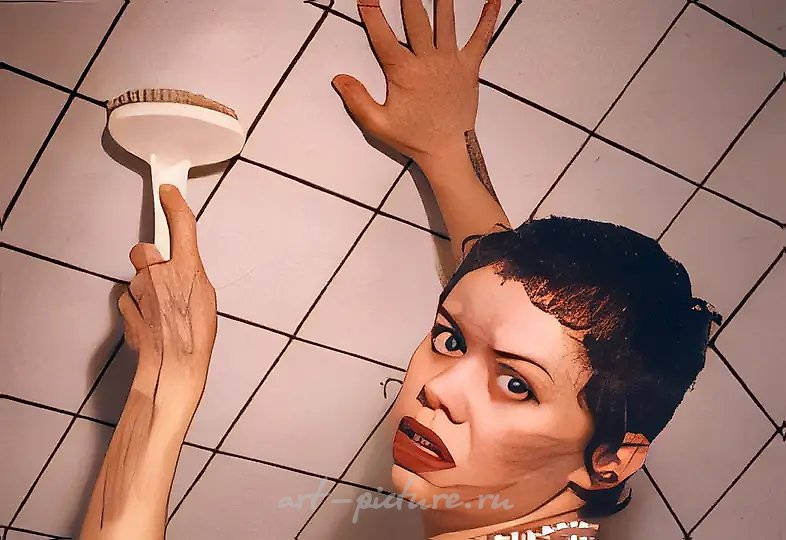
(photostory), 1997, ,
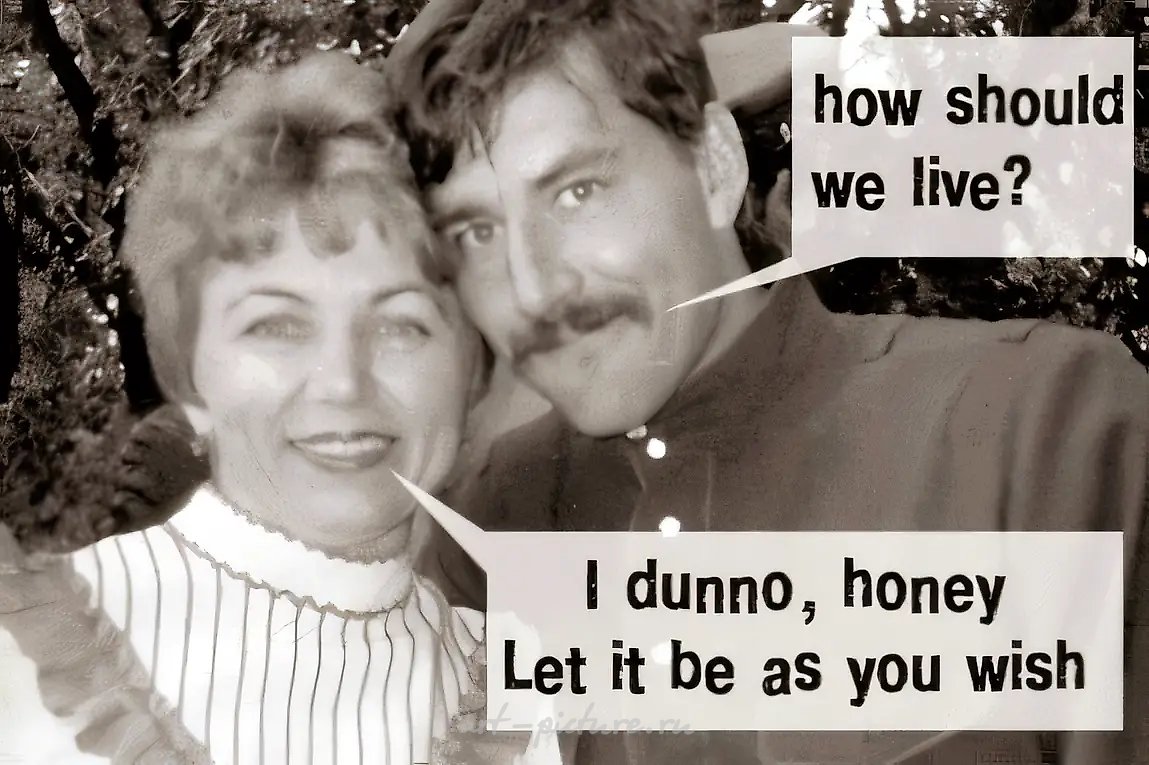

, 2001, Video, app. 18min (video still),

(a love story photonovel), 2002, mixed media,
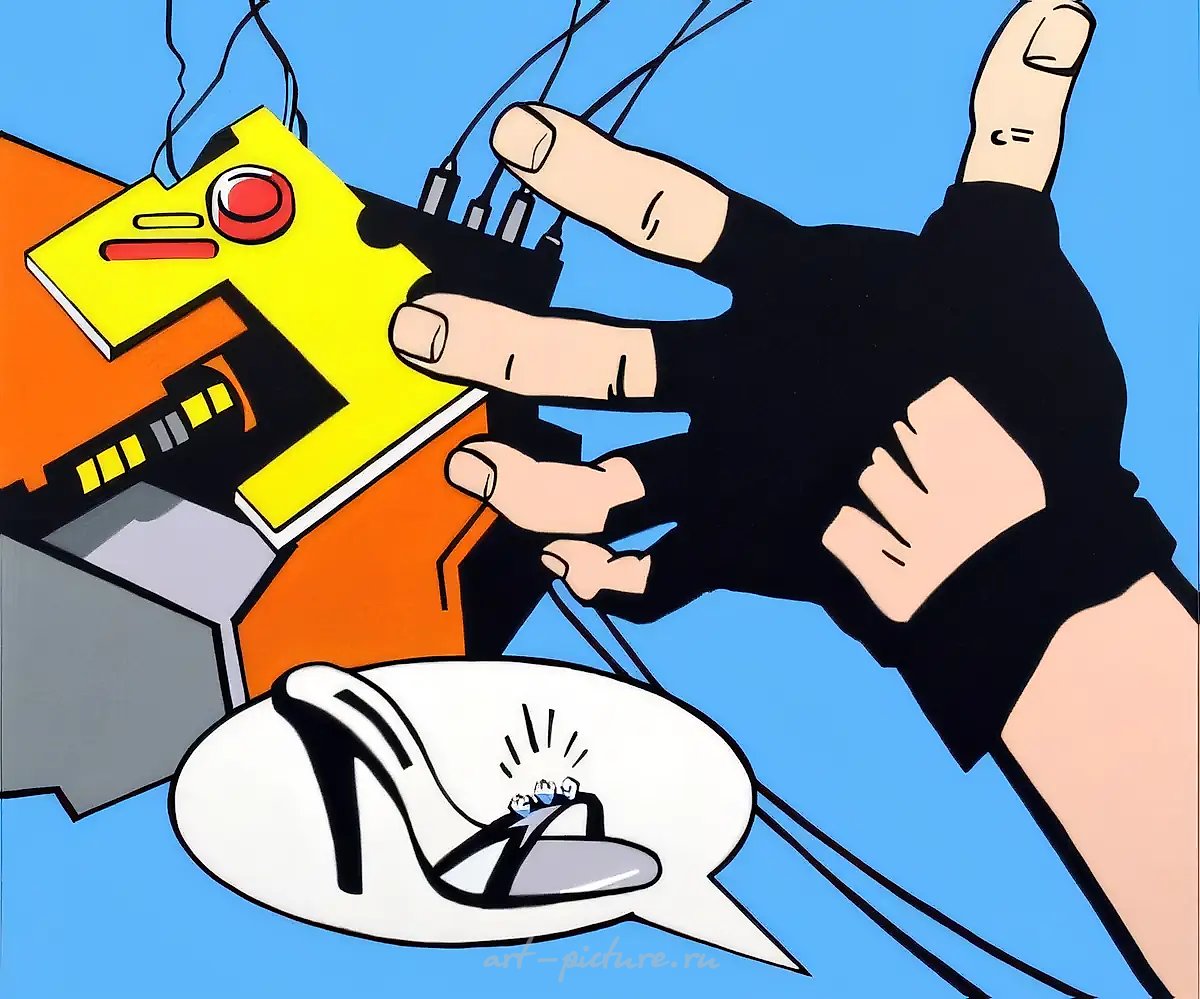
, 2006, comix painting,