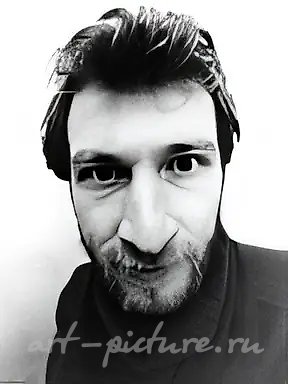
Dmitry Valeryevich Demsky
In 1989, graduated from the Moscow Art Theatre School (production faculty). Since 1989, member of the City Committee of Graphic Artists. Since 1989, member of the International Federation of Artists (IFA).
Works in collections
Collection of contemporary art of the Tsaritsyno State Museum-Reserve, Moscow; Bank "Sibirsky", Moscow; Private collections in Switzerland, the Netherlands, Germany, Spain.
Exhibitions and auctions
SOLO EXHIBITIONS:
1993 "Without title". 4000 volt ex. sp., Kassel, Germany
1994 "Newspapers". "Wilhelmina", Circ atelier, Amsterdam, Netherlands
GROUP EXHIBITIONS:
1989 "Young Soviet Artists", Beijing, China; Furmanny Zaulek. Dawne Zaklady Norblina, Warsaw, Poland
1990 "Logic of Paradox", Youth Palace, Moscow; "Furmanyj in Factory: Soviet Avantgarde Art", Kulturfabrik Salzmann, Kassel, Germany; "ART MYTH 1", Central House of Artists, Moscow
1991 "Peso y Locura", Fernando Duran Gallery, Madrid, Spain; "Private Lessons", Exhibition Hall at Solyanka, Moscow; "In Vacio / In Emptiness", Auditorio de Galicia, Santiago de Compostela, Spain; "Novecento", L Gallery, Central House of Artists, Moscow; "V izbach", House of Culture, Bratislava, Slovakia
1992 "Moscow Romanticism", Central House of Artists, Moscow; "Triade", Grassi Museum, Leipzig, Germany
1993 "Shop", "Konstantin" Shop, Olympic Complex, Moscow; "Three Generations", Moscow Fine Arts Gallery, Moscow
1995 "Kunst im verborgenen. Nonkonformisten Russland 1957-1995" (from the Contemporary Art Collection of Tsaritsyno Museum-Reserve). Wilhelm-Hack Museum, Ludwigshafen am Rhein; Documenta-Halle, Kassel; Staatliches Lindenau Museum, Altenburg, Germany; "Configura 2", Dialogue of Cultures, Erfurt, Germany
1996 "Proportional Inequalities", Academic Society, Eindhoven, the Netherlands; "Atelier", University Exhibition Hall, Amsterdam, the Netherlands
Critic
Demsky graduated in 1989 from the Moscow Art Theatre School, which trains artists for the theatre. He began working as a free artist in a studio located in an abandoned apartment in Furmanniy Lane, which during the Perestroika years became a hotbed of radical art. The first fact of his biography suggests that his professional training fostered a certain approach to reality, in particular a mistrust of the value of the material used, treating it as a kind of theatrical prop, whose empty nature implies total and lawful submission to the author's will. The second, that being in an environment permeated with the ideology of conceptualism, not only strengthened the emerging preferences of the young artist, but also gave them a more fundamental, cultural-philosophical basis.
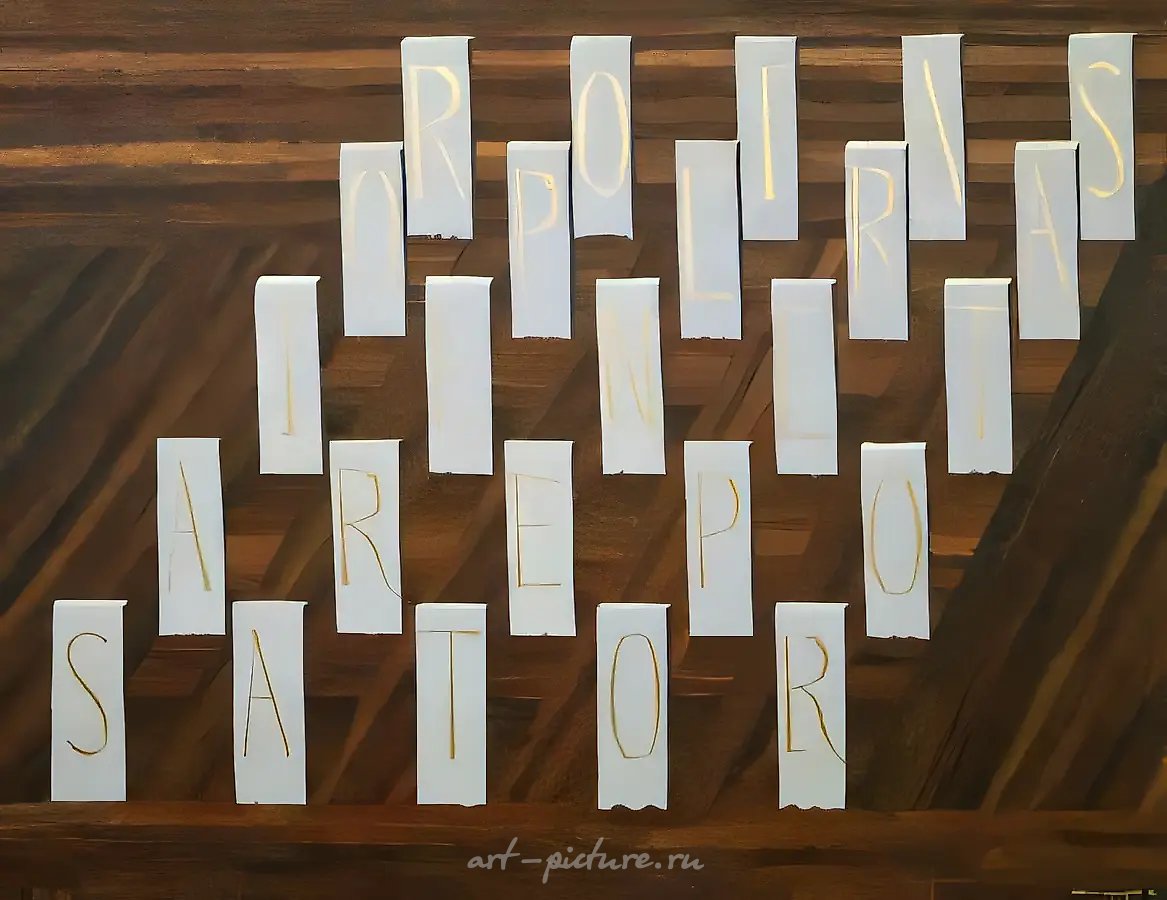
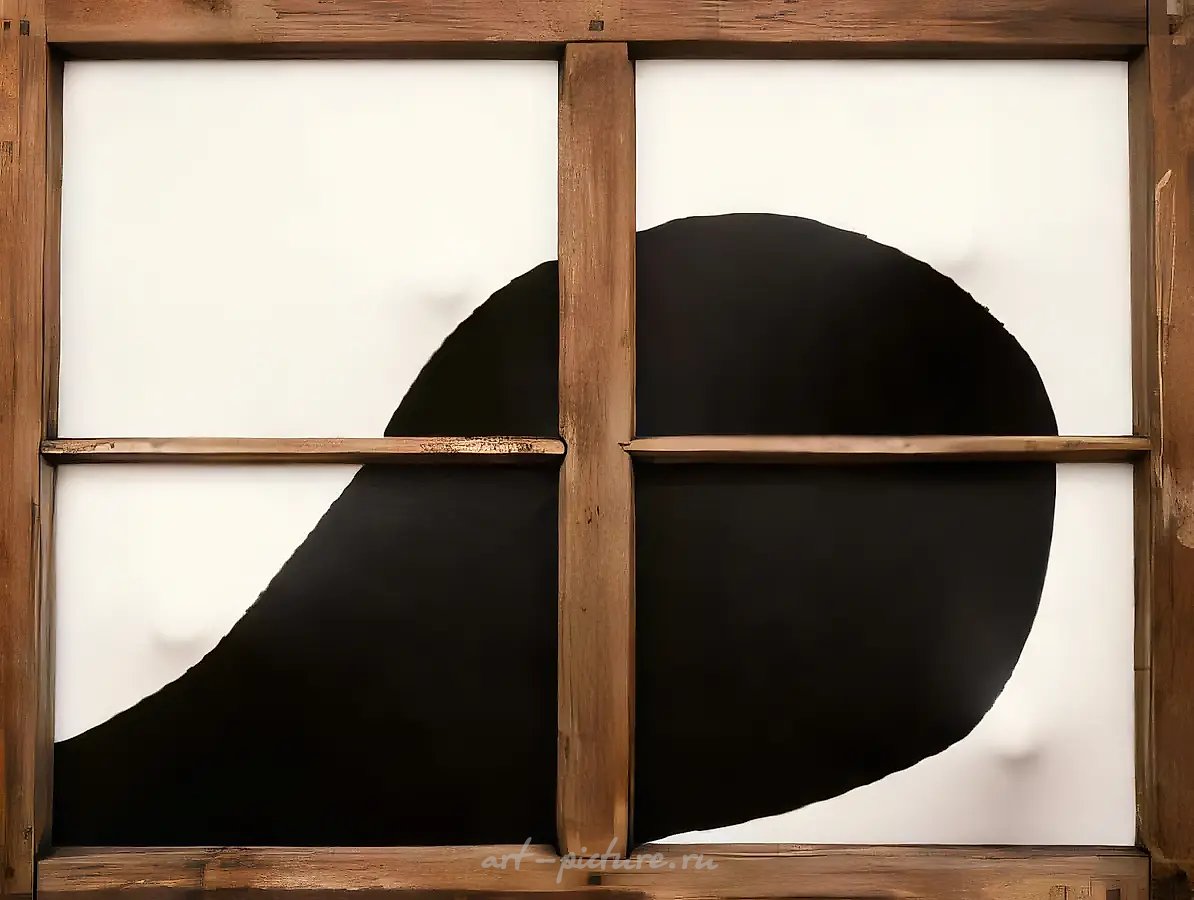
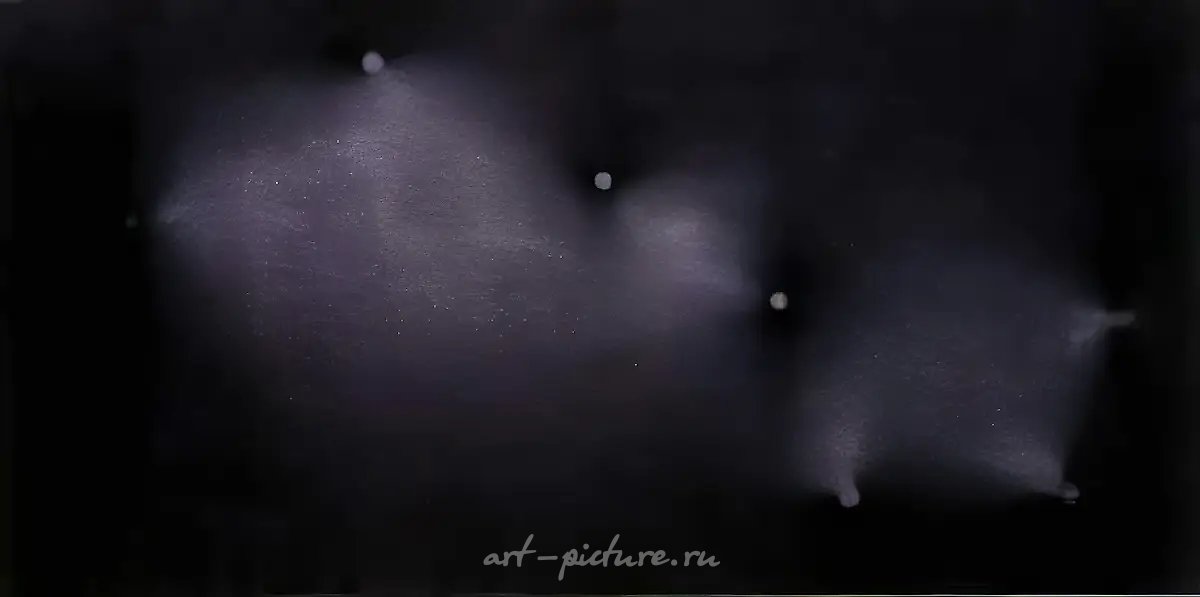
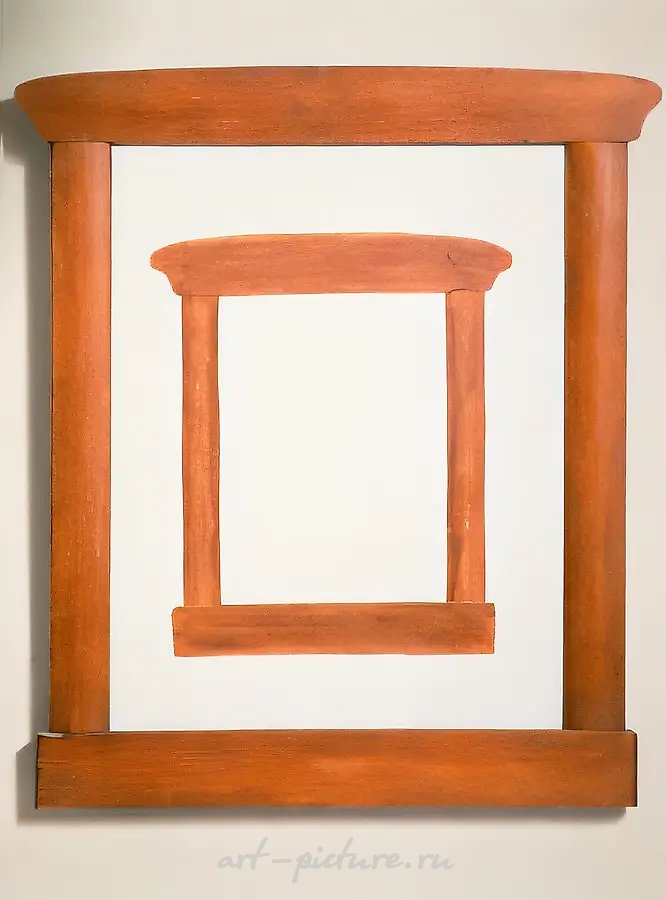
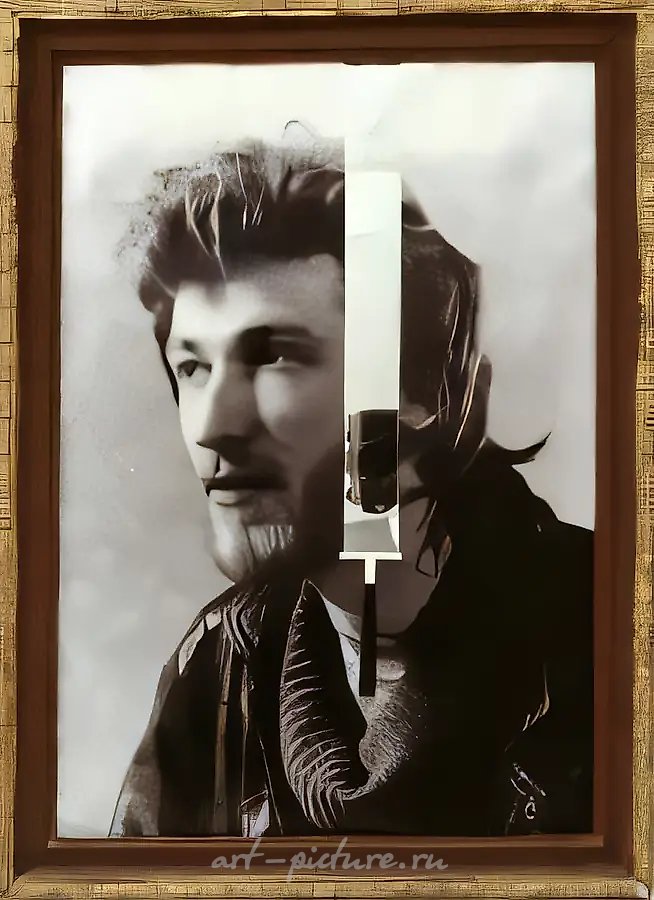
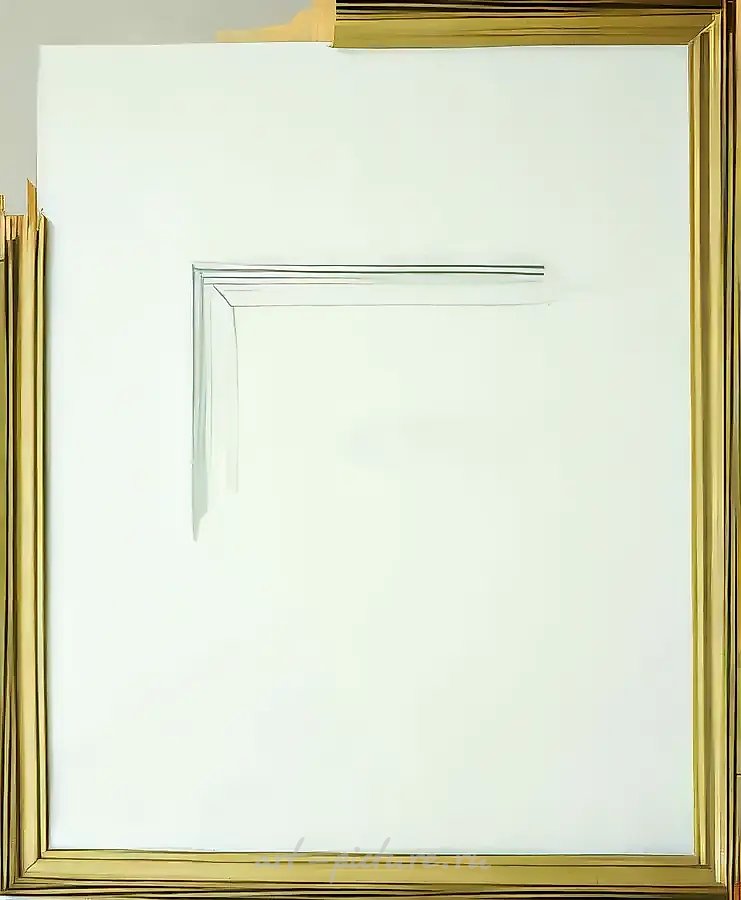
What are the main groups of Demsky's works? Monochromatic canvases with various objects placed underneath, presenting only the 'shadow' of their volume to the eye, as if their pictorial projection. A series of natural frames, inside which, except for emptiness, only their painted copy is enclosed. The most recent works feature mirrors, glass, and masks, which, with varying degrees of materiality, can only double the appearance of the viewer contemplating them. Finally, graphic sheets where all elements of the image are spelled out in words ('cloud' is depicted with the word 'cloud', 'sea' with 'sea'), not so much verbalizing the visual as tautologizing it, making it literal.
Each time, the empty 'source of artistic creation' distinctly glares through the sparse pattern of pictorial forms. Each time, the material deployment, driven by the author's will, does not reach its maximum, beginning to fade just as forms start to acquire materiality. And the artistic will is so firmly connected with the memory of its origin that it cannot help but return to its beginning, each time collapsing the creation into its original emptiness, making it discrete, depriving it of continuity and visual logic.
In this sense, every work by Demsky repeats the configuration of the entire creative process, becoming its trace, copy. And art testifies to itself not so much as a production of signs, but as a production of tautologies. Thus, 'poor' signs are produced in which the signified nearly merges with the signifier, and the entire symbolic series, because of this, seems to fall inward, returning art to its empty nature.
So what remains after such reduction? The frame. And what is contained in this frame, in other words, what here is the symbol of the internal, the essence of art? Emptiness. Finally, what becomes the sign of essentially tautological meaning-creation, if not the mirror? Emptiness, Frame, Mirror. Or—otherwise—the essence of art, its boundaries, the principle of its form-creation. All these are brought forth in Demsky's work as fully real 'actors', besides which he essentially needs nothing. No, we have forgotten the mask, which has recently appeared, seemingly compensating for the asceticism of the artistic toolkit. The mask is not the face, nor the essence, but a persona. That which is meant to hide, to disguise—what? Probably, that art here exists as a pure and self-sufficient mechanism, producing emptiness. And also to give it a false, phantom, yet corporeality. In other words, to present it as traditional—easel (in a frame, on canvas, on a sheet of paper, under glass in clips), mimetic (mirror)—art. But if the product of mimesis here is mirror-tautological, then this means that in the process of duplicating reality, something extra-artistic, real, arises again. Accordingly, art turns out not to be art at all but a kind of magical action.
V. Levashov
Works 12