
Aleksei Nikolaevich Isaev
1960 - Born in the village of Serebryanye Prudy, Serebryanoprudsky District, Moscow Region.
1973-77 - Studied at the Moscow State Art School No. 1, Moscow
1978-79 - Worked as an assistant cameraman at the 'Tsentrnauchfilm' film studio (film 'Restoration of the Field Marshal's Hall of the Hermitage', among others)
1980-87 - Collaborated with Moscow publishing houses 'Kniga', 'Finances and Statistics', etc. Worked in student theaters. Studio 'Slaidofilm' of Yu. Sobolev
1993-94 - Participant in the 'Studio of Egocentric Features'
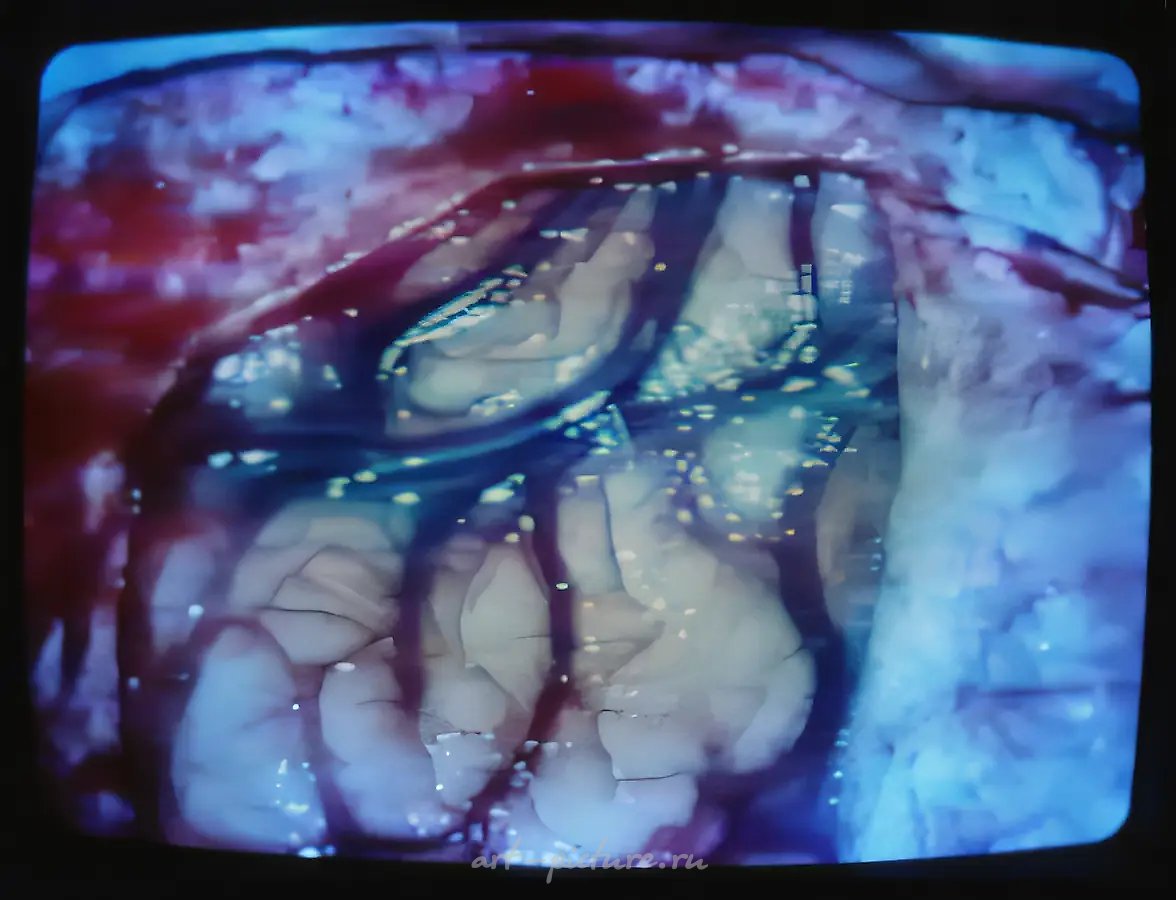
1994-95 - Employee at the 'NeuroVideoCenter' at the Burdenko Institute of Neurosurgery, Russian Academy of Medical Sciences
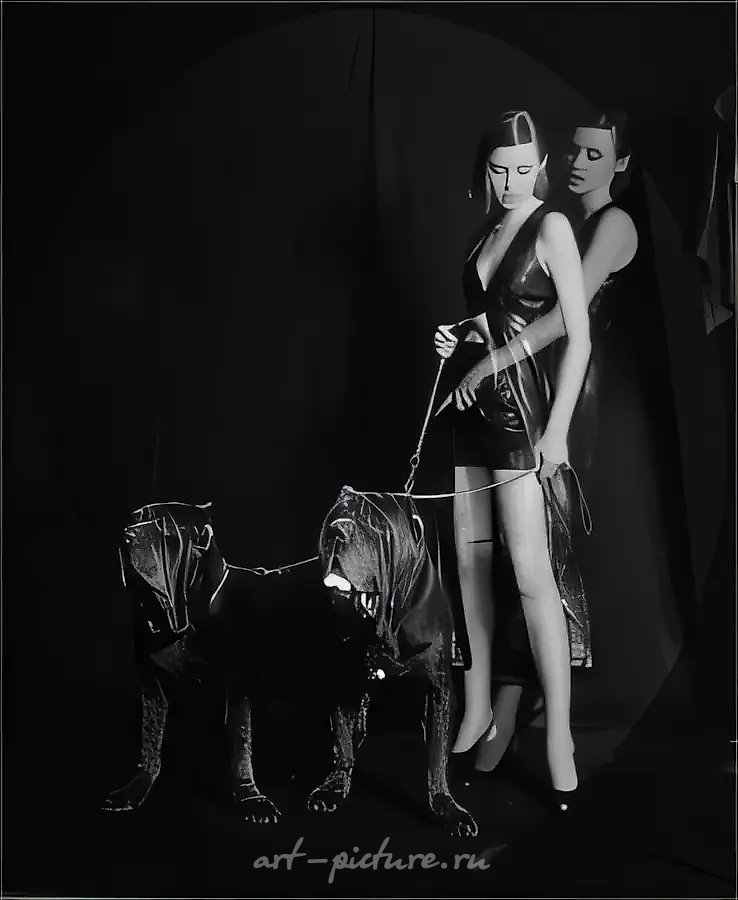
Chief artist of the journal 'Molosses in Russia'
Works in collections
Gallery 'Moscow Collection', Moscow
Kolodzei Art Foundation, USA
Exhibitions and auctions
SOLO EXHIBITIONS
1992 - Presentation of the author's project 'Labyrinthology'. 'Kashirka', Moscow
Solo exhibition and video performance (together with S. Kuskov and 'Syra Blanche' theater) at the Philological Symposium in the main building of Moscow State University, Moscow
1993 - Solo exhibition and video performance with S. Kuskov and 'Syra Blanche' theater (presentation of the 'Labyrinthology' project). Contemporary Art Center, Moscow
1995 - 'Neuromancero'. 'Ptuch' Gallery, Moscow
1996-97 - Network project 'My revolution'
http://www.aha.ru/~newart
GROUP EXHIBITIONS
1987 - 'Non-trivial Book Illustration' (A. Yulikov, G. Bershtein, L. Orlova, etc.). Central House of Artists, Moscow
1992 - 'Moscow Apartment'. 'A 3' Gallery, Moscow
Author’s Book Exhibition. 'Moscow Collection' Gallery, Moscow
1993 - 'Avant-garde and Traditions, Books by Russian Artists of the 20th Century'. Book Museum, Moscow
'ART MYTH 3' (videoprogram of the Institute of T...) [text cut]
1995 - Ateliers du Fond Regional des Pays de la Loire. Saint-Nazaire, France
Contemporary Art Festival. City Museum of Fine Arts, Sochi
International Forum 'Third Reality' (video program). St. Petersburg
1996 - 'Berlin in Moscow' (within the framework of the exhibition 'Moscow – Berlin, State Museum of Fine Arts). Small stage of the Mossovet Theater (video film 'Dance & Video')
Pan European Art Manifestation 'Manifesta'. Rotterdam, Netherlands (video installation 'S. Eisenstein Pavilion' – joint project with V. Podoroga). Catalog
'Attraction Montage' (http://www.aha.ru/~newart/page1)
1997 - 'It’s a better world'. 'Secession' Museum, Vienna, Austria; Art Forum Gallery, Merano, Italy (catalog)
VIDEOGRAPHY
1995 - Author (with V. Kromin) of the April program 'Century of Cinema' (Channel 1 'Ostankino', project by V. Kobrin)
'New Cannibals'. Betacam, 12 min.
Author about himself
I am drawn to a certain professional foundation, based on deep and thoughtful, polyphonic command of various techniques, as well as a great interest in culture as such (poetry, music, theater, cinema, painting, literature, sculpture). This determines my individual character – the desire to venture and appropriate a new, unknown field, to bring my own experience sometimes into the narrow confines of contemporary art.
Constant reflection on the grand style is the most significant part of my work; it is what contemporary critics often ignore in relation to specific (temporary) styles.
I view my activity as both a conflict (in its reactive stage) and a dialogue (in a calmer stage) between an artist belonging to the grand style, which he attempts to realize in his works, and specific artistic commissions he must fulfill – artistic behavior thus becomes inadequate for the artistic situation in which it develops, and most importantly, his motivation becomes inadequate.
This sense of grand style later transforms into quite a concrete position — an attempt to create art through permanent actions, exhibitions, uniting various artistic statements into a single narrative.
My work is essentially autobiographical – the criterion for autobiographicality is a clearly articulated artistic language (not dependent on technique, situation, etc.). Every event in my professional life, every statement is a reference to the main event (timeless and decontextualized), much like in hypertext. Hence a fondness for utopian projects and pathetic statements.
I am an artist whose creative biography is highly dualistic: there are 2-3 projects in which I act in all possible functions (author, ideologist, performing artist, curator, producer). I was among the first to insist that a project is not a fashionable term in art, but a distinct system of creativity and existence for an artist in the professional context. I belong to artists working outside of commissions, outside of groups, combining in one person both the artist and the curator of their own projects. Each curator plays his own games; fitting into their developed aesthetic and production systems is unacceptable for me, since I have my own ideas about relevance and fashion. There are projects where I revealed myself better as an artist, and there are those where my curatorial work was more interesting.
The main thing in evaluating my work is to understand the interaction and dialogue between these two entities, since, accumulating experience as an artist, I analyze and synthesize this experience, develop and modify concepts (the artistic experience is often realized with the involvement of other performers).
My projects 'Labyrinthology' and 'Undergroundland', each comprising numerous performances, actions, presentations, exhibitions, and video films with computer animation, in my opinion, have stood the test of time. By creating an ideal, utopian context, I create a kind of world whose system can successfully develop regardless of specific artistic practices (whether performance, video, computer or networks).
Various techniques are mechanisms whose trendiness becomes obsolete at birth.
It is not surprising that today it becomes obvious that these are one hundred percent virtual projects.
Sometimes it seems to me that I am a critic reading 24 hours a day the thoughts and images of a single artist.
Critic
Throughout his artistic career, Aleksei Isaev constantly combines the roles of artist and curator, assuming also those of critic, director, producer, and many others. Such free transition from one role to another, manipulating all possible techniques (from graphics and sculpture to video and networks), sometimes hinders the assessment of the artist’s coherence and the clarity of his realized projects.
Since all the author's individual works are part of his large-scale projects, I will first attempt to describe them.
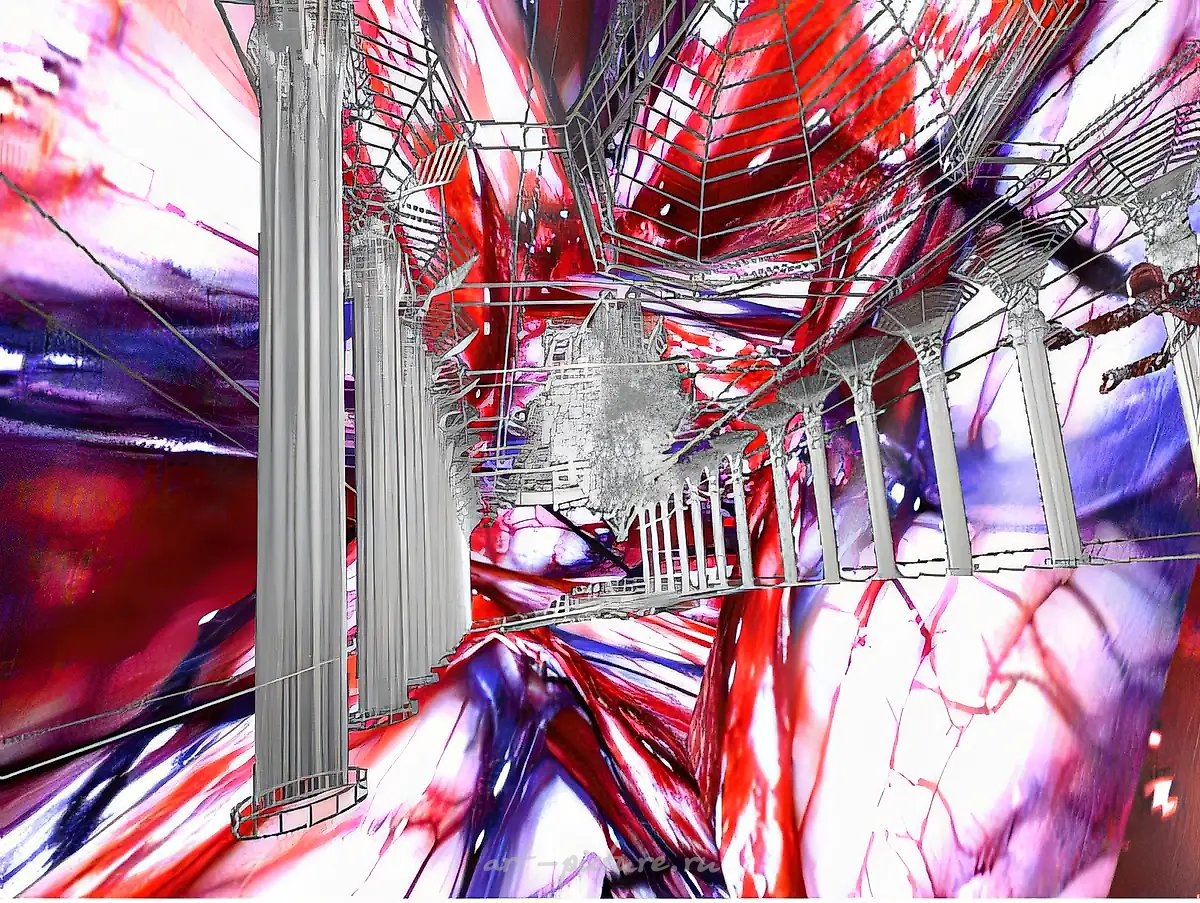
The first project is 'Labyrinthology' (with Sergei Kuskov). Exploring the idea of the labyrinth, the artist chooses the most figurative labyrinth of Moscow – the metro. Another life labyrinth is also present, originating from the artist’s creativity as far back as his creation of artist's books in the form of scrolls, Möbius strips, etc. This is the labyrinth-text, labyrinth-book, filling any free space. Using the language of post-structuralism in this project, the author recodes and creates a new reality which is classical in form and utopian in content.
He builds a whole system that can freely develop independently from concrete artistic practices (if in 1991 it was a performance or an exhibition, by 1995 it was a video film, a video installation, and ultimately – an extensive network project).
In realizing his projects, the artist employs a wide spectrum of material delivery – from purely conceptual actions (remarked space in the 'Dobryninskaya' action) to happening-actions (at Novoslobodskaya metro station with the 'Dzyu-Om' music group), creating even at the initial stages video materials that are independent works rather than mere chronicles of events.
Collaboration at all stages of his own projects’ development with various theater and music groups (the most successful synthesis being with the 'Syra Blanche' theater and the music groups 'Tri O' and 'Dzyu Om') reveals his interest in the synthesis of arts, which later leads the artist to monumental events, such as the Experimental Video Festival or video works whose theme for a long time was the combination of video, theater, and music.
The second project, 'Undergroundland', also changes over time but remains relevant. At its inception, it was perceived as an intellectual modification of Sots Art, but now it is evolving as a network project, appealing to virtual reality.
It should be noted that since 1993 Isaev began working in the non-commercial video 'Studio of Egocentric Features', where he created his first video works and held a festival of experimental video, computer animation, and project synthesis. Isaev was the festival curator (together with Vadim Koshkin) and the 'Video Scenario' exhibition. The festival, for the first time, set out to demonstrate synthesis of the arts and highlight the specifics of this topic among video artists, theater practitioners, musicians, directors. Here, the artist managed to realize his accumulated experience in performance practice in an entirely new form, distancing and spinning it through technological video and computer.
The video installation 'Animation(ism) or Concert for Thirteen Monitors' (at the annual CSIS exhibition) is another example of arranging and performing, as operator and animator, working with sound and visual score. The installation recreated a circular movie panorama, a reminiscence of the tech-marvel shown at VDNH.
One of Isaev’s most notable recent actions – the 'Neuromancer. New Cannibals' exhibition at the 'Ptuch' club – demonstrated a hidden polemic between biological and machine intelligence. The author gave the viewer the illusion of being inside a kind of virtual space, leading them through an enfilade of electronic environments.
At the exhibition in Saint-Nazaire (France, a French-Russian artists’ exchange project), Isaev completely distanced himself from the work and the technology, coming closest to an absolute statement. The connection with previous works is also evident (the work resembles perhaps the most successful early performance at Moscow State University – a white, constantly growing sphere, made by participants from fragments of life – drafts, with text inside – absorbing thoughts and the time of the labyrinths of the text lines).
The artist is constantly contacting the sphere of mass media. Work on television is associated with constantly emerging projects – unfortunately not always realized. The artist is never interested in commissions as an end in itself; it is always the transformation of his own projects and giving them other artistic expressiveness.
O. Shishko
Bibliography
AUTHOR'S PUBLICATIONS
'Open Project. Interpretation of Fictions.' Art Magazine, No.2, 1994
Works 7