Alyona Kirtsova
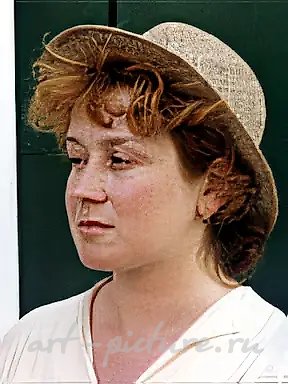
Alyona Kirtsova (full name: Elena Valentinovna Kirtsova, born January 24, 1954, Barentsburg, Svalbard) is a Russian painter.
Works in collections
Ministry of Culture of the Russian Federation
State Russian Museum, Saint Petersburg
State Tretyakov Gallery, Moscow
Solomon R. Guggenheim Museum, New York
Museum of Modern and Contemporary Art of Trento and Rovereto
Exhibitions and auctions
SOLO EXHIBITIONS
1990 ALYONA KIRTSOVA. Moscow State University, Moscow.
1991 ALYONA KIRTSOVA. First Gallery, Moscow.
WALLS AND STAIRS. State Museum of Architecture, Moscow.
1994 ALYONA KIRTSOVA. State Russian Museum, Saint Petersburg (catalogue).
1996 FRANKFURT AUFENTHALLE. Carmelite Monastery Gallery, Frankfurt am Main (catalogue).
RED WINE - GREEN GRASS. Roza Azora Gallery, Moscow.
2002 RETROSPECTIVE. Moscow Arts Center.
GROUP EXHIBITIONS
1977 Apartment exhibitions, Moscow.
1977-80 Periodic Exhibitions of the City Committee of Graphic Artists.
1986 XVII YOUTH EXHIBITION. House of Artists on Kuznetsky Most, Moscow.
ART AGAINST COMMERCE (action-exhibition). Bitsevsky Park, Moscow.
1986-87 Exhibitions of the Hermitage Association: REPRESENTATION I, II, DWELLING, RETROSPECTIVE. Profsoyuznaya 100, Moscow.
1988 KIRTSOVA, MEEL, SALNIKOV. Exhibition Hall of Kirov District, Moscow.
XVIII MOSCOW YOUTH EXHIBITION, Central Exhibition Hall Manege, Moscow.
ALL-UNION YOUTH EXHIBITION, Central Exhibition Hall Manege, Moscow.
YOUNG ARTISTS OF SOCIALIST COUNTRIES, Central Exhibition Hall Manege, Moscow.
ART - ROCK - PARADE ASSA, DK MELZ, Moscow.
LABYRINTH. Palace of Youth, Moscow.
ALTERNATIVE? Glinka Museum, Moscow.
1989 ZHURAVLEV, KIRTSOVA, SEREBRYAKOVA. Garage Gallery, Belgrade (catalogue).
AFFORDABLE ART. First Gallery, Moscow.
1990 AVANT-GARDE 20/90. Central Exhibition Hall Manege, Moscow.
1990/91/93 International Art-Myth Fair, Moscow (catalogue).
1992 LESSONS OF MAGNITSKY. GEOMETRIC ABSTRACTIONISM: MOSCOW EXPERIENCE. Contemporary Art Center, Moscow.
STILL LIFE AT THE END OF THE 20th CENTURY… Moscow Palette Gallery, Moscow (catalogue).
1993 ART OF MOSCOW 1988-93. Cultural and Historical Center, Krasnoyarsk.
1994 Exhibition tour of the Incombank collection - Ulyanovsk, Samara, Magnitogorsk, Chelyabinsk, Omsk, Yekaterinburg (catalogue).
1995 LA TERRA RITROVATA. ALPHABET OF RUSSIAN LANDSCAPE 1860-1995, Villa Ormond, San Remo (catalogue).
RUSSIAN ART, Villa Zorn, Sesto San Giovanni.
ON THE HOUSE. Belyaevo Gallery, Profsoyuznaya 100, Moscow.
MOSCOW STUDIOS II. VIEW. Academy of Arts, Berlin (catalogue).
1996 MOSCOW STUDIO 1991-96. Corcoran Museum, Washington (catalogue).
ARTOTHEQUE. National Center for Contemporary Art, Central House of Artists, Moscow.
1997 COLOR FOR MIKHAIL VRUBEL. Wall painting for the Vrubel Retrospective, Kunsthalle, Düsseldorf.
ARCHITECTURE AND DESIGN. Central House of Artists, Moscow.
1997/98/00/03 Artistic Initiatives Forum. Small Manege, Moscow (catalogue).
1997-98 RUSSIAN CONSTRUCTIVISM: TODAY. University of Maryland Gallery; University of New Hampshire Gallery; Dickinson College, Pennsylvania; World Bank, Washington (catalogue).
1998 RUSSIAN MANCHESTER. Ivanovo, Regional Museum of Art (catalogue).
2000 THE DOLL OF THE STAR, State Museum of Architecture, Moscow (catalogue).
PERSONAL VIEW, State Tretyakov Gallery, Moscow (catalogue).
2000/01 FACETS. NCCA, Novosibirsk Gallery; Kurgan Regional Museum of Art; Kemerovo Regional Museum of Visual Arts.
2001 MANUFACTURE. Small Manege, Moscow (catalogue).
ABSTRACTION IN RUSSIA. 20TH CENTURY. State Russian Museum, Saint Petersburg (catalogue).
FOOD. Des Artistes restaurant; MUHA Club, Moscow.
2002 ABSTRACT//REAL//VISIBLE//INVISIBLE. Union of Artists Exhibition Hall of Russia (catalogue).
FEMININE ART. Women artists in Russia XV-XX centuries. State Tretyakov Gallery, Moscow (catalogue).
MELIORATION. Klyazma Reservoir, Moscow Region.
2003 ART-KLYAZMA. Klyazma Reservoir, Moscow Region.
2004 IMAGINE LIMERICK. City Art Gallery, Limerick.
Critic
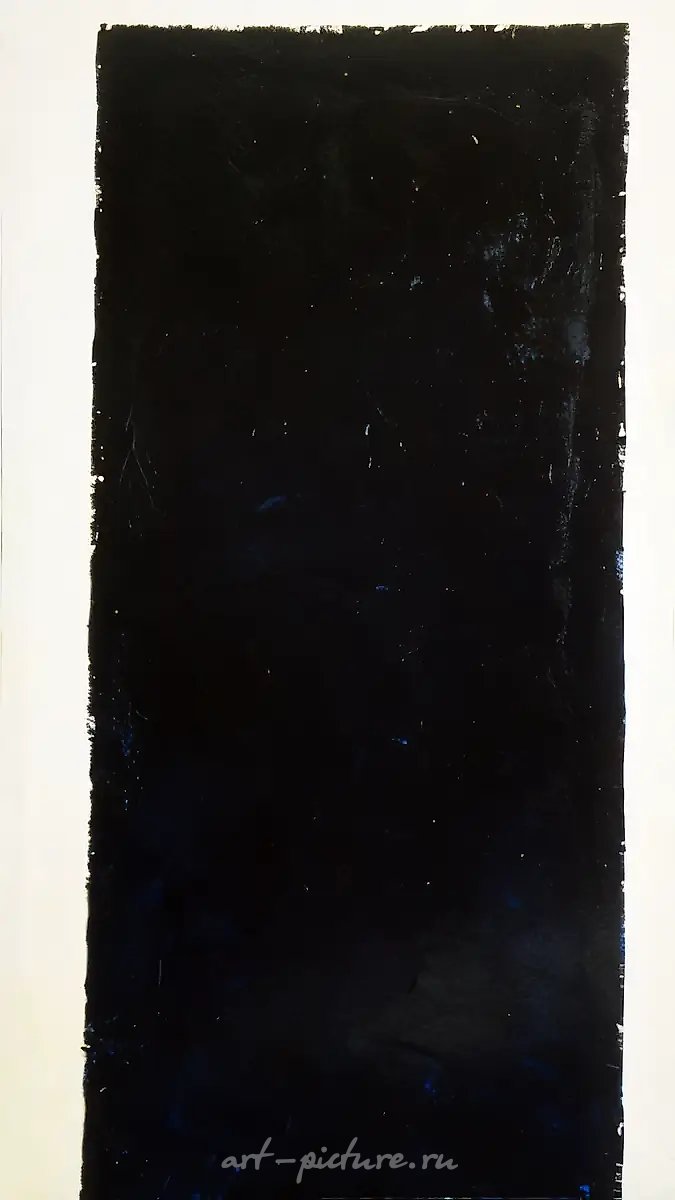
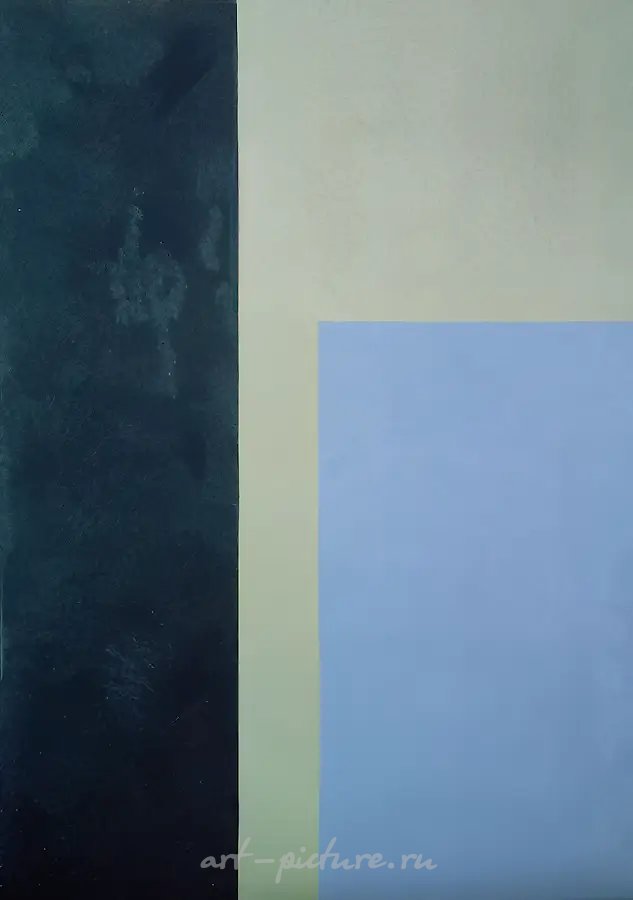
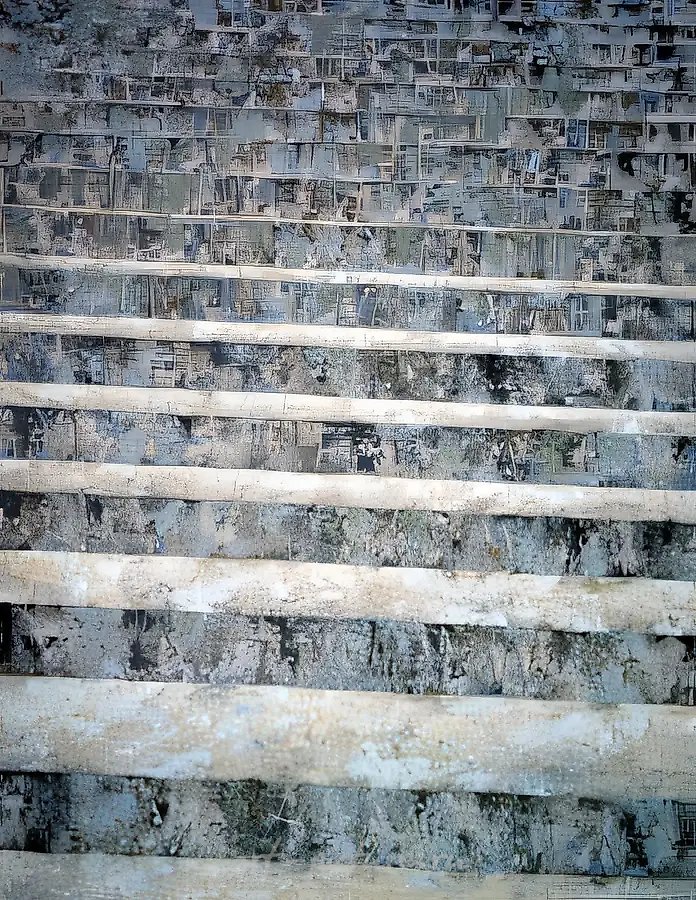
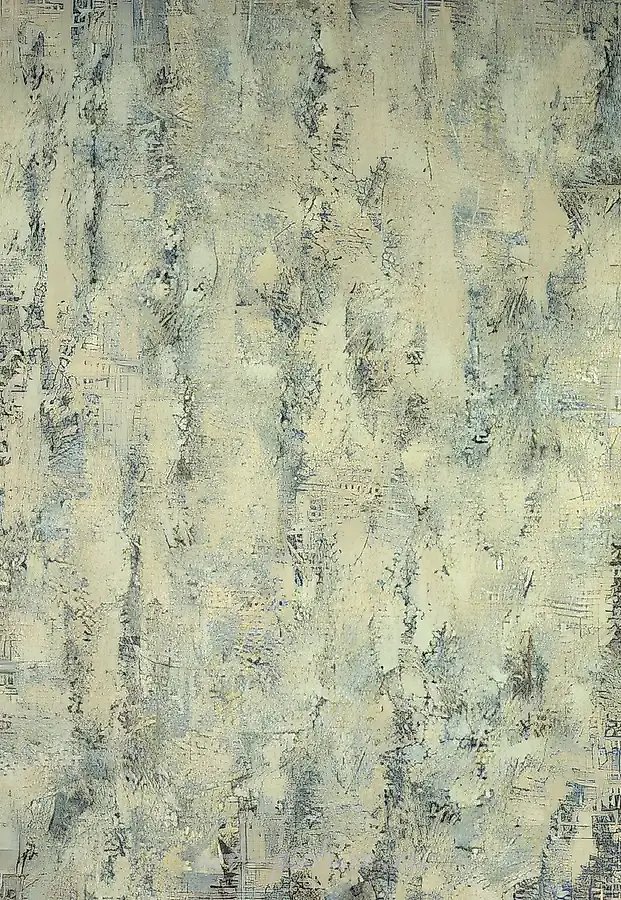
"Art into Life" – the grandiloquent slogan-title of a recent Russian avant-garde exhibition in America – harkens back to the deep utopian ideals of the era. The Russian Revolution provided a group of marginal artists, albeit briefly, with titles, status, and opportunities for a grand artistic-social experiment. The ambiguous results of the revolution and its artistic legacy only underscore the fragile relationship between art and life. The work of Alyona Kirtsova – mostly abstract painting – owes little directly to Moscow's modernist heritage. Due to the complex consequences of the revolution, unlike her peers in Europe or America, she did not reach professionalism through academic training based on modernist principles. She was familiar with and loved all the peculiarities of Mikhail Vrubel, the Russian artist of the late 19th century. She later discovered and admired Pavel Filonov through poor reproductions in a small album published in Czechoslovakia in 1970. In this case, she was more fascinated by his life and writings, for she herself transitioned from poetry to painting. It is this literary origin, then the final choice of painting as the only possible mode of existence (rather than any specific painterly precedent), that best explains her understanding of the subtle relationship between art and life:
"In previous years, I wrote a lot of poetry, full of painful doubts, hardly showing it to anyone. This activity was not very satisfying for me. Much later, thanks to Plato, I realized why. I sang like a bird, like a medium for myself, capturing in words and images what already existed within me. But as I matured and became more complex and refined, the written word—no matter how delicately portrayed—became firmly fixed. 'What is written with a pen...' That is, the written did not develop further; rereading it, I learned nothing new, only remembered. The knowing part of 'me' was absent from these relationships. It’s different in painting. Playing with color, shapes, contours, textures, tone, space, etc., no matter how much you plan in advance, the result is always different—unknown. The idea grows and ripens, often changing beyond recognition during the process. A thought expressed in paint (and the paints themselves—change over time) continues to develop in a magical way. Sometimes an unfinished painting, left alone for a month or two, ripens by itself." *
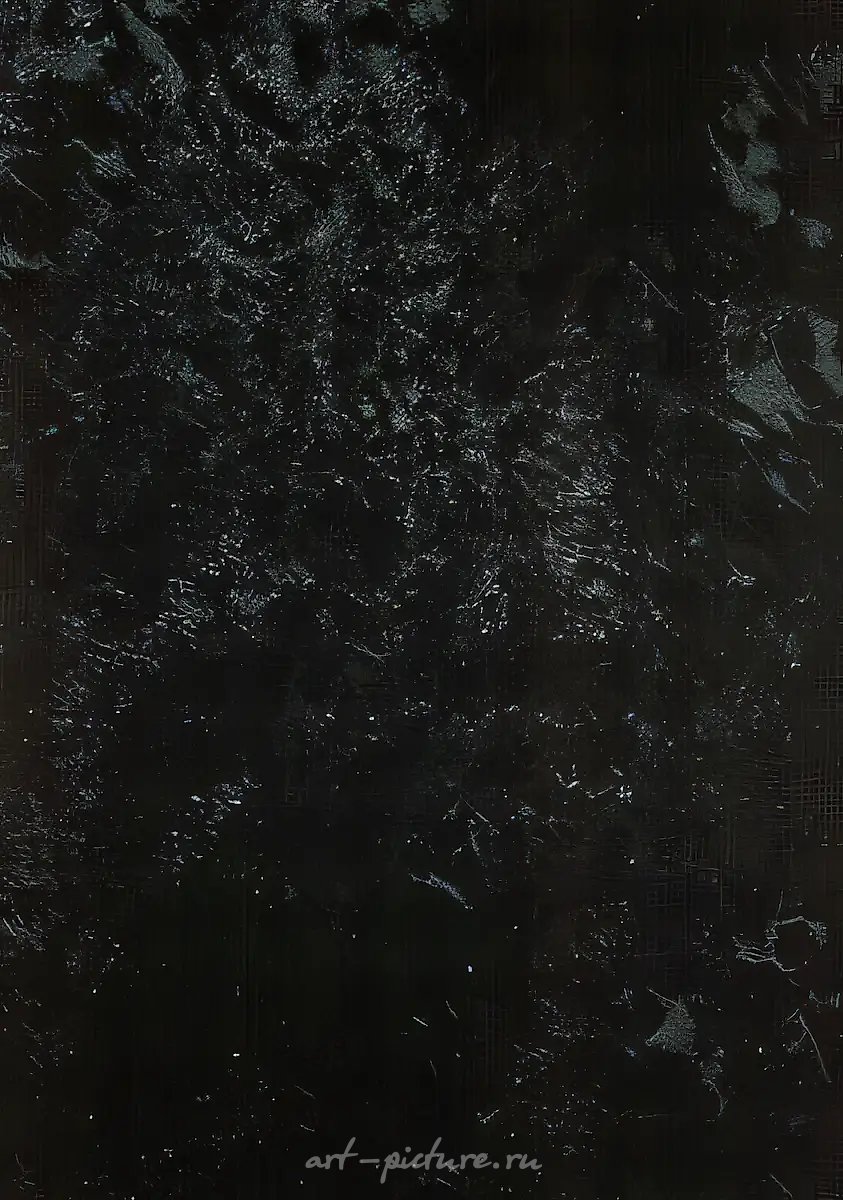
Starting with figurative painting of "onions and pitchers, backgrounds and shadows – 'complexly colored characters in space,' as she describes – Kirtsova eventually moved toward abstraction, noting that there is not much difference between heavily textured clouds in her early landscapes and abstract painting. Her interest – whether in depicting clouds or abstract surfaces – is directed toward achieving the same effect of elusive luminosity in subtly blended colors. She describes the torment and uncertainty of watching the form develop on the canvas, "as in my life," later disintegrating into many tiny pieces (perhaps also like in life). She describes the path that light takes over rough and smooth, or matte and glossy surfaces... "And at some point, the light ceases to seem like a white or black hole, as an abyss, but becomes volumetric radiance, already thickened, increasing the psychological surface of the canvas and of life, thickening my 'second skin.'"
One of Kirtsova's early works is a small white canvas with painted shadows of cups and pots, so subtle that standing on a table by the wall, where I first came upon it, it might be mistaken for a fragment of reality. Only in that moment between recognition of these shadows and then the absent objects casting them—neither being any more material than the fleeting reflection of light, which allows us to see at all—is contained the rare possibility of self-awareness in this world.
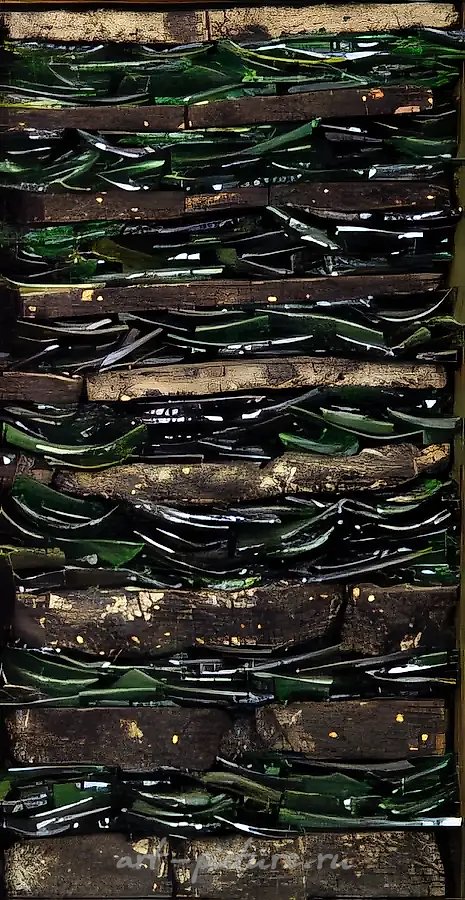
This incorporeal effect of luminosity is important not only in terms of pure visual pleasure but also, metaphorically, as an admission of fleeting feelings of life—this affects both Kirtsova’s oil paintings, her prismatic objects from shards of old glass, and her carefully executed drawings. Like a photographer’s flash splitting time into "before" and "after," Kirtsova’s art gives the viewer the experience of an instantaneous insight, a cognition or thinking, which unexpectedly and swiftly transforms our perception of simple paint into ART, or a succession of organic sensations into LIFE.
-
- Quotes are taken from an unpublished interview (10.12.1993 - 6.06.1994)
M. Govan. "Art into Life (and back). The Art of Alyona Kirtsova." Booklet for the exhibition "Alyona Kirtsova", State Russian Museum, Saint Petersburg, 1994
- Quotes are taken from an unpublished interview (10.12.1993 - 6.06.1994)
Works 16