
Oleg Kulik
1961 - Born in Kyiv
1979 – Graduated from Art School in Kyiv
1982 – Graduated from the Geological Institute in Kyiv
1981-84 – Worked as director of a rural club, Selizharovsky District, Tver Region
1990 – Pollock-Krasner Foundation grant holder (New York)
1990-93 – Collaborated with Regina Gallery
1995 – Berlin Senate grant holder
Works in collections
Collection of Contemporary Art, State Museum Reserve Tsaritsyno, Moscow
State Tretyakov Gallery, Moscow
Moscow Museum of Contemporary Art, Moscow
State Center for Contemporary Art, Moscow
Moscow House of Photography, Moscow
European Trade Bank, Moscow
Jane Voorhees Zimmerli Art Museum, Norton and Nancy Dodge Collection, Rutgers University, New Brunswick, New Jersey, USA
Exhibitions and auctions
SOLO EXHIBITIONS:
2007
Olegkulik. Central House of Artists, Moscow
2005
Gobi Test 2. XL Gallery, Moscow
2004
Gobi Test. XL Gallery, Moscow
2003
Oleg Kulik. Center of Contemporary Art, Naples
Slogans. Regina Gallery, Moscow
Slogans. State Russian Museum, St. Petersburg.
2002
Museum. XL Gallery, Moscow
2001
Deep into Russia. S.M.A.K, Ghent
Two Kuliks. Ikon Gallery, Birmingham
2000
Oleg Kulik in Warsaw. Zamek Ujazdowski, Warsaw
Lolita vs. Alica. Galerie Rabouan-Moussion, Paris
1999
Red Room. XL Gallery, Moscow
Russian. Regina Gallery, Moscow
1998
Oleg Kulik. Galerie Rabouan-Moussion, Paris
Oleg Kulik. Center of Contemporary Art, Riga
1997
Family of the Future. M. Gelman Gallery, XL Gallery, Moscow
Virtual Dog. M. Gelman Gallery, Moscow
I Bite America & America Bites Me (with Mila Bredikhina). Deitch Projects, New York
1995
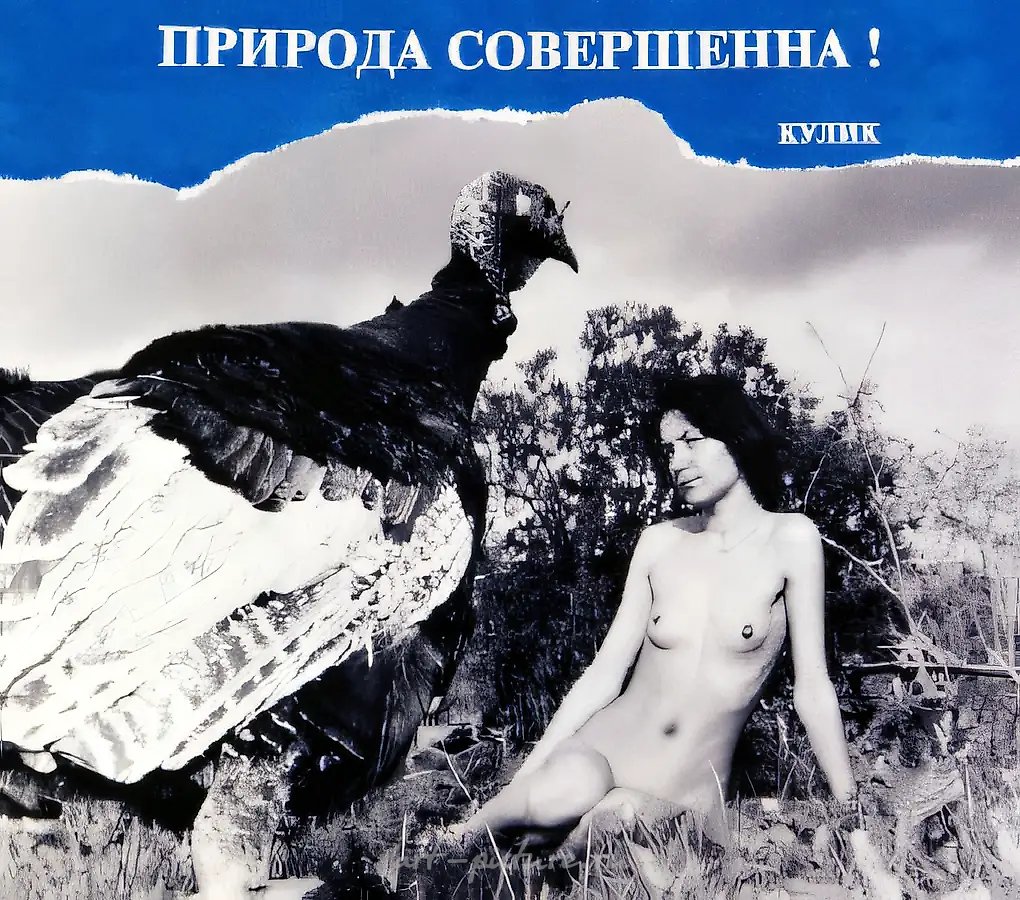
My Family, or Nature is Perfect. M. Gelman Gallery, Moscow
The Same and Skotinin. XL Gallery, Moscow
The End of History. XL Gallery, Moscow
1994
I Love Gorbi. M. Gelman Gallery, Moscow
1989
Foreboding of Unfreedom. Youth Palace, Moscow
1988
Paradox as a Method. Exhibition Hall of Sevastopol District, Moscow
GROUP EXHIBITIONS:
Selection includes: History of Russian Video Art vol. 2, 2009, Moscow Museum of Contemporary Art, Moscow; Russia! Solomon R. Guggenheim Museum, New York & Bilbao; 51st Venice Biennale; Tate Modern, London; Documenta-Halle, Kassel; Jeu de Paume, Paris; Moderna Galerija, Ljubljana; Freud Museum, London; 49th and 50th Venice Biennale, among many others.
Author about himself
I am an artist with a powerful projective will. My projects are interesting to the extent that they are dangerous or repulsive to society. When I am able to realize the phantoms of my fantasies, using my knowledge of reality mechanisms, I experience supreme bliss, which I strive to share with my admirers and connoisseurs.
Critic
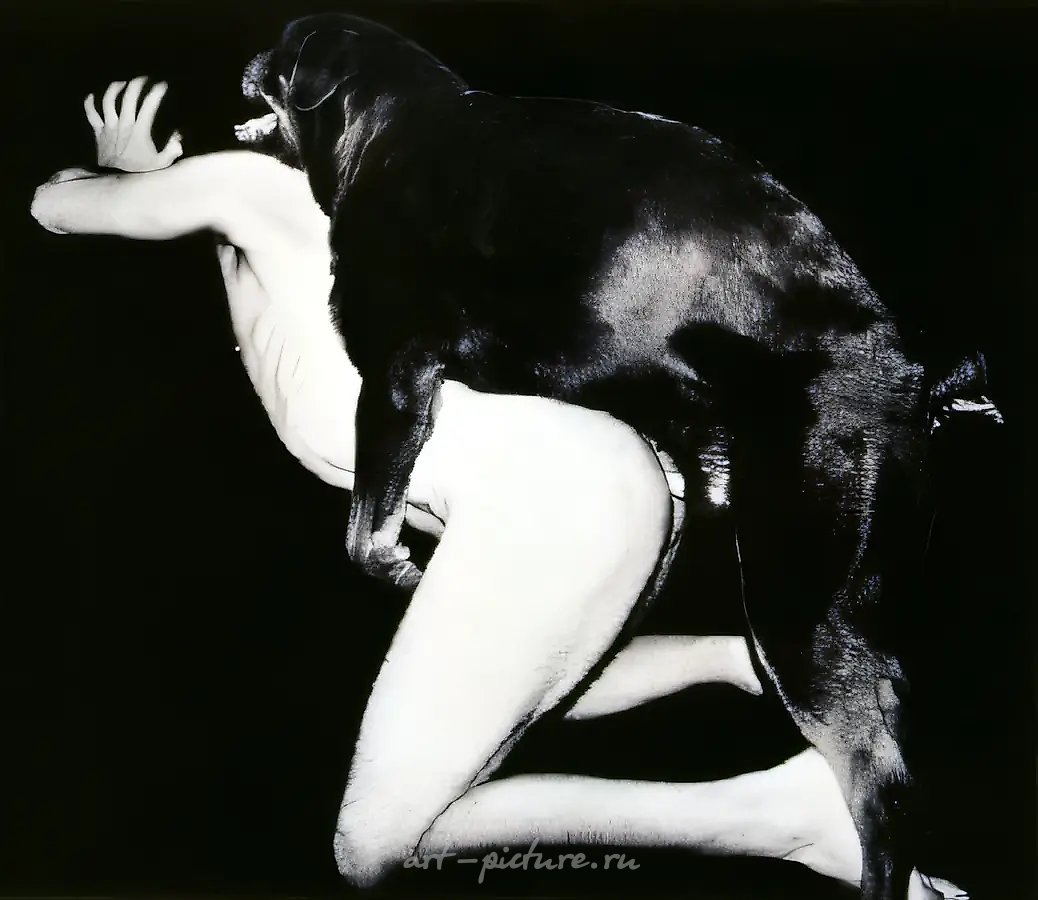
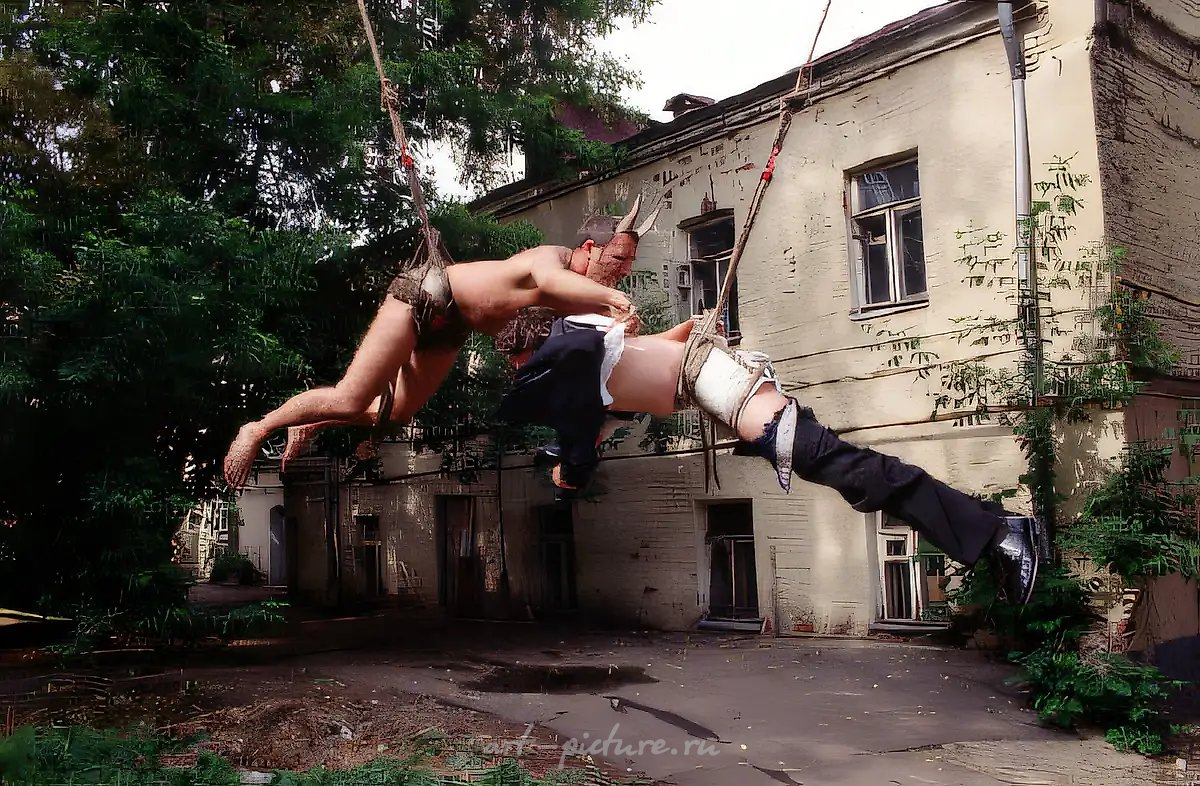
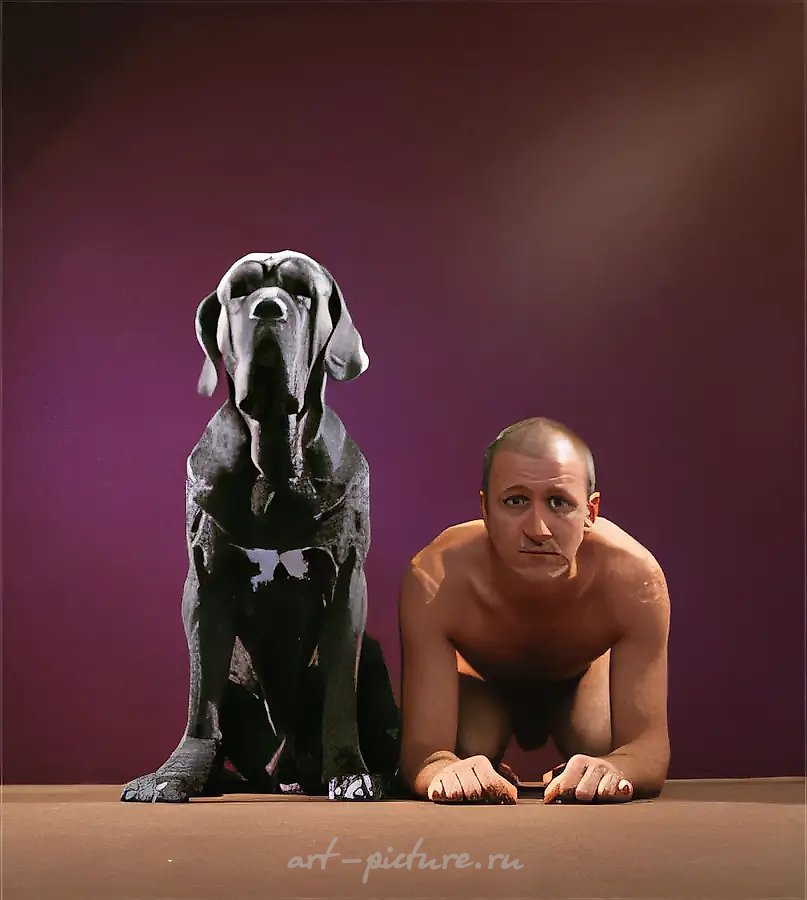
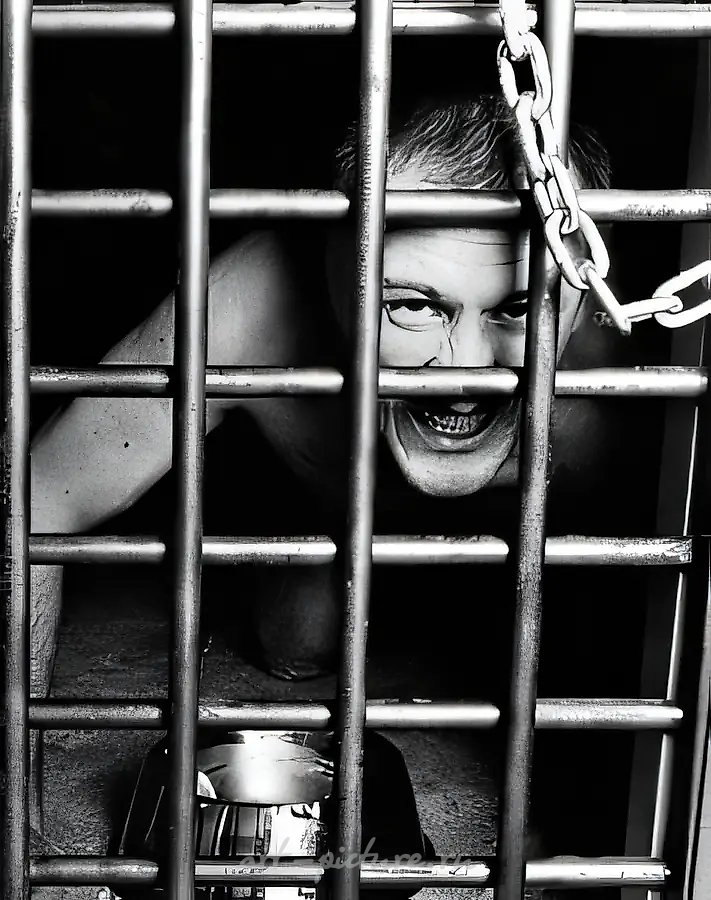
Anyone who studied Karl Marx's works as a child is familiar with the formula demonstrating the essence of this great philosopher's doctrine: 'Man is a social animal (zoon politicon), which can only distinguish itself in society.' Oleg Kulik often uses the same term when speaking of the metaphysical underpinnings of his art, but does so with a different emphasis than the ideologue of proletarian dictatorship. He interprets the term 'political animal' literally—as an animal that has decided to engage in politics. The paradox of such an approach is only apparent; it has its own history. It's enough to recall Orwell's 'Animal Farm,' where pigs—the totemic animals of Kulik, whom he both deifies and slaughters—seize power, led by the Marxist-inspired boar Napoleon (a prototype for Stalin). His ideological adversary, Snowball (a stand-in for Trotsky), is also a boar. The dogs, into which Kulik likes to transform himself, in Orwell's work play the role of the 'secret police.' Thus, one can say that Kulik's political theater is grounded in a solid tradition, literary and otherwise: the cat Murr, Swift's speaking horses, and more—intelligent rulers under whom humans play the role of attendants.
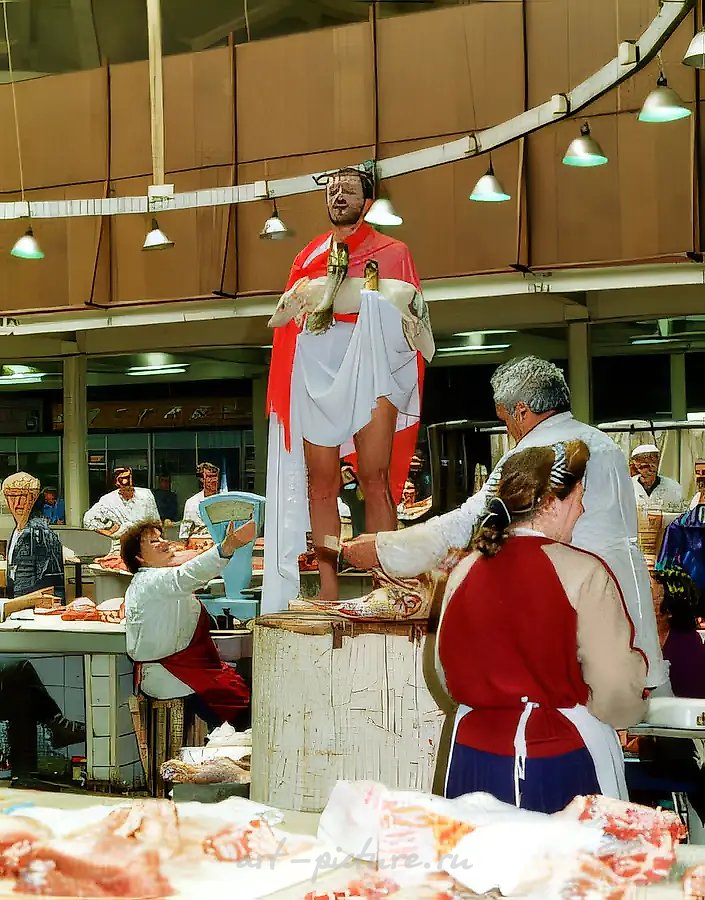
But the associations are not only literary. Kulik's zoophilia also has logical-philosophical origins. Among the principles of logic is the little-known principle of the identity of God and animal, the unity of the one who has absolute power over you and the one whose fate you can entirely dispose of. Kulik makes use of this principle in his action 'New Sermon,' in which a verbose Christ is transformed in the context of the Danilovsky Market meat rows into the speechless god of animals.
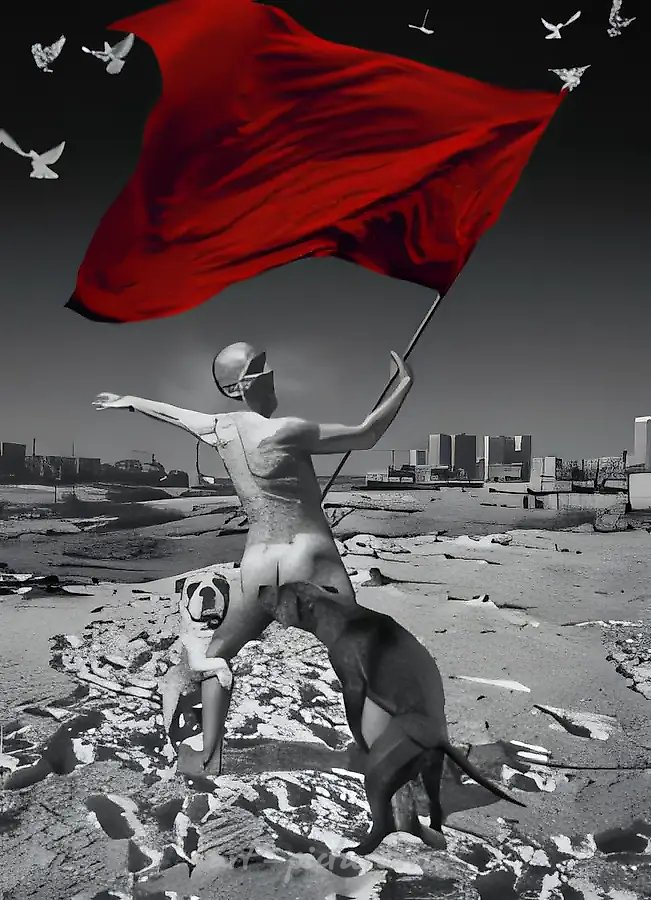
Like other artists who shape the direction of relevant Moscow art, Kulik has a sharp social intuition, the ability to navigate accurately in a constantly changing social context. This, in part, is a traditional quality for Russian artists: all four major styles of the last hundred years in Russian art—Peredvizhniki, classical avant-garde, socialist realism, and Moscow conceptualism—were defined by their social function, sometimes apologetic, sometimes critical. The history of conceptualism and soc-art only confirms the importance of the social constant in Russian culture. Kulik continues the soc-art line, and it's no coincidence that his actions are well understood by soc-art founders Komar and Melamid, whose latest ideas are close to Kulik's zoo-centrism.
However, one can examine this phenomenon differently. Since everything new is such only in relation to tradition, the artist has to seek out a tradition and reflect on it. For soc-art and conceptualism, the key tradition was official Soviet semiotics, its descriptive language synthesized with that of European and American modernism. For Kulik and other Moscow actionists, Tartu School semiotics and Russian structuralism are likely the tradition, as these provided the theory of the consciousness of the Russian intelligentsia—an alternative to institutional thought in Soviet postwar culture.
Of course, it's unimportant whether Kulik or his peers are familiar with the works of the Tartu School or just their French contemporaries—Foucault, Lacan, Levi-Strauss, Barthes. Tradition operates regardless of our awareness of it. And since one never knows where state law ends and the 'thieves' law' begins, today one can only violate the moral law, the universal law of Reason. This is exactly what the 'Lonely Cerberus'—Kulik's new 'political animal,' a new hero for our time—does so artistically.
I. Bakshtein
Works 28