Yuri Alexandrovich Leiderman
Born in 1963 in Odessa. Graduated from Moscow Institute of Chemical Technology in 1987. Member of the 'Medical Hermeneutics' Inspection group from 1987-91. Participated in exhibitions of Apt Art and the 'Club of Avant-Gardists' (KLAVA). From 2008 to 2010, founder and member of the groups 'KAPITON' and 'Corbusier' (together with V., Zakharov, A. Monastyrsky, and Y. Leiderman).
Works in collections
Collection of Contemporary Art of the Tsaritsyno State Museum-Reserve, Moscow; MANI Museum, Moscow; State Russian Museum, St. Petersburg; State Tretyakov Gallery, Moscow; Museo d'Arte Contemporaneo Luigi Pecci, Prato, Italy; Neue Galerie - Sammlung Ludwig, Aachen, Germany; National Gallery Victoria, Melbourne, Australia; Fonds National d'Art Contemporain (FNAC), Paris, France; P.Sprovieri, Rome, Italy; FRAC, Paris, France.
Exhibitions and auctions
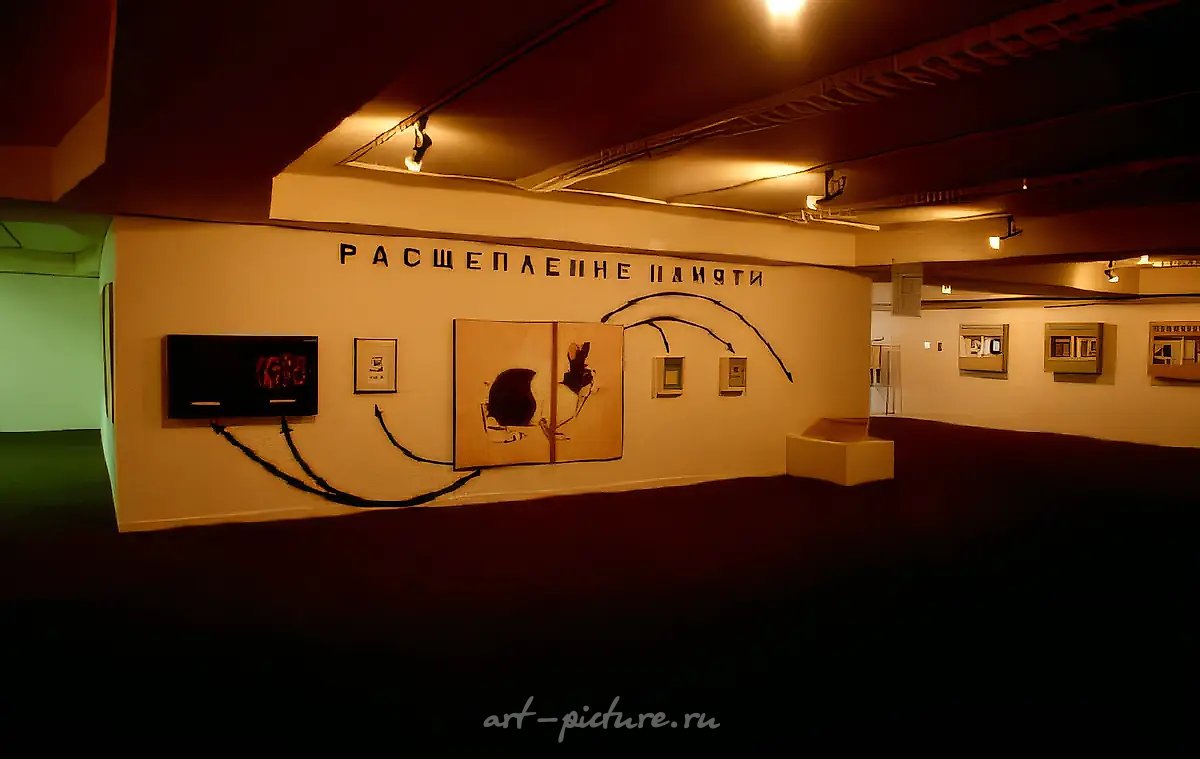
SOLO EXHIBITIONS: 1989 - ASP Museum, Warsaw; Tarabula Gallery, Krakow, Poland. 1991 - 'Stabilisierung der psychodelische phantasmata', Krings-Ernst Galerie, Cologne, Germany. 1992 - 'The Best and the Very Doubtful', Gallery 'School'; Gallery 1.0, Moscow. 'To Joseph Kosuth and the Civilization of Glynes', Vita Nova Gallery, Minsk. 'The Well and the Pendulum', 'The Hound of the Baskervilles', 'Animalistic Projects' Festival, Regina Gallery, Moscow. 'West in Space' (with A.Andora), Baikonur Cosmodrome. 1994 - 'The Best and the Very Doubtful', Galerie Inge Baecker, Cologne, Germany. 'World Football Championship', Gallery 'School', Moscow. 'La route Jura-Paris (fragments)', Michel Rein Gallery, Tours, France. 1995 - 'Les equipes perolues', Art 3, Valence, France. 1996 - 'Apperendre l'histoire de l'Europe a un chat', FRAC Champagne-Ardenne, Reims, France. 1997 - 'Eskimos', Palto Gallery, Moscow. 1999 - 'Circles and Masses', Galerija Skuc, Ljubljana. 2002 - 'Achselhohlen eines Entenflugels', GAK, Bremen, Germany. 2004 - Le Quartier, Quimper, France. 2005 - Rapport geopoetique, Museum of Contemporary Art, Marseille. 2007 - 'Here Comes the Swiss Captain Home and Sees: A Round Box on the Table' (GeoPoetics-5), Moscow Museum of Modern Art. 2010 - 'Place of Memory', National Center for Contemporary Art, Moscow. GROUP EXHIBITIONS: 1982-84 - Apt Art exhibitions in Moscow and Odessa. 1987 - First exhibition of the Club of Avant-Gardists (KLAVA), Peresvetov Lane, Moscow. (Further details omitted for length). 2003 - Individual Systems, Venice Biennale. 2004 - Techniques of the Obvious, Shanghai Biennale.
Critic
The intellectual biography of Yuri Leiderman at its various stages connected him both with the poetics of the archive and the poetics of reality. He was involved in the Moscow conceptualist school of Ilya Kabakov and Andrey Monastyrsky, and was a core member of their closest group of followers ('Medical Hermeneutics'), but later distanced himself from them at the moment when their work began to take the form of archival poetics. Subsequently, he joined efforts with Oleg Kulik, Anatoly Osmolovsky, and others to renew the value horizons of the Moscow art scene but again distanced himself when their work became representative of the poetics of reality. He is acutely aware of the exhaustion of the underground tradition: it is pointless to revive the past by fetishizing its texts and dogmas. Tradition should be given its true status, namely, as a fact of history. However, at the same time, it is clear to him that with the reduction of tradition, the last system that bestowed ontological status to existence disappears. The scale and drama of this catastrophe should be deeply and responsibly comprehended. After all, blind trust in reality removes the necessary distance and thus the possibility of comprehending it.
As a result, Leiderman's poetics set itself the task of finding a new post-catastrophic identity and can be defined as negative ontology. The meaning of this poetics lies in its constant appeal to universalist horizons, in the unwavering construction of ontological frameworks. As opposed to the lapidary nature of the poetics of reality, Leiderman sees a special value in speculative complexity, flawless causal logic, and architectural coherence of his ontological models. Yet, at the base of these constructions, there is always a semantic vacuum: one link in their chain of meaning remains open. Thus, Leiderman's poetics reconstructs ontological values and simultaneously dismantles them. Thus, in the era of ontological crisis, striving to avoid ideological phantoms or conservative orthodoxy, he tries to valorize the very process of seeking ontology.
For Leiderman's poetics, these zones of meaning extinction are of special value, so striking amid a crystal Cartesian logic. It is precisely there that new dimensions may emerge, that the possibility of other meanings reveals itself. Thus, in contrast to the poetics of the archive, which absolutizes the past, and the poetics of reality, which absolutizes the pure present, the poetics of negative ontology opens up the potentiality of the future. In contrast to the fetishized perception of archivists focused on the texts of tradition or the acquisitive perception of reality privatizers focused on new property, the poetics of negative ontology proposes a completely different, disinterested perception. The experience of pure vision is the only value that can be drawn from the process of ontological decay, the only foundation upon which post-catastrophic identity can be constructed.
It is clear that poetics aiming at pure vision is absolutely uninterested in representation: it needs it neither tactically nor strategically. For if tactical calculation inevitably reduces art to professional routine, then strategic efforts inevitably lead it to an identity with show business. Authentic meanings today are incommunicable: they remain deeply intimate and inexpressible. Therefore, the only possible representation is one that fully demonstrates its ineffectiveness and simultaneously introduces the idea of the possibility of another, unrepresentable communication. Only by inertia or naivety can one still see significance in art: its only value is that it still provides an occasion for experience, having no direct relation to art itself.
V. Miziano. 'Yuri Leiderman's Negative Ontology'. Exhibition catalogue 'La route Jura-Paris (fragments)', Michel Rein Gallery, Tours, France, 1994.
Bibliography
Leiderman, Y. Olor. Moscow: New Literary Review, 2004. 416 p. ISBN 5-86793-301-6. Leiderman, Y. Names of the Electrons. St. Petersburg: New Luna, 1997. 228 p.
Works 15

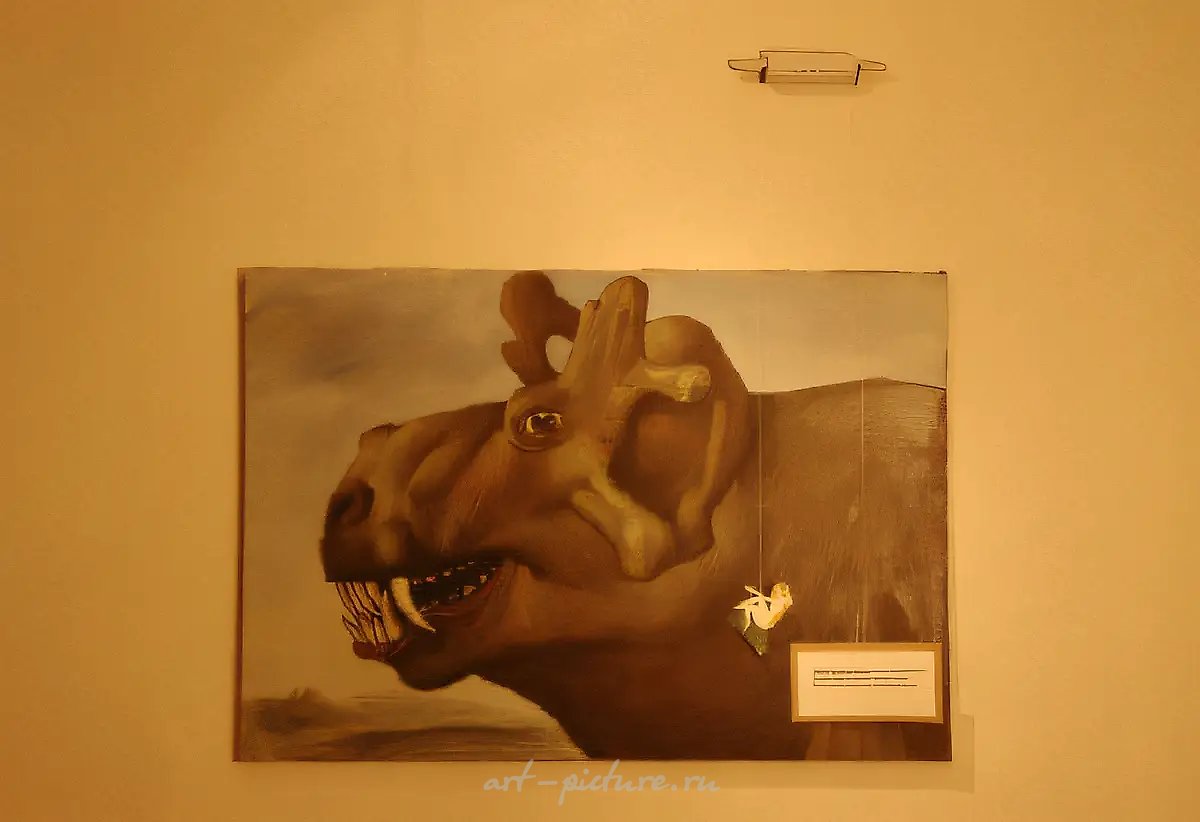
, 12х15cm A.Monastyrsky`s collection
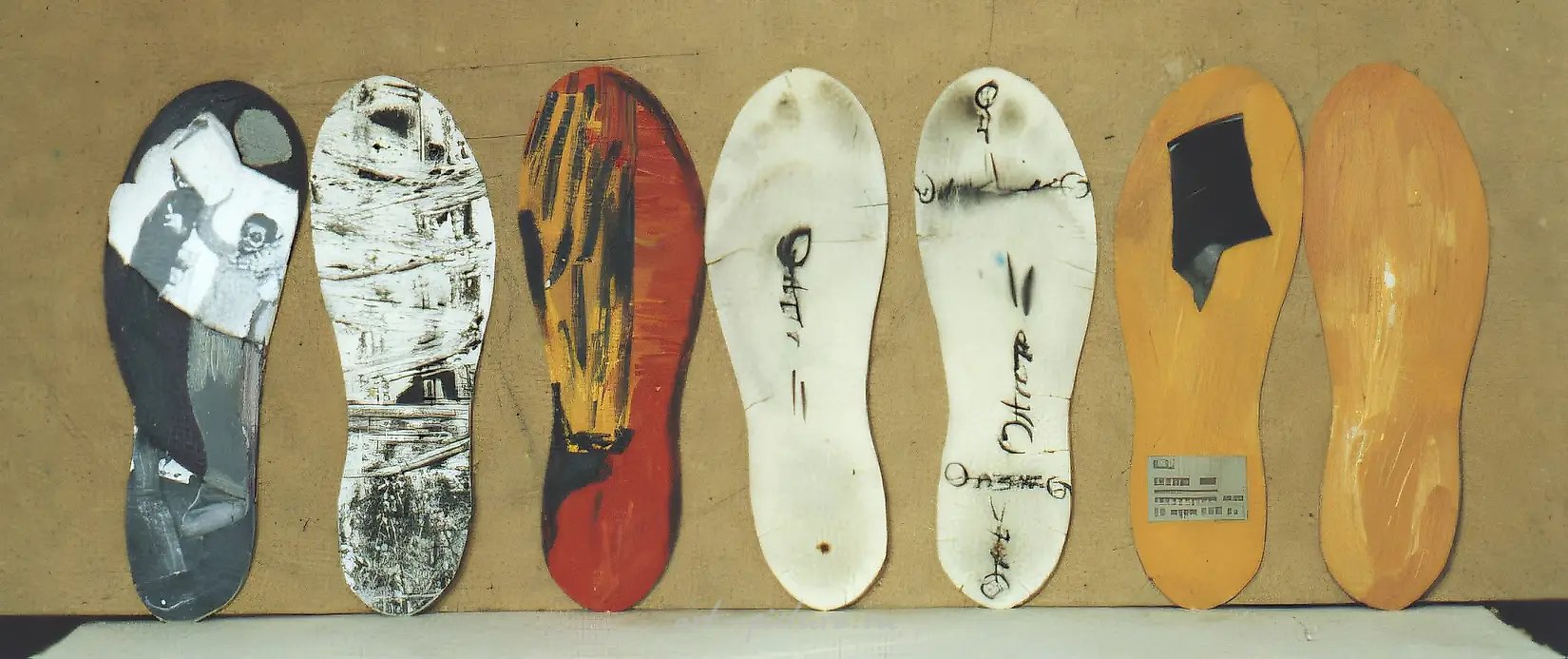
, 27х9cm A.Monastyrsky`s collection