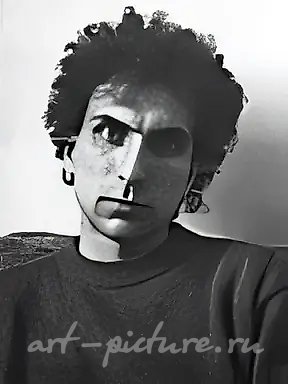
Anton Yulievich Olshvang
1965 born in Moscow
1988 graduated from the Moscow Art Theatre School-Studio (Production Department)
since 1989 member of the City Committee of Graphics
Works in collections
Collection of Contemporary Art, State Museum-Reserve Tsaritsyno, Moscow
Ministry of Culture of the Russian Federation, Moscow
State Russian Museum, St. Petersburg
Incombank, Moscow
Museum of Contemporary Art, Avignon, France
Neue Galerie - Sammlung Ludwig, Aachen, Germany
P. Sprovieri, Rome, Italy
Private collections in Austria, Belgium, United Kingdom, Germany, Italy, the Netherlands, USA
Exhibitions and auctions
SOLO EXHIBITIONS
1989 "New Works" (together with A. Mironov). Sculpture Studio, Glasgow, UK
1991 Krings-Ernst Galerie, Cologne, Germany
1992 "New Works." Storm Gallery, Amsterdam
Program "Duets" (with I. Zatulovskaya). "Dominus." MARKHI, Moscow
1993 "A. Olshvang, O. Chernysheva." Cinema Museum, Moscow
1994 "Anton Olshvang. Olga Chernysheva." Krings-Ernst Galerie, Cologne, Germany
"Polyethers." SRM, St. Petersburg
"June 30. 23-15." SRM (Stroganov Palace), St. Petersburg
"Polyethers." Gallery 1.0, Moscow
GROUP EXHIBITIONS
1988 "Eidos." Youth Palace, Moscow
1989 XVIII Youth Exhibition. Manege, Moscow
"Exhibition of Unfinished Works." K. Zvezdochetov's Workshop, Furmanniy Lane, Moscow
"...up to 33." Youth Palace, Moscow
"Affordable Art." First Gallery, Moscow
"Dialogue." "Avant-Garde Russe et Art Contemporain Sovietique" Centre Boris Vian. Ville des Ulis, Paris, France
"Furmanny Zaulek." Dawne Zaklady Norblina, Warsaw, Poland
1990 "Furmanny in Factory." Kassel, Germany
"Medhermeneutics and Others." Krings-Ernst Galerie, Cologne, Germany
"UdSSR Heute: Soviet Art from the Ludwig Collection." Aachen, Germany; Saint-Étienne, France
"Towards the Object." "Kashirka," Moscow
1990-91 "Exposition." Profsoyuznaya, 100, Moscow
1991 "Contemporary Soviet Art: From the Thaw to Perestroika." Contemporary Art Collection of the Tsaritsyno Museum. Setagaya Art Museum, Tokyo, Japan
"In de USSR en Erbuiten." Stedelijk Museum, Amsterdam, Netherlands
"Private Lessons." Gallery 1.0; Exhibition Hall at Solyanka, Moscow
"New Russian Artists." Santiago de Compostela, Spain
"Weight and Madness." F. Duran Gallery, Madrid, Spain
"Art of Europe." Kunstverein, Hanover, Germany
"Opera." Academia dell'arte, Perugia, Italy
"V izbah/In Rooms." Dom Kultury, Bratislava, Czechoslovakia
1992 "Moscow Romanticism." Central House of Artists, Moscow
"Wastes." State Center for Contemporary Art. Plastov Museum, Moscow
"a Mosca... a Mosca..." Villa Campoleto, Ercolano; Galleria Comunale d'Arte Moderna, Bologna, Italy
1992-93 "Humanitarian Aid, Parcels for Germany. 27 Moscow Artists." Central House of Artists, Moscow; "Humanitare Hilfe, Packchen fur Deutschland." Tranenpalast, Berlin, Germany
1993 "Exchange / Obmen." Moscow
"Kontext Kunst 90." Künstlerhaus, Graz, Austria
1994 "Europe'94." Munich, Germany
Cetinjski Biennale II. Cetinje, Montenegro
"Exchange II / Dacha." Almere, Flevoland, Netherlands
1995 "Kunst im verborgenen. Nonconformists Russia 1957-1995." Contemporary Art Collection of the Tsaritsyno Museum-Reserve. Wilchelm-Hack Museum, Ludwigshafen am Rhein; Documenta-Halle, Kassel; Staatliches Lindenau Museum, Altenburg, Germany
"Configura 2. Dialog Der Kulturen." Erfurt, Germany
"Prospects." Vaggart, Sweden
"in Moscow... in Moscow..." Badischer Kunstverein, Karlsruhe, Germany
1995 "Open Atelier." Rijksakademie. Amsterdam, Netherlands
1996 "Massig und gefrassig." MAK-Austrian Museum of Applied Arts, Vienna, Austria
Russian Atelier. Universiteit Museum, Amsterdam, Netherlands
Author about himself
No information available
Critic
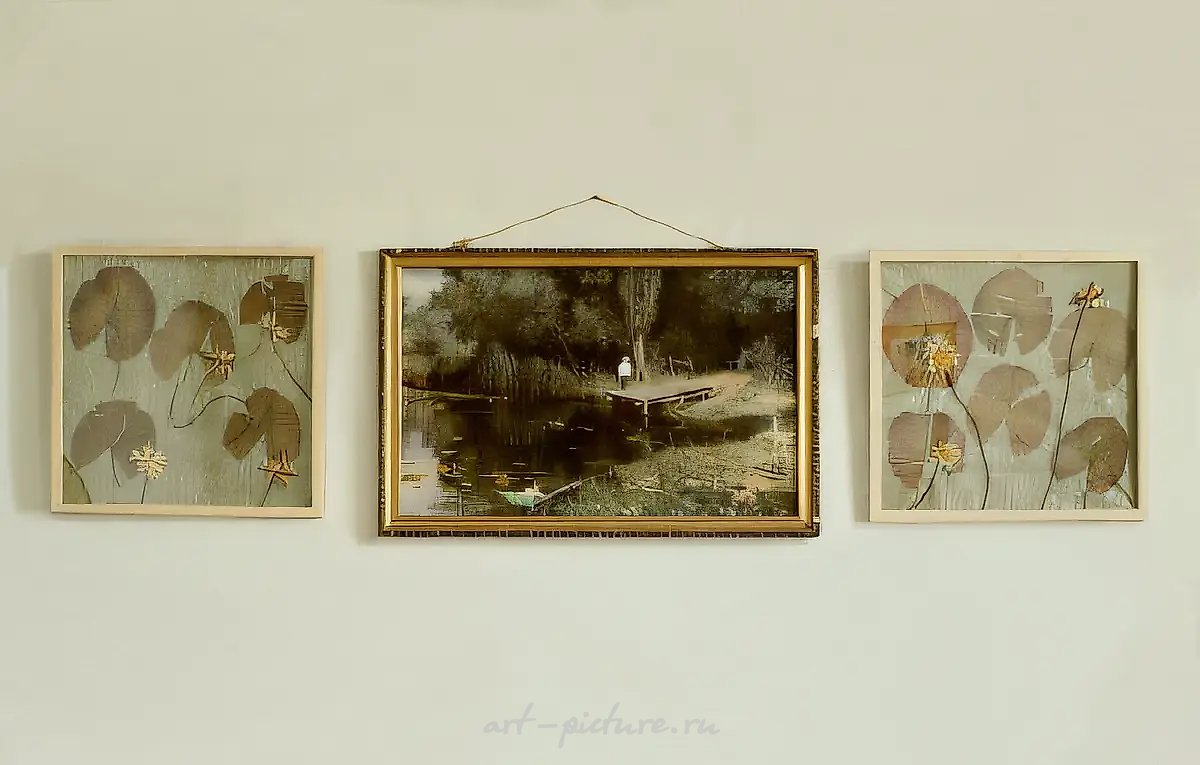
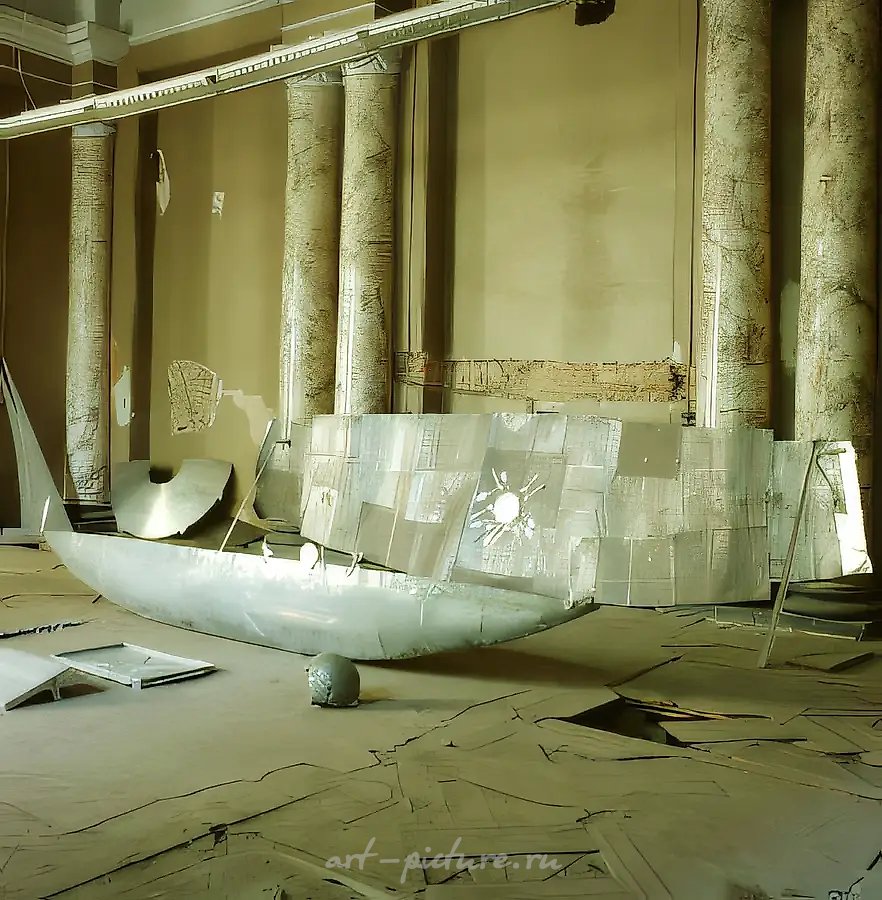
Olshvang’s aluminum objects and installations were considered by some, against the backdrop of the dominance of "text art," as aestheticism, an alternative to conceptualism, and Olshvang himself as an agent of minimalism. However, Olshvang is not a formalist.
Gathering his works from the dump, he enacts a key metaphor of post-Soviet art of the 1980s. At that time, both artistic discourse and practice saw the USSR described as a dump—of useless things and devalued ideas. Every Soviet object initially looked like a trash heap. Olshvang does not immerse things in the realm of garbage, but extracts them from it, without an act of debasement. He does not reduce art to zero. He is not fascinated by the idea of the empty sign. Forms and signs, for him, should be 'weighty', significant.
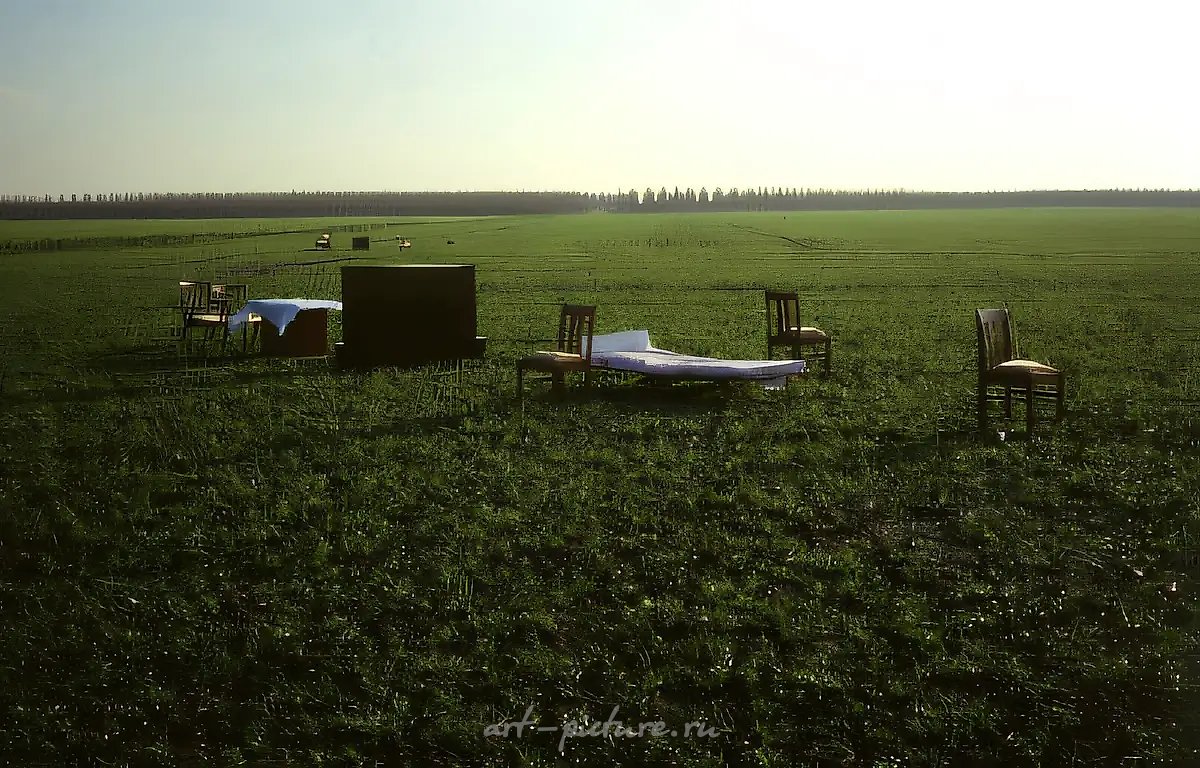
In his famous installation "Tactics," where a table with moth-eaten cloth is cleverly staged to evoke a geographic map, he elevates the natural to the signified and cultural, endowing the work with an infinite train of associations, which ensures its "life."
Against the background of reductionist and reproductionist practices, Olshvang's gesture appears as a persistent restoration of uniqueness, a staging of the buried 'aura.' He presents the stamped and industrial (industrial waste) as authentic and unique.
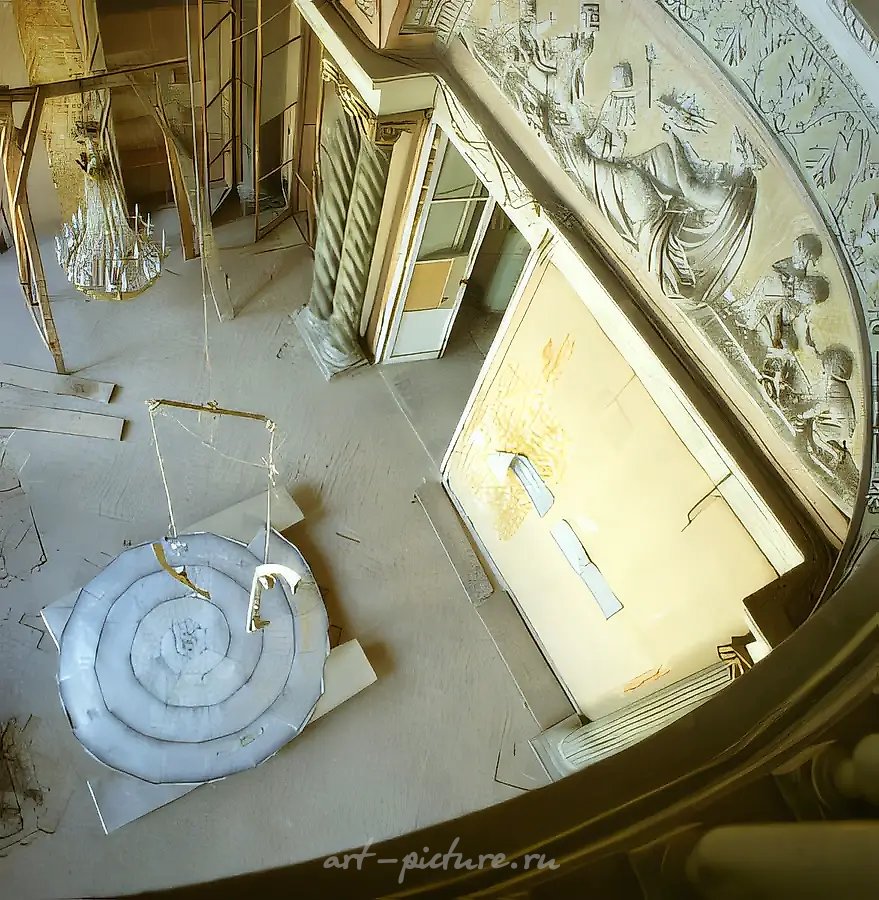
Aura arises from ritual. The construction of many of Olshvang's "mythogenic" works, for example, in the form of a spiral, serves the desired rituality.
Working with trash relates to ecological consciousness, but this similarity is deceptive. Recycling epitomizes reproductionism, the free exchange of one signifier for another (the transformation of the object's form when melted down), with a decisive disregard for the object's aura and meaning. Olshvang, on the contrary, is interested in meanings, imprinted memory; therefore, besides urban dumps, the domain of his explorations is old apartments with their piles of sentimentally significant things.
Olshvang’s "archetypes," like a large boat with a human mask fixed on it, sometimes border on kitsch, as does the concept of the archetype itself. Olshvang’s best works are those in which his ambiguous symbols reference not the collective unconscious, but the individually psychological, and responsibility for the surrealism is assumed by personal obsession, shining through the latent narrative. Such is the aforementioned "Tactics" with its invisible protagonist—a mad retired general (this interpretation, of course, is free), such is the record player with two tonearms creating the effect of a delayed echo, and the posthumous paired photo of a groom next to a bride. In both works, the artist deals with the hyperbolization of chance, making the vintage photograph involuntarily suggestive.
The strong point of Olshvang’s art is a rare capacity for mystification—which, perhaps, will be demonstrated by the complex set of actions devised as a work for this project.
E. Degot. "Anton Olshvang." - Segodnya, September 11, 1993
Works 9