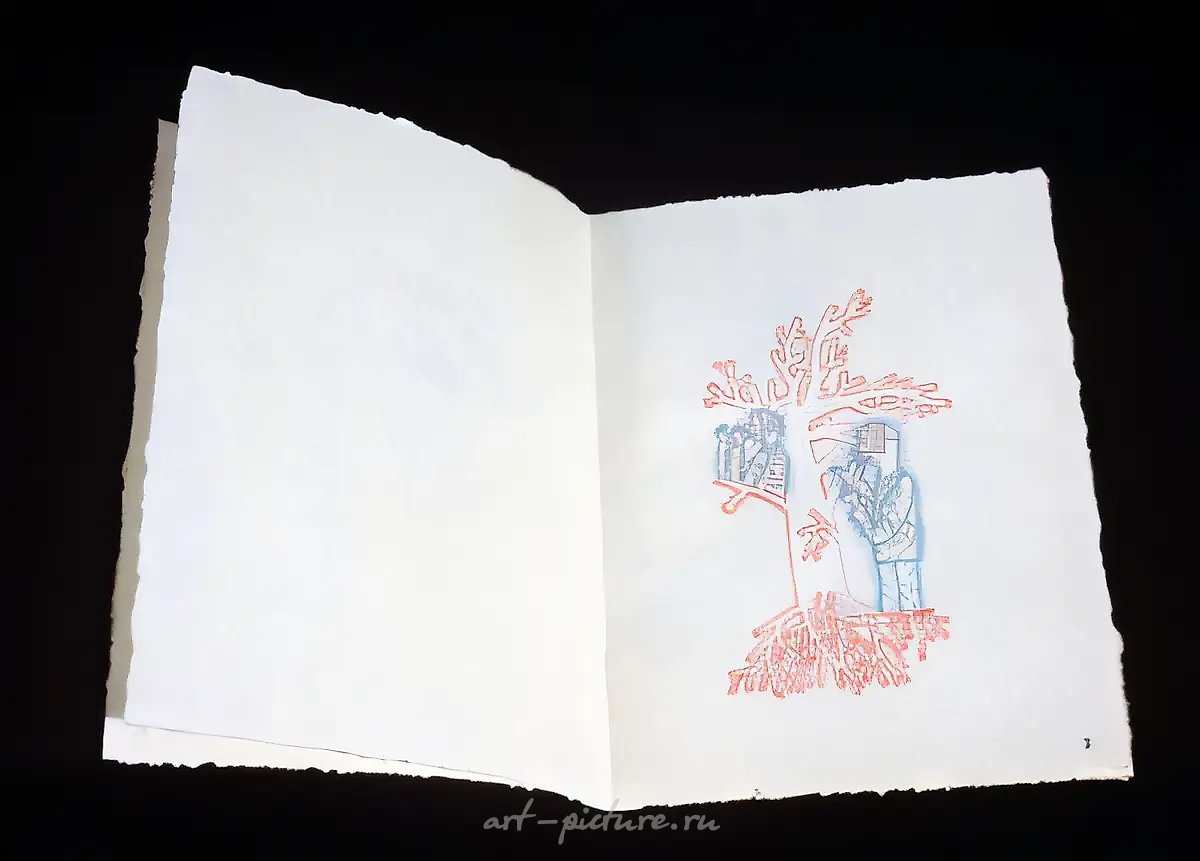

Perevezentsev Pyotr Yulievich
Pyotr Yulievich Perevezentsev (Born April 29, 1962, Moscow) is a graphic artist and book artist, illustrator, and poet.
Biography
Pyotr Perevezentsev was born in Moscow in the family of artist Yuli Yulievich Perevezentsev. He studied at the Art and Technology Faculty of the Moscow Technological Institute, graduating in 1985. In 1987, he became a member of the Youth Association at the Moscow Union of Artists; two years later, he joined the Moscow Union of Artists (1989). For many years, he has worked as an illustrator with publishing houses (Vita Nova and others) and magazines. According to the State Museum Catalogue of the Russian Federation (as of 15.01.2023), twenty-seven works by the artist are part of the permanent collections of museums in Russia.
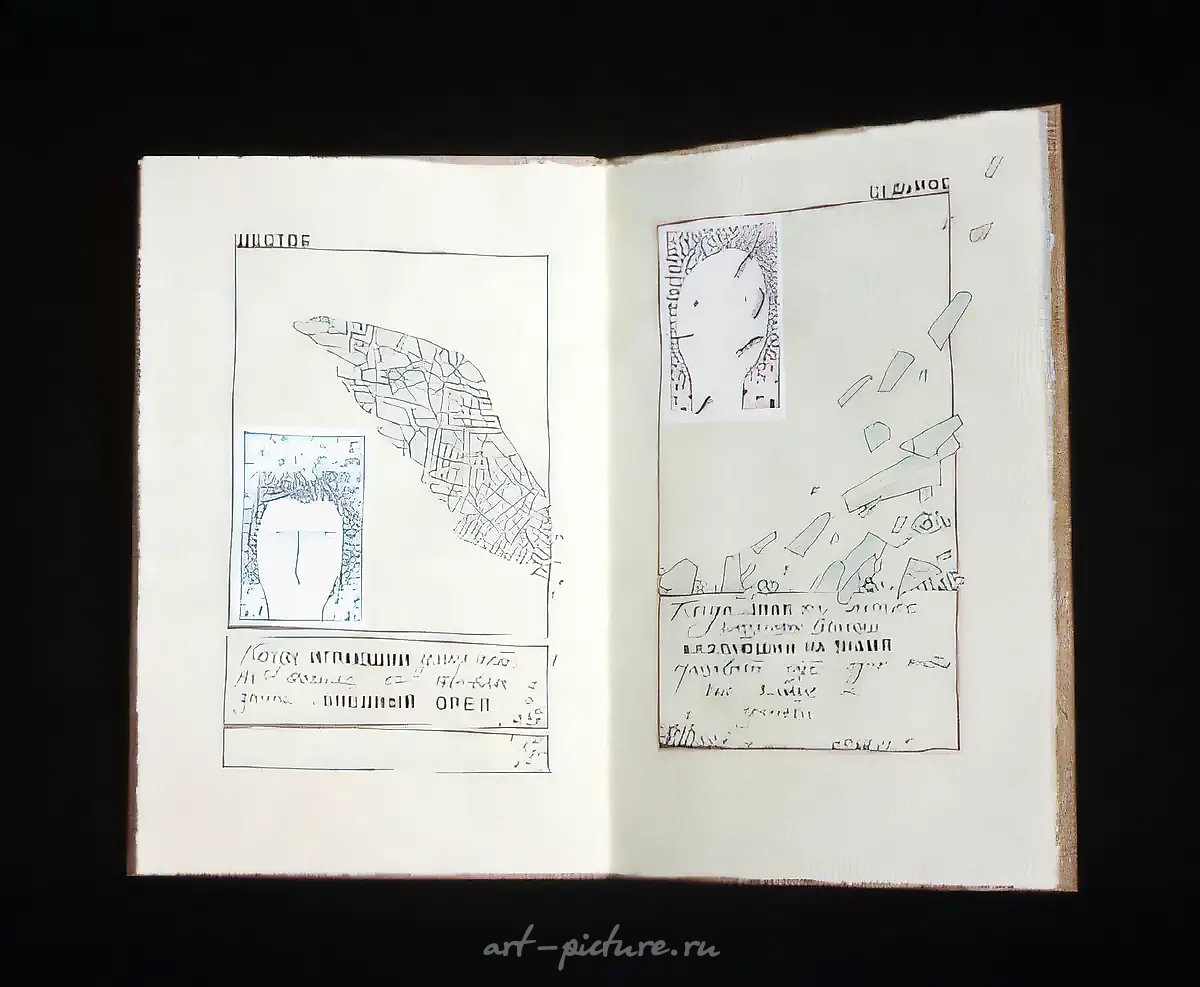
Pyotr Perevezentsev is a frequent participant in group projects in the format of livre d'artiste: 'The City as an Artist's Subjectivity', St. Petersburg, 2020 (curator — Alexey Parygin); ILIZDA, Moscow, 2019 (curators — Vasily Vlasov and Mikhail Pogarsky); 'Poetry of Unknown Words (Variations in Cyrillic)', Moscow, 2019 (curators — Vasily Vlasov and Mikhail Pogarsky); 'The Yellow Sound' (on the 85th anniversary of Alfred Schnittke), Moscow, 2019 (curators — Vasily Vlasov and Mikhail Pogarsky); 'Russian Primer', Moscow, 2018 (curators — Viktor Lukin and Mikhail Pogarsky); 'Birds and Numbers', (130th anniversary of Velimir Khlebnikov) St. Petersburg, 2015 (curator — Mikhail Karasik); 'The Book at the Cutting Edge of Contemporary Art', St. Petersburg-Moscow, 2013 (curators — Viktor Lukin and Mikhail Pogarsky).
He lives and works in Moscow.
Works in collections
State Hermitage. Scientific Library of the Hermitage, Sector of Rare Books and Manuscripts. (St. Petersburg).
State Russian Museum. (St. Petersburg).
Prints and Photographs Department of the Russian National Library. (St. Petersburg).
Anna Akhmatova Museum at the Fountain House. (St. Petersburg).
Pushkin State Museum of Fine Arts. (Moscow).
Garage Museum of Contemporary Art. Artist's book collection. (Moscow).
AVC Charity Foundation. (Moscow).
AZ Museum. (Moscow).
Kaliningrad Regional Museum of Fine Arts (Kaliningrad).
Yaroslavl Art Museum.
Victoria and Albert Museum (London).
Van Abbemuseum. LS (Albert Lemmens & Serge Stommels) Russian Artist's Book Collection Eindhoven (Netherlands).
Museum of Modern and Contemporary Art of Trento and Rovereto (Italy).
Bavarian State Library (Munich).
Berlin State Library.
Klingspor Museum. Museum of Book and Typeface Art (Offenbach am Main).
Saxon State Library. Artist's Book Fund (Dresden).
University Scientific Library (Mannheim).
Exhibitions and auctions
SOLO EXHIBITIONS
1992 "ABRAXAS. Bilder von Pjotr Perewesentzew". "Studio im hochhaus", Berlin, Germany
"Pyotr Perevezentsev. Graphics." Gallery "Moscow Collection", Moscow
1995 "Pyotr Perevezentsev. New Objects." Kaliningrad Art Gallery, Kaliningrad
GROUP EXHIBITIONS
1985-91 participant in more than 20 Moscow, All-Union and Republican exhibitions
1988 "IV Internationale Triennale der Zeichnung." Kunsthalle, Nuremberg, Germany
1989 "IBA-89." Leipzig, Germany
1990 "XIII Convegno internazionale del fumetto e del fantastico." Prato, Italy
"Konkret. Russian Visual Poetry." Galerie "Am Markt", Annaberg-Buchholz, Germany
"Visual Poetry International." Schloss Friedenstein, Gotha, Germany
"Transfutur".Galerie "Kasseler Kunstetage", Kassel, Germany
1992 "Transfutur". Galerie "Pankow", Berlin, Germany
1993 "Books of Russian Artists of the 20th Century. Tradition and Modernity". Lenin Library, Moscow
"ART MYTH 3" (exhibition and auction). Manezh, Moscow
1994 "Theatre of Papers-2." Anna Akhmatova Museum, St. Petersburg
III Kaliningrad Biennale of Graphics. Kaliningrad (2nd prize and medal)
Selected Bibliography:
Pogarsky M., Lukin V.F. Encyclopedia of the Artist's Book. Moscow — 2022. color ill. — 296 pp. — P. 170. ISBN 978-5-9906919-7-1
Gagarin. Gaining Wings (exhibition project in the genre of "Artist's Book") Introductory article authors: Schelokova, M. Moscow: Open Club. — 2021. — 28 pp. [no pagination]. Print run — 100 copies.
Sopromat / Group Project Album. Comp.: K. Matissen. Moscow; N. Novgorod: Express. — 2021. — 128 pp. Print run — 300 copies.
The City as the Subjectivity of the Artist. Group project in the format of the artist's book/ Catalog (Russian-English). Article authors: Parygin A.B., Markov T.A., Klimova E.D., Borovsky A.D., Severyukhin D.Ya., Grigoryants E.I., Blagodadov N.I. — St. Petersburg: T. Markov Publishing. 2020. — 128 pp.: color ill. ISBN 978-5-906281-32-6
Poetry of Unknown Words in the 21st Century // Project catalog. Introductory articles: P. Kazarnovsky, M. Pogarsky. Moscow: AVC Charity. — 2019. — 98 pp., color ill.
Zdanevich Here and Now // Project catalog. Introductory articles: P. Kazarnovsky, M. Pogarsky. Moscow: AVC Charity. — 2019. — 110 pp., color ill.
Die Verwandlung. 25 Jahre russische Künstlerbücher 1989-2013. LS collection Van Abbemuseum Eindhoven (exhibition catalog). Introductory articles: Antje Theise, Klara Erdei, Diana Franssen. Eindhoven, 2013. — 120 pp., color ill.
Museum "Artist's Book" (exhibition catalog in the Erarta Museum. St. Petersburg). Introductory articles: M. Pogarsky, M. Karasik, E.D. Klimova, Y. Samodurov. St. Petersburg. 2011. — 200 pp., color ill.
Author about himself
One endless narrative: a tight, narrow circle of archetypal images, cross-cutting symbolism stretching through the entirety of creative experience.
And — a striving to infinitely expand the sphere of expressive means, to a plastic "mixing of languages". My work attempts to take root in the uncomfortable spaces between types of art, between genres, between eras.
Russian futurism, empire style, late European painting — all are sieved and melted down to serve the unending narrative.
In parallel goes the search for a capacious, compact model that could serve as an "encyclopedia" of my figurative-plastic system and channel the aforementioned "narrative" into a certain stream.
Thus, since the second half of the 1980s, I have been working on the Kopyssa theme. This story of a fictional city is something between a utopia and a myth. A self-contained absurd utopia without an ideological supertask, and a myth that resists structural analysis.
The influence of Kopyssa affects all areas of my work in one way or another: graphics, artist's books, visual and phonetic poetry, spatial objects.
All this venture, with its provocative, playful character — like a mask covering the face of my work; a mask similar to those worn by the inhabitants of Kopyssa, obeying the overcomplicated ritual of the city's life.
Critic
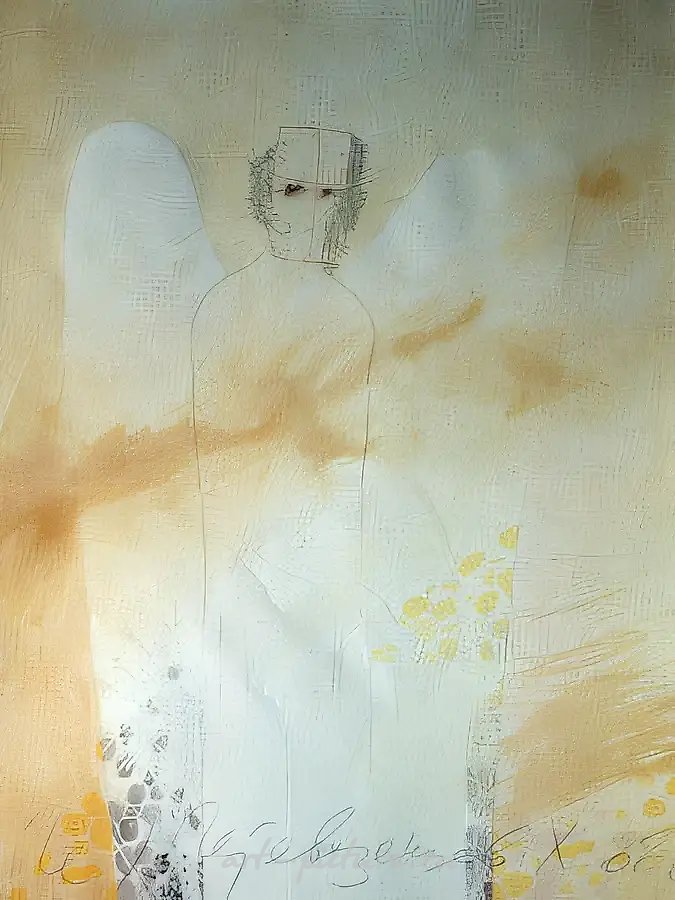
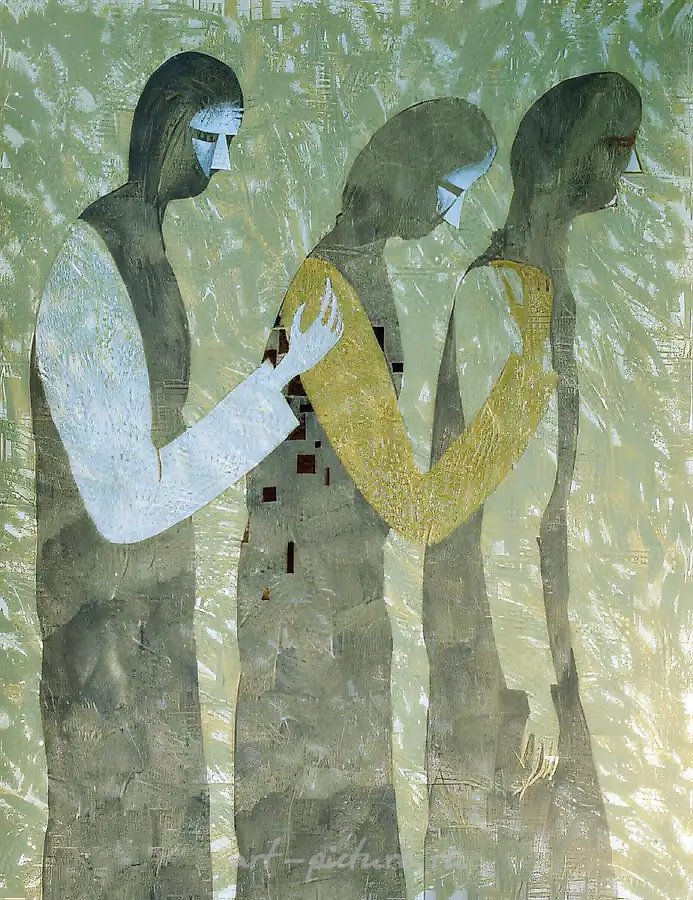
An attempt to clearly isolate a specific name or group of names that were starting points for Pyotr Perevezentsev as a graphic artist is virtually doomed to fail. The foundation of his work lies in stylistic features, often of entirely different origins. Most often, these are not constructive qualities but conditional external features of one or another style, which are intertwined into a single whole. The octagonal frame of the Empire period, a vignette from the same epoch, coexist with a unique font enclosing itself in the graphic image, bringing an elusive aroma of Viennese Secession. Special, contoured, slightly caricatured outlines of human figures remind us of the chamber, intellectual graphics of the 1970s.
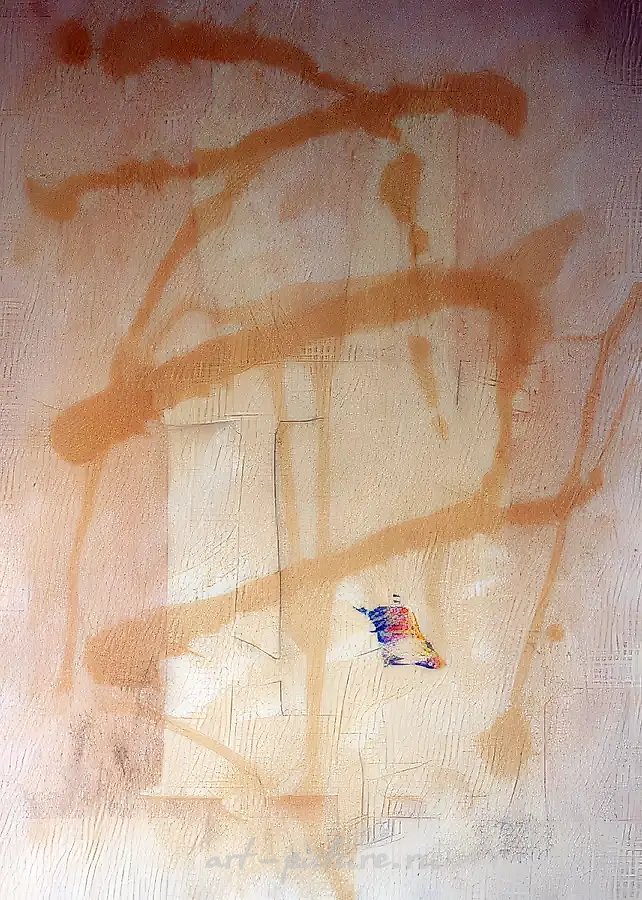
Playing the role of signs, the objects, the modes of their depiction, the organization in the plane of the sheet are remarkably equalized in their rights. Colliding, they form a completely unexpected but strong system of images. Moreover, the more Perevezentsev’s sheets the viewer sees, the stronger becomes the sense of style the artist has consciously set for himself. It makes one want to write: an artist of style... And then it becomes clear that this style does not exist outside the artist’s works, and the viewer has simply fallen under the spell of the artistic myth he has created.
Perevezentsev’s myths are distinguished by a unique feature — lacking bright plot twists, they impress with a mysterious all-encompassing character. The artist does not choose symbolic plots, does not rethink everyday situations to the point of biblical generalization, nor does he pursue the well-trodden path of mythmaking of the late 1980s. His myths are strange, independent, and have no parallels in eternal history. Their strength, in our view, lies not in the narrative or symbolic interpretation of images, but in a new understanding of the decorative and spatial elements of the sheet.
The complexity and a certain codedness of Perevezentsev’s myths, thoroughly camouflaged by the sophistication of color and formal relationships in his easel sheets, disappears if one understands the primary relationship between meaning and artistic means of expression found by the artist. The fact is that meaning is hidden in the depths of the pictorial language itself. It is precisely this inseparability of content and means of expression, the impossibility of knowing one without the other, that creates the uniqueness of his graphics. This is also what compels Perevezentsev to break down the spatial-temporal and compositional guidelines familiar to us and to create new ones.
M. Nenarokov. "The Art of Creating Myths." - Tvorchestvo, 1988, No. 7
Works 9