Khorovsky Yuri Alekseevich
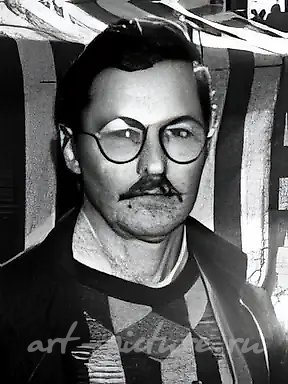
Yuri Alekseevich Khorovsky (b. November 14, 1946, Chadyr-Lunga, Moldavian SSR) is a Russian sculptor, graphic artist, and painter.
Works in collections
State Tretyakov Gallery, Moscow; Republican Art Museum, Chisinau; MARS Gallery, Moscow; Moskovskaya Palitra Gallery, Moscow; Na-ne Gallery, Budapest, Hungary; Marat Gelman Collection, Moscow. Also in private collections in the CIS, Russia, Western Europe, and the USA.
Exhibitions and auctions
SOLO EXHIBITIONS 1977 Sculpture exhibition. Chisinau 1989 'Painting, Sculpture, Graphics'. Chisinau 1990 Exhibition Hall 'Dom 100', Moscow; Union Gallery, Moscow; 'ART MIF 1'. Imex Gallery. CCE, Moscow 1991 Marat Gelman's Gallery, Moscow 1992 Marat Gelman's Gallery, Moscow 1994 'Jews'. Marat Gelman's Gallery, Moscow; 'Charisma of Power', Russian Government House, Moscow; 'Obsession', Dar Gallery, Moscow 1995 'Psychiatric Archive', Marat Gelman's Gallery, Moscow 1996 'Destructuring the Family Album', Dar Gallery, Moscow; 'Seven Stations' (part of Photobiennale), Marat Gelman's Gallery, Moscow; 'The Russians Came' (part of the 'Moscow-Berlin' festival), Dar Gallery, Moscow GROUP EXHIBITIONS 1989 Moldavian Artists’ Exhibition, Moscow 1989 '2+1', Moscow; 'Myths and Reality', Youth Palace, Moscow 1990 'Babylon', Youth Palace, Moscow; 'Ideal Soviet Art Market Project', CCE, Moscow 1991 Na-ne Gallery, Budapest, Hungary; 369 Gallery, Edinburgh, UK 1992 'Diaspora', CCE, Moscow; Traverse Center, Edinburgh, UK 1993 'Dedicated to the 7th Congress of People's Deputies', Marat Gelman's Gallery, CCE, Moscow; 'Balls for Socrates', New Space, Historical Museum, Odessa; 'Conversion', Marat Gelman's Gallery, CCE, Moscow; 'New Territories of Art', State Art Museum, Krasnoyarsk; '777 Distance Communication', Aspex Gallery, Portsmouth, UK; Kunstnernes Hus, Aarhus, Denmark; Storm Gallery, Amsterdam, Netherlands; Galeria Nova, Bratislava, Slovakia; Reykjavik Art Museum, Reykjavik, Iceland; Marat Gelman's Gallery, Moscow; 'Postmodernism and National Traditions', Tretyakov Gallery, Moscow; 'Nostalgia', American Trade Center, Moscow 1994 'Mazepa', Soros Center for Contemporary Art, Kyiv 1995 '5 Years of Marat Gelman's Gallery', Artist House on Kuznetsky Most, Moscow 1996 'Olympiad and Art', Nexus Contemporary Art Center, Atlanta, USA; 'The Lion's Share', Dar Gallery, Moscow 1997 'Results of the 1996-97 Hunting-Exhibition Season', Dar Gallery, Moscow; International Art Fair ARTMOSCOW, CCE, Moscow (catalogue) ACTIONS 1997 'Seeing Off Political Winter', Marat Gelman's Gallery, Moscow
Author about himself
My father, an officer, came to Moldova with the Red Army in 1944 and married my mother, but only lived with her for a week. He moved to Moscow. I was born in 1946 in the small southern Moldovan town of Chadyr-Lunga, in my grandfather's house. My grandfather was Isaiah Khorovsky, a Polish Jew who moved to Moldova at the end of the last century. My Jewish relatives hoped for a better life with the arrival of the Red Army, but when the troops arrived, they took the tiles from the new house and replaced them with a receipt. The family had to move to the old house. My mother and her younger brother were the first Komsomol members in town. In 1952, my mother and I moved to Chisinau, the capital, where my new, vivid life began. The city was still in ruins, but life was buzzing. Everyone was happy that the war and hunger had ended and that Stalin promised a happy and prosperous life. One day, my mother took me to an art museum, and what I saw there amazed my imagination. I started drawing, sculpting, carving. At 11, I joined a studio; at 13, I entered an art school as a sculptor. At 15, I began traveling to Moscow for museums, exhibitions, and to visit studios. In 1965, after graduation, to avoid military conscription, I went to Moscow to enroll in a college that was easier to get into. I was admitted to the fashion design faculty of the Moscow Technological Institute, where I studied for a year and then left - it was boring. Back in Chisinau, I immersed myself in Moldova's artistic life, working for several years in the workshop of academician Lazar Dubinovsky and assisting on his major projects. I first exhibited in 1968, and in 1970 joined the Artists' Union. For years, I was its youngest member; they tried to mentor and load me with social work. It was the start of the Brezhnev stagnation: the Union was run by talentless socialist realist ideologues. My works weren’t 'socialist realist', and I faced opposition, labeled a 'leftist'. But my works were bought in Moscow and accepted in national exhibitions. The Ministry of Culture and the Tretyakov Gallery bought my works. I started spending more time in Moscow and participating in its art life. With perestroika, life in Moldova changed dramatically—nationalist revolution, and in art, national-ethnographic tendencies dominated, making me an outsider again. In 1988, I had two major solo shows in Chisinau, which national-patriotic circles criticized. I became a stranger in Moldova. Then I met Marat Gelman, who proposed a solo show in Moscow—it was held in 1989 at the 'Dom 100' gallery and received press attention. That marked the beginning of my new Moscow life. My wife divorced me and went to New York with our children; I moved to Moscow. All these years in Moscow, I've collaborated with the Gelman Gallery, participating in all major projects in Russia and abroad. Ten solo exhibitions have been held. I work in painting, sculpture, graphics, installation, and photography.
Critic
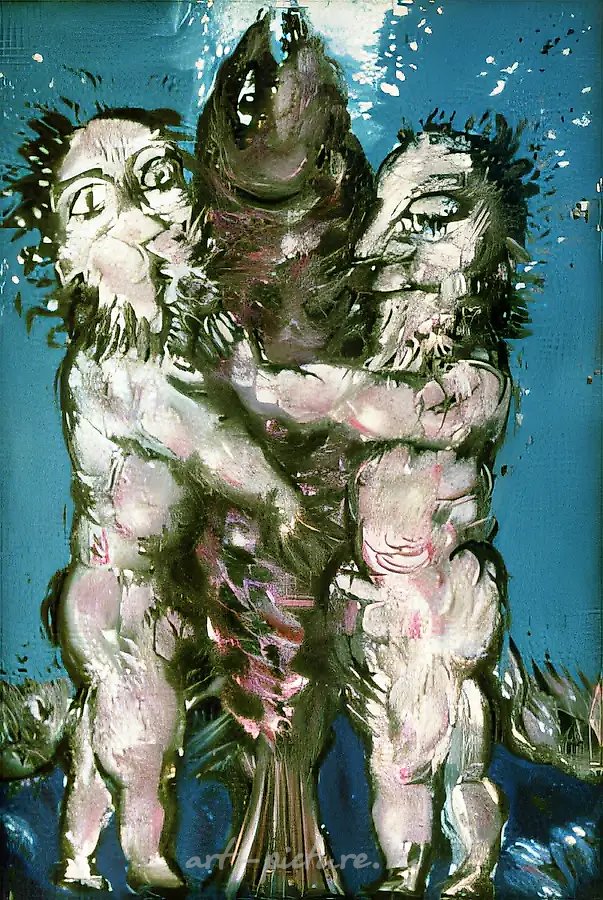
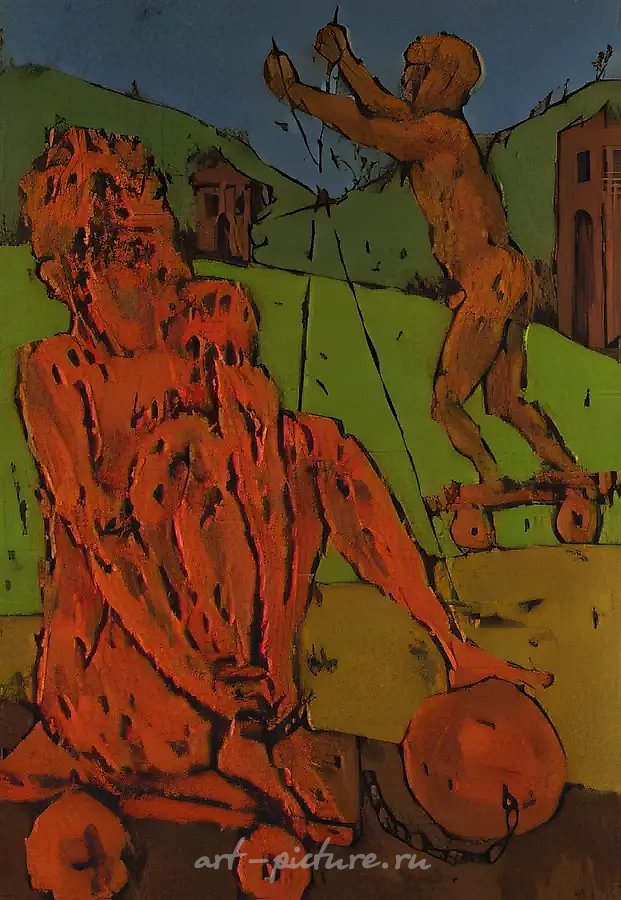
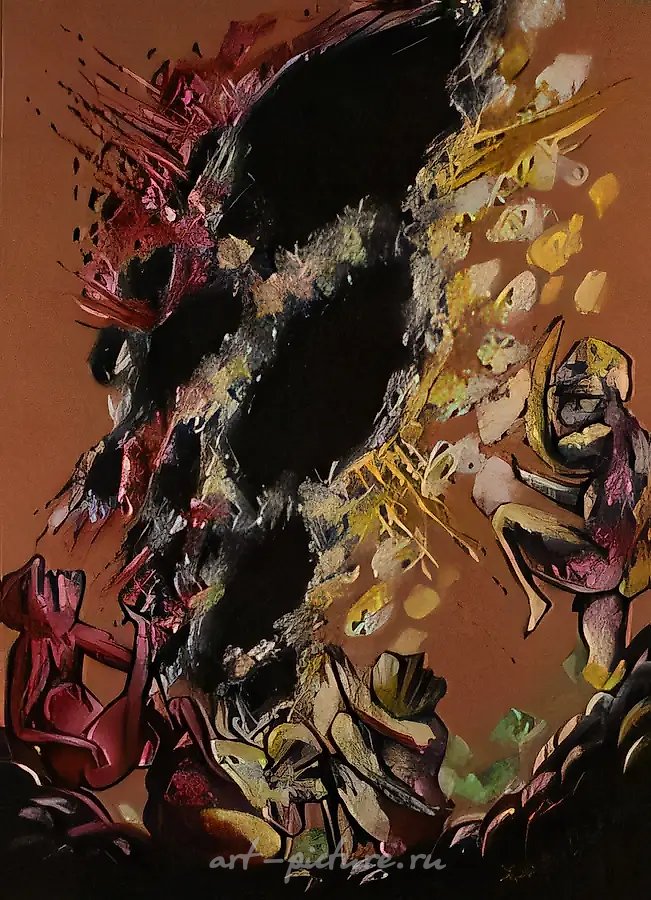
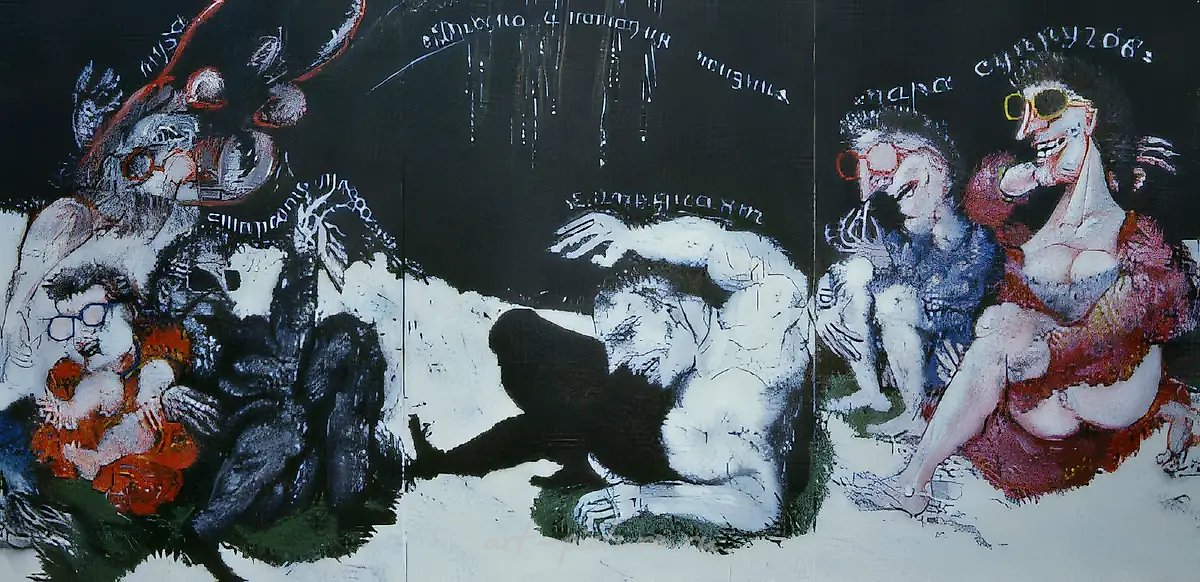
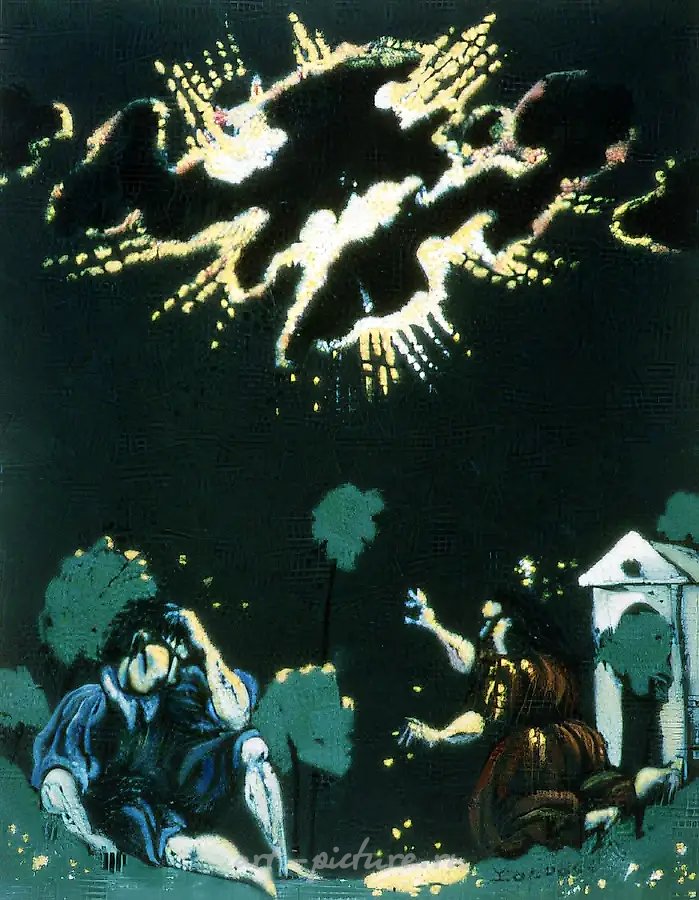
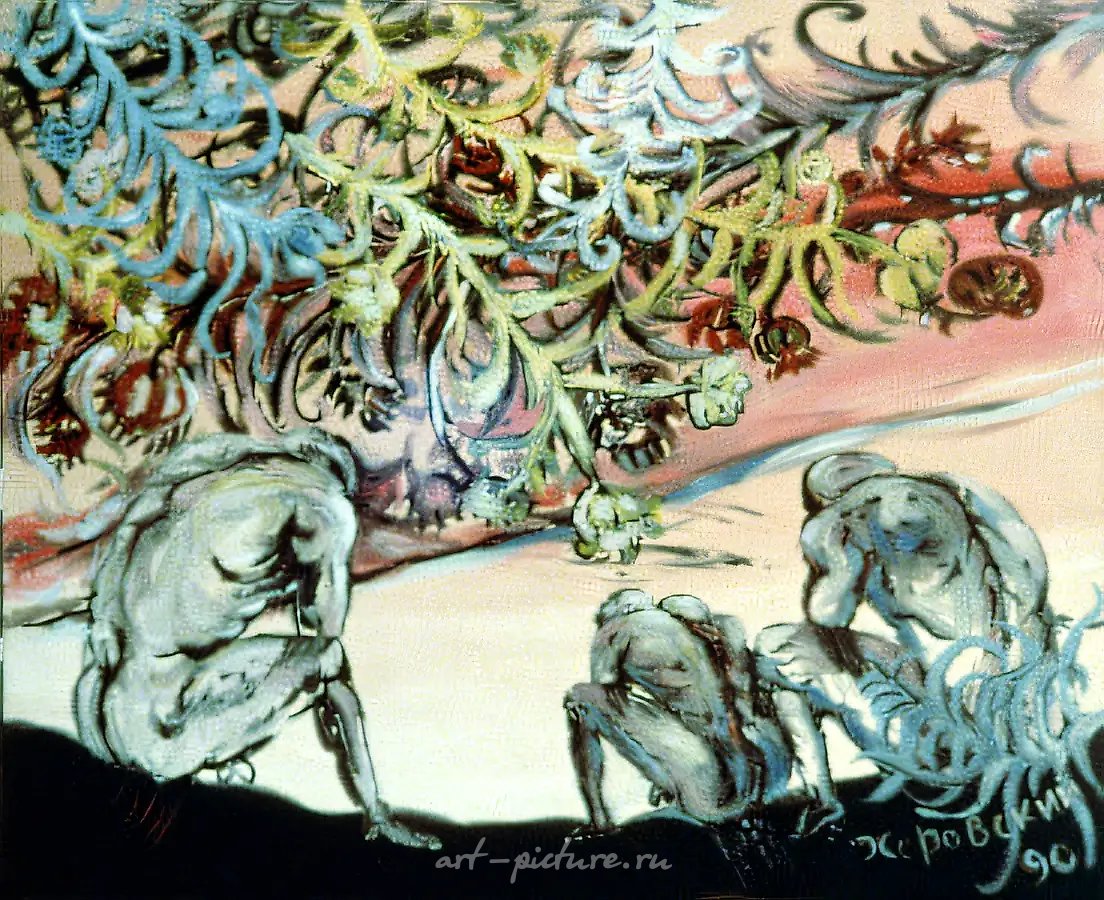
Yuri Khorovsky’s gallerist Marat Gelman describes his work: 'Once, art's central place was occupied by the hero. Now, the hero is gone, replaced by comic book characters: Batman, Superman, even Mickey Mouse. Khorovsky tries to bring the hero back. But, passing through the dirt and mess of our times, Khorovsky’s hero no longer resembles the glorious Greek gods. His Hercules is a superhero who has seen too much. It’s bitter but true. Christ, having starred in the rock opera "Jesus Christ Superstar", can’t take off Ian Gillan’s sunglasses.' Khorovsky agrees: 'Yes, it sounds beautiful. I like it, but it’s just a cultural background I work on. I want to use it, like paint or paper. Schwarzenegger—the new hero—looks at us from every poster; one can only treat it ironically. But as an artist, I solve different problems: I live by plasticity...' Khorovsky often uses classical subjects, eternal characters, archetypal episodes from literature and history: Christ, Daphnis and Chloe, Lot's wife and the Last Supper, Hercules, Cain and Abel. But his images are removed from their classic predecessors. As an insightful critic wrote: 'Once you’ve flirted with modernism, or even only lived beside it, you can’t return to tradition with an open heart free of irony.' Khorovsky’s heroes are made with irony, yet not belittled—they remain heroes, heroes of our time. For example, on his desk there is a papier-mâché relief: a lion tearing a bull (after a small 19th-century sculpture). But the beast's gaze is empty, tired of its ferocity. And the bull’s pain is dulled. The Khorovsky known today, with many exhibitions and publications, works in Moscow since 1988. His previous life—as one of Moldova’s leading monumental sculptors—effectively ended at 42, and his biography changed: new circle, new address, new work. Now primarily a painter, though his longing for 'heavy' sculpture permeates his canvases. Layer upon layer, old newspapers and stories cover words that become yesterday’s news as the glue dries... Khorovsky doesn’t much care for words, so biographical questions elicit brief answers: 'I was a sculptor, then I had to switch to painting because of my heart.' He avoids romanticizing his life, seeing it as kitsch. His heart attack and time spent in intensive care left an acute sense that there’s little time left, none to waste on vanity. 'In the past two years I’ve grown tired of the avant-garde,' Khorovsky says. 'Maybe it’s age, but now I’m discovering real art, especially areas outside the main canon. I want to use my new knowledge. The richer the work’s culture, plasticity, and associations—the better.' And truly, his associative range is wide: his works meld comic and tragic, as in life and real art. (M. Kaminarskaya, 'Hercules and Supermen', Stolitsa, 1993, No.2)
Bibliography
T. Chistova, 'Image in Bronze', Horizont magazine, No.9, 1986, Chisinau; A. Kantor, 'Soviet Art of the 80s', Soviet Art Criticism magazine, No.24, 1988, Moscow; Booklet, Yu. Khorovsky, 1990, Chisinau; D. Goltsov, 'Fine arts of Soviet Moldova', 1987, Chisinau; A. Yakimovich, 'Art and Mentality of Russia. End of the 20th Century', AIKA Bulletin, Moscow, 1989; I. Tsentsiper, 'Apology of Commercial Art', Ogonyok, No.42, 1990; 'ART-MIF' fair catalogue, Gelman and Imex Galleries, 1990, Moscow; ART EXPO fair catalogue, 1991, Budapest; I. Tsentsiper, 'Librarians’ Bacchanalia', Decorative Art magazine, No.1, 1991; Gallery newspaper, No.2, 1991, Tallinn; ART magazine, No.4, 1991, Germany; Accent Magazine, No.10, 1990, Singapore; Singapore exhibition catalogue, July 1990; Australia exhibition catalogue, 1990; 'Babylon' exhibition catalogue, 1990, Moscow; Soviet Art magazine, No.24, 1988.
Works 15