
Valera and Natasha Cherkashina
Artists Valera and Natasha Cherkashina work together as a single artist. They have been collaborating with cultures of the USSR, Germany, USA, UK, Spain, Japan, and Mongolia for more than 15 years. Their themes have resulted in more than 80 solo exhibitions, 40 performances, 30 TV programs, and 250 publications.
Works in collections
Selected Collections: The Art Institute of Chicago (1994, 1998); Boston Museum of Fine Arts (2003, 2005); The Museum of Art, Philadelphia; The Los Angeles County Museum of Art; Houston Museum of Fine Arts (1998, 2005); Santa Fe Museum of Fine Art; San Francisco MOMA; Newseum, Washington DC; The Harry Ransom Humanities Research Center, University of Texas, Austin; The Zimmerly Art Museum, NJ; State Russian Museum, St. Petersburg; The US Library of Congress; New York Public Library; Museum am Checkpoint Charlie, Berlin; World Bank Headquarters, Washington DC; The International Center of Photography, Tokyo; Museum of Contemporary Art, Rostov-on-Don; Motorola Company, Moscow; Russian Culture Foundation; Kolodzei Art Foundation, USA; Pacific Ocean, Niagara Falls.
Exhibitions and auctions
2007 - Work on the project 'Global Metro'. www.metro33.org
2006 - Participation in Art Moscow; ARCO, Madrid; Vienna Art Fair, Austria, Vienna.
2005 - Participation in the 15th international photo festival 'Month of Photography in Bratislava' at MMCИ.
2005 - Began work on the project 'Global Metro.'
2004 - Participation in the cultural program of the Olympic Games, Athens (Stella Art Gallery), Greece.
2003 - Cherkashins selected as 'Creative Photo Artists of the Year' by 'Creative' magazine and the Moscow Union of Journalists.
2002 - Soros Foundation Grant for participation in the 'East-West' project, Mongolia.
2002 - Exhibition at the State Russian Museum.
2001 - Permanent installation of Cherkashins' works opened at the World Bank Headquarters.
2000 - Participation in the international photo festival PhotoEspana2000, Madrid.
2000 - 'Real rapprochement between Russia and Japan', Hokkaido. Solving the 'Wonders of the World' problems, Niagara Falls, USA.
1999 - Start of work with digital images with the support of the School of Visual Arts in New York. www.che.dfcz.net
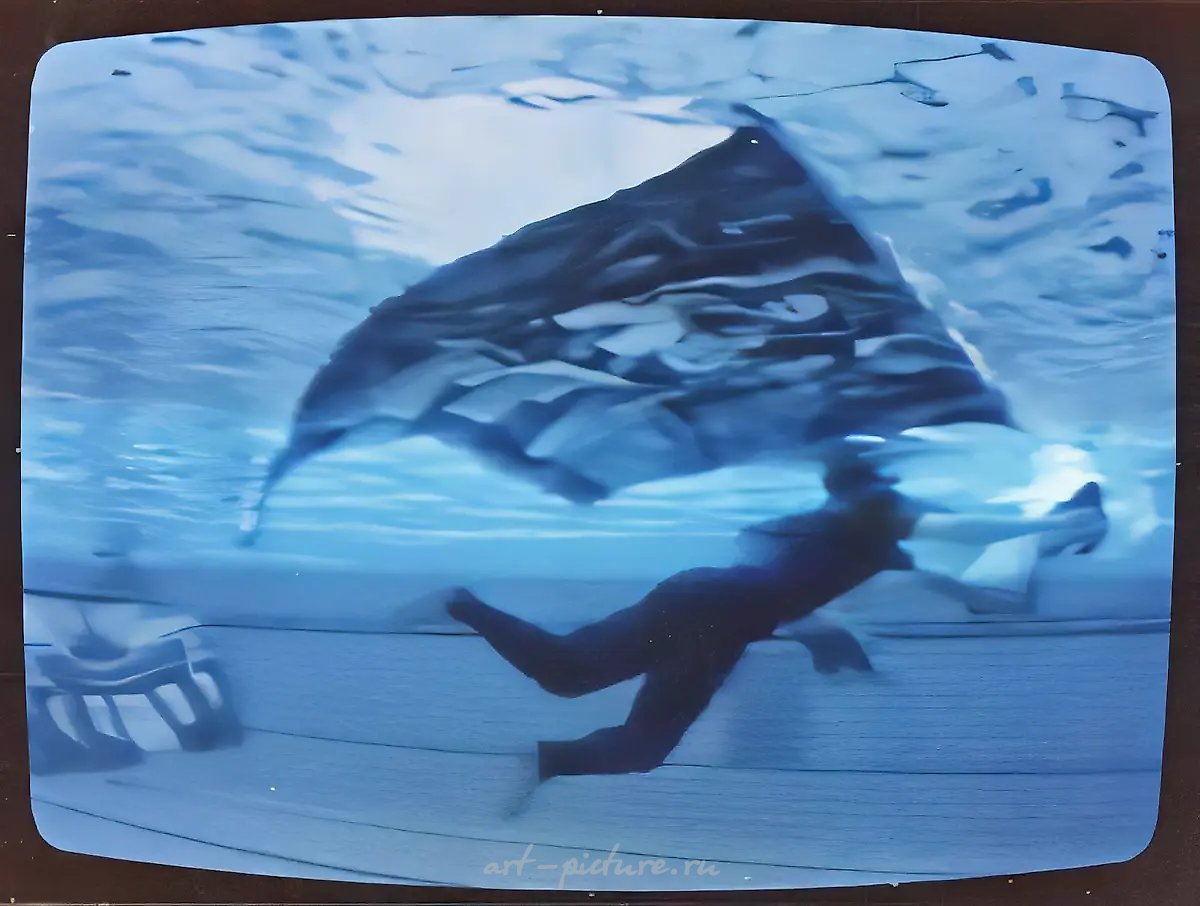
1999 - 'Farewell Beloved Portraits of the European People - Hello Euro' - underwater installation at the World Bank Headquarters, Washington.
1999 - Japanese Foundation Grant for travel to Japan for four months. Performances Art in Diplomacy: 'Solving the Northern Territories Issue', 'Signing the Peace Treaty with the Japanese', Tokyo.
1997 - Launched the program 'Favorite Portraits of the Peoples of the World'.
1996 - Launched the program 'World Atlantises.'
Exhibitions: 'Germany's Atlantis', swimming pool of the Olympia Stadium, Berlin; 'USSR's Atlantis', University of Maryland swimming pool.
1995 - Launched the program 'Mirages of Empires.'
1994 - Launched the program 'Travel as Art.' www.dfcz.net/che/travel/
1993 - Social Initiatives Foundation Grant, 'New Leaders of Russia'. USA.
1992 - Founded the conceptual 'Cherkashin's Metropolitan Museum.'
1982 - First exhibition in Moscow.
1978 - First exhibition with Boris Mikhailov and Klim, Kharkov.
1962 - First photographic happenings, Kharkov. www.dfcz.net/che/photo/
Lectures on Cherkashin projects (selected): Harvard University; University of California, Berkeley; Princeton University; Columbia University; The Kennan Institute, Woodrow Wilson Center, Washington DC; New York University; Museum of Fine Arts, Santa Fe, New Mexico; The School of Visual Arts, New York City; Goldsmith University, London; University of Southern California; San Francisco State University; The Art Academy of Cincinnati; University of Rochester; Cosmos Club, Washington, DC; PhotoEspana, Madrid; Tokyo University, Japan; RSUH, Moscow; School of Photographic Art, Moscow; School of Moscow Museum of Contemporary Art, Moscow; Publishing House "Izvestia" School; Rodchenko Moscow School of Photography.
Author about himself
No data available.
Critic
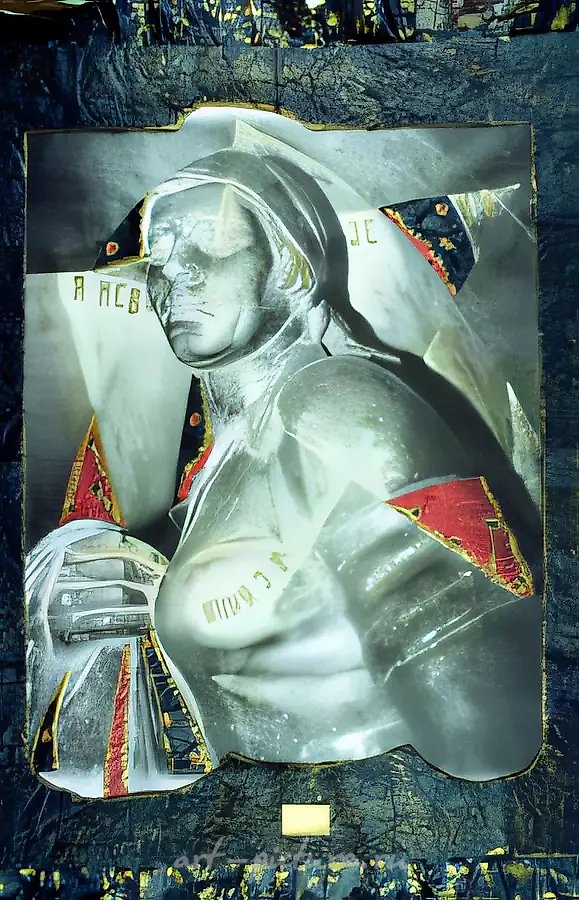
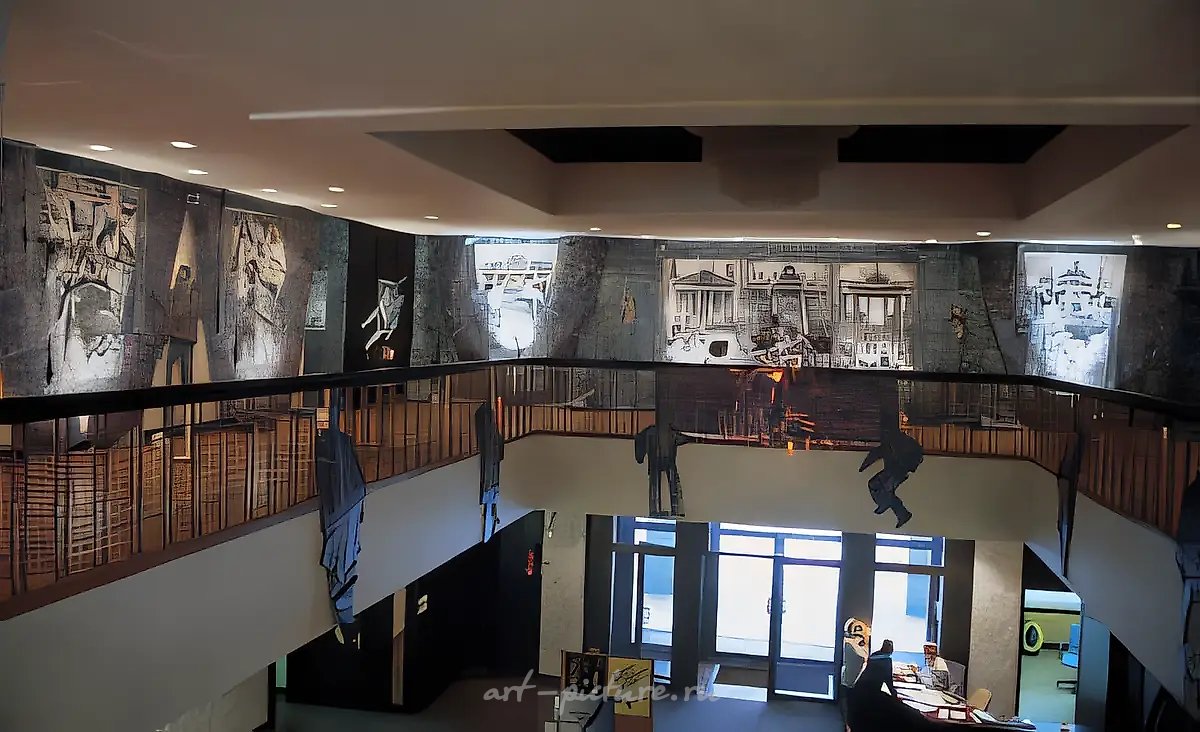
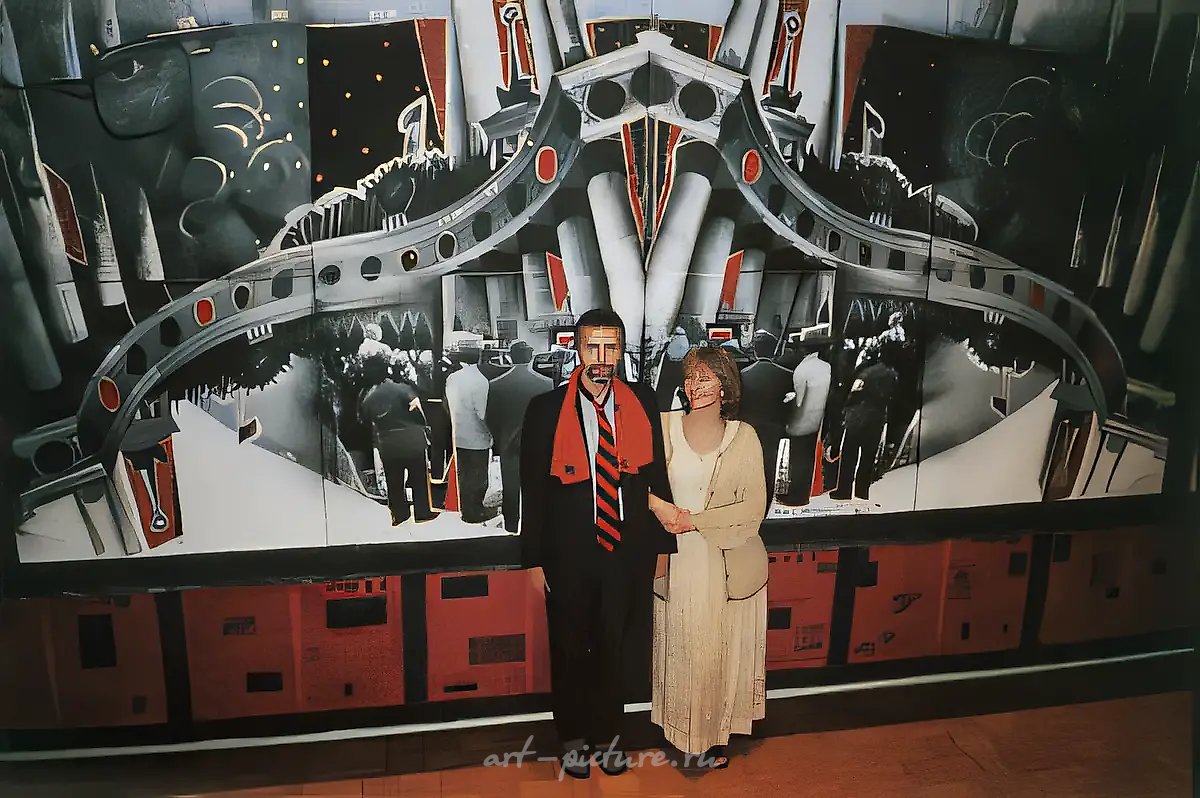
Valery and Natasha Cherkashina are engaged in developing a series of art programs related to the socialist era in world culture—and beyond. Their site-specific installations assimilate over 70 years of Soviet history, its symbols, and values. What they borrow from the past is reused to create a new type of visual expression. Their art serves as a mirror of the multifaceted structure of contemporary Russian society. This is a multidimensional collage of past and present, raising more and more questions about life as it rapidly changes in the 1990s.
The contemporary art history of the 20th century helps us understand their complex photographic art. The Cherkashins do not work within the traditions of photography. Their unconventional, room-sized works cannot be categorized by style, subject, or technique. They belong to a new generation of artists who have reignited the creative spirit of the early European avant-garde, but not to follow its form.
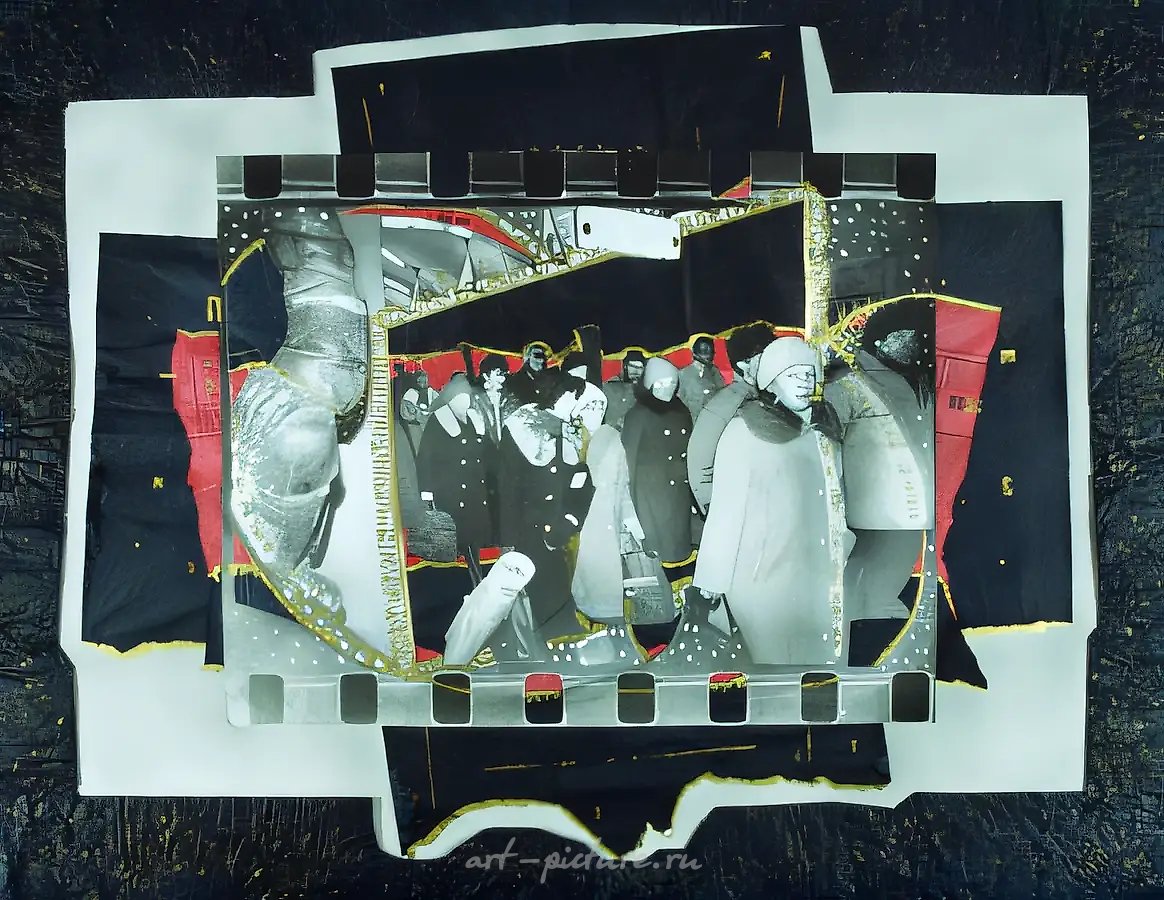
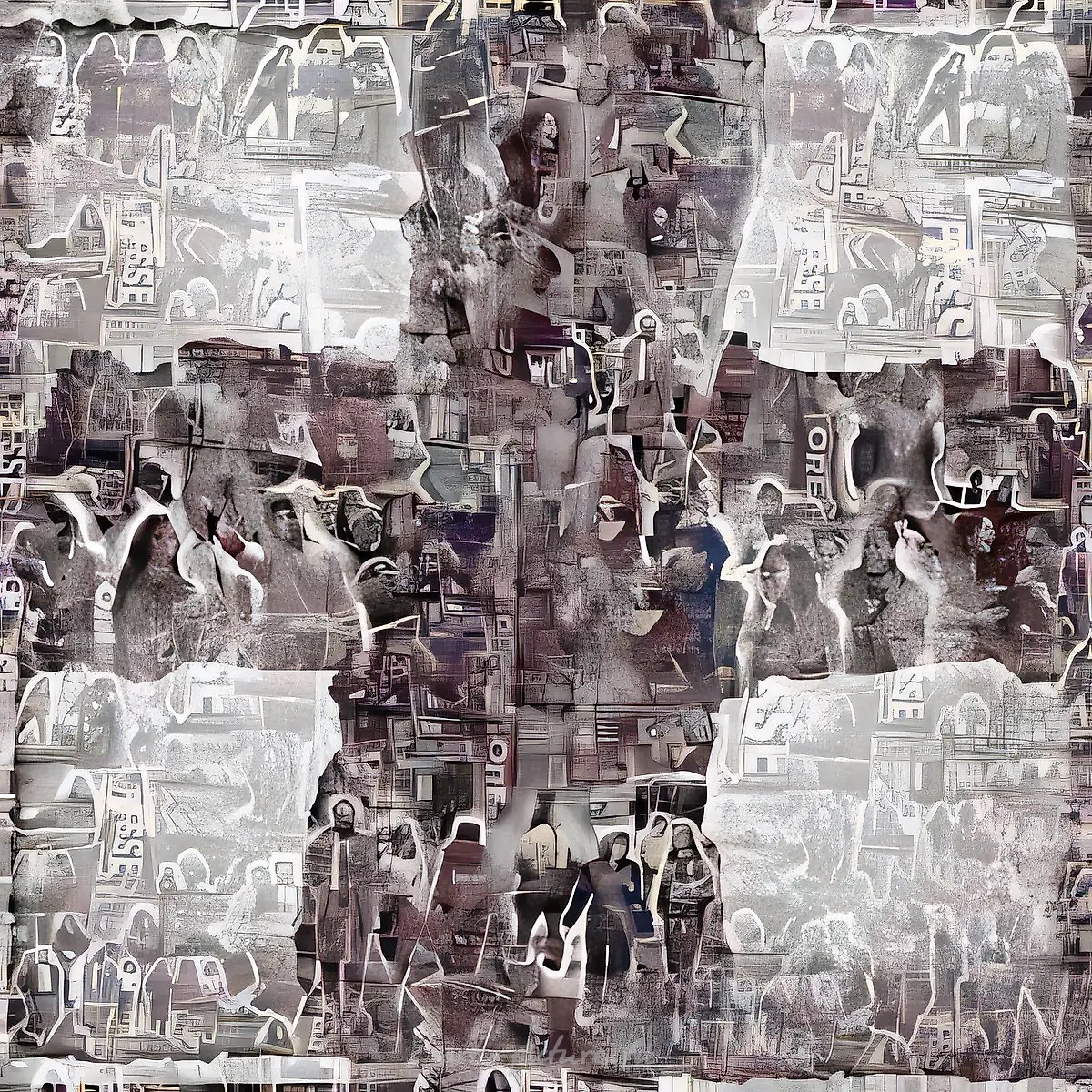
Their photographic installations share the anti-art spirit typical of Dada of the 1920s. Like the Dadaists, the Cherkashins reject the art principles of the past, referencing them through temporary materials (such as Pravda pages) and an aesthetic that reflects only the changes of the 1990s. Berlin Dadaists like Hannah Höch, Raoul Hausmann, George Grosz, and John Heartfield were among the first to borrow other people’s photos (usually from magazines) for reuse in their works. Using this technique, these four developed photomontage as a form of fine art that historically replaced traditional painting and graphics.
...While the Cherkashins do not rely on photomontage or any single art form, they indeed compile heroic plots and the values of Soviet history, including its art. They merge external ideas, symbols, and styles belonging to one of the richest cultures in history, much as the Dadaists cut photo illustrations from popular German and American magazines.
Cultural history, especially the ideological culture of communism, and contemporary art have become a semantic platform for the Cherkashins. However, they do not break with postmodernism—it also becomes part of their three-dimensional montage.
The Cherkashins deconstruct ideological myths while simultaneously recreating culture in the current period of radical change in the former USSR. This is an art of conceptual parody, irony, and satire—a blend of fantasy and reality as the ideological culture of communism turns back on itself in the postmodern context.
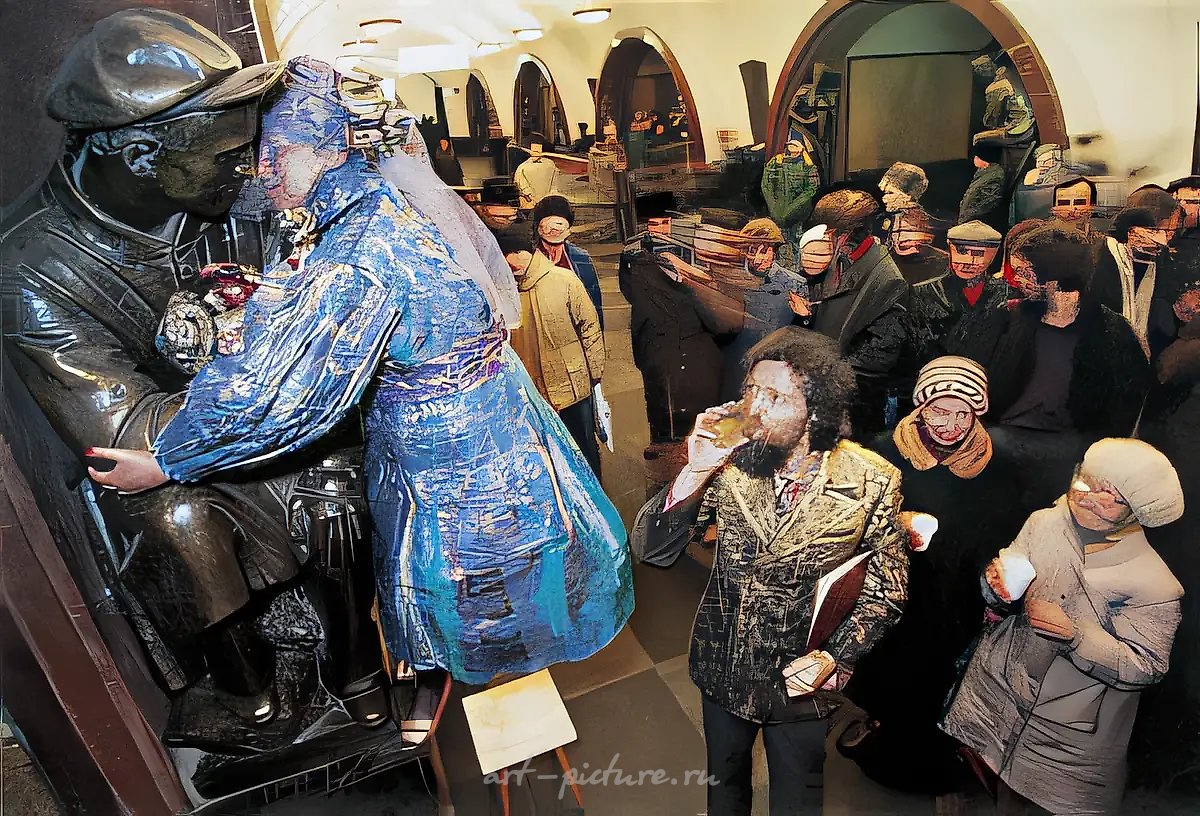
Photography as a means of expression becomes more than a leitmotif in their work. Besides including snapshots of people and sculptures taken in public spaces, they have also recently copied living objects on Red Square and in an American museum. Muscovites were taken from the pages of Pravda, while Americans (including the curator and museum director) were found and cut from The Wall Street Journal. Their figures, suspended together from the exhibition hall ceiling, depicted a procession toward the closed doors of Lenin’s Mausoleum. These fragments of real life not only invoke the jokes and irony of Dada but, with their silhouettes, refer the viewer to the origins of photography at the beginning of the last century.
The photos themselves in these installations deny a connection with fine art just as Dada photomontage rejected bourgeois painting. These photographs are not exquisitely printed masterpieces or technical achievements. They serve as markers of reality and values, as scales of life and as a yardstick bringing global experience to what we already know and can easily imagine.
The Cherkashins’ use of ordinary scale for people and objects enables them to animate their hidden dynamics in architectural and sculptural contexts as much as in photographic ones.
...So far, the Cherkashins’ art has found resistance from traditional photographers and painters. But perhaps the time has come again when no art form can rise above the current “isms.” At first their concept seems as obscure as life in the former USSR in the 1990s. Their art is built on a multilayered set of meanings, revealed anew every time you enter their temporary installations.
The Cherkashins help break down the principles of modernism and the ideological forms of culture by an endless process of invention in which the history of art is both used and denied.
If the postmodern era reasserts the end of modernist movements, reflecting each other as in a mirror, this will mean the Cherkashins are helping to prepare the ground for an era of new possibilities in Russia and beyond. Their art, within the context of today’s photographic environment, is necessary to understand the new history being written now.
S. Waits. Excerpts from the article 'Destruction of Ideology and Reconstruction of Culture. Anti-modernist photo installations of Valery and Natasha Cherkashina.' – Tvorchestvo, 1995, No. 1-2
Lectures on Cherkashin projects (selected): Harvard University; University of California, Berkeley; Princeton University; Columbia University; The Kennan Institute, Woodrow Wilson Center, Washington DC; New York University; Museum of Fine Arts, Santa Fe, New Mexico; The School of Visual Arts, New York City; Goldsmith University, London; University of Southern California; San Francisco State University; The Art Academy of Cincinnati; University of Rochester; Cosmos Club, Washington, DC; PhotoEspana, Madrid; Tokyo University, Japan.
Bibliography
- "New Angelarium", catalog, Moscow, 2007. (1 ill.)
- "N+V = Cherkashins Metropolitan", Anzhelika Avizhas. Aeroflot-Don magazine #8, 2007 (10 ill.)
- Project "Global Metro", New York. Russian Zoom magazine # 7-8, Moscow 2007 (1 ill.)
- "Valera and Natasha Cherkashina: End of an Era" Russian Zoom magazine # 5-6, Moscow 2007 (2 ill.)
- Catalog "Night with the Pioneer Leader", for the exhibition MCII Rostov-on-Don, Moscow 2007.
- Catalog "End of an Era", for the exhibition at the Sakharov Museum, Moscow 2007.
- "Playing with Symbols", Anna Malpas, The Moscow Times, May 18, 2007, Moscow (1 ill.)
- "The Lucies Awards", Natasha Cherkashina, Russian Zoom magazine # 1-2, Moscow 2007 (2 ill.)
- "Two in the desert of the Art of Empires", Irina Chmyreva, DI magazine # 4, 2006 (12 ill.)
- Catalog "Art Moscow 2006" Moscow, 2006 (1 ill.)
- "Mirages of Empires" Photo Travel magazine July – August 2006, Moscow, (8 ill.)
- Reflections: Mirages of Empires, "DI" #5, 2006, (3 ill.) Moscow.
- "Family – two pianos for one voice" Olga Davydova, Art Council magazine #4, 06 Moscow, (5 ill.)
- "Valera and Natasha Cherkashina". A. Kharitonov. Russian ZOOM N5, 2006 (8 ill.)
- Tretyakov Gallery magazine N4 (09) 2006. (1 ill.)
- "Night with the Pioneer Leader", Igor Shevelev, Russian newspaper 01.02.06 Moscow (7 ill.)
- "Moscow – Athens. Montages of Valera and Natasha Cherkashina", Alexander Yakimovich, 'Sobranie' magazine N 4, December 2005, Moscow (7 ill.)
- "Two in the desert of the Art of Empires", Irina Chmyreva, Month of Photography 2005 catalog, Slovakia (3 ill.)
- "Russian photographers now exhibiting at Art Center", Mark Katz, "Great Neck Record", 13.10.2005, New York (4 ill.)
- Art + Auction magazine, October 2005, New York (1 ill.)
- Art Forum International magazine, September 2005, New York (1 ill.)
- Catalog "Futurism and Nostalgia", for the exhibition at Great Neck Arts Center, New York, 2005.
- "Creative in Russian" Galina Yergaeva, Journalism magazine # 7-8, 2005. Moscow. (6 ill.)
- "20 years of Perestroika", 'Gorodskaya Zebra' magazine N1, 2005 (12 ill.) Moscow.
- "New York", 'Gorodskaya Zebra' magazine N11, 2004 (7 ill.) Moscow.
- "Germany's Atlantis", Elena Konkova, 'German' magazine, Moscow 2004 (7 ill.)
- "My Kabakov", catalog, Stella Art Gallery, Moscow 2004 (2 ill.)
- "Photomagazine", N 5, Moscow 2004 (9 ill.)
- "Non-Obligatory Time", Irina Chmyreva, Foto & Video magazine N9, 2004, Moscow, (16 ill.)
- "Project 13+1", Creative magazine N 13, Moscow, 2003 (1 ill.)
- "Nastoljaschee", Natalya Ivanova. Cover. Moscow, 2003 (2 ill.)
- "Children. Overcoming" catalog, Moscow government. Moscow, 2003 (4 ill.)
- "How to creatively celebrate New Year", Zhanna Vasilieva, Creative magazine N 12, Moscow, 2003 (4 ill.)
- "Mirages of Empires", brochure, Moscow 2003.
- "Muscovites must observe morals and distance when kissing" Clem Cecil, The Times, London, November 15, 2003 (1 ill.)
- "Budetliane – Natasha and Valera Cherkashina", Zhanna Vasilieva, Creative magazine N 11, Moscow, 2003 (5 ill.)
- State Russian Museum. Annual report. St. Petersburg, 2003
- Catalog "Photographic Ideas: After Modernism". Museum of Fine Art, Santa Fe, New Mexico 2002 (2 ill.)
- Elle magazine, 2002. (1 ill.) Moscow.
- "Between Reality and Symbol", Elena Konkova, 'Art&Times' magazine, May – June, St. Petersburg, 2002 (6 ill.)
- Vogue magazine, N5, 2002. (1 ill.) Moscow.
- 'Arthronika' magazine, N3, 2002. (1 ill.) Moscow.
- "Interview", Evgeniya Emets, 'Portfolio' magazine N2(6) 2002. (20 ill.)
- "Empire of Mirages", Lev Berezkin, 'Izvestia' May 24, St. Petersburg, 2002
- "Mirages of Empires", Evgeniya Gershkovich, 'Mezonin' magazine N43, 2002. Moscow.
- 'Arthronika' magazine, N7, 2002. (1 ill.) Moscow.
- "Foto&Video" magazine N5, 2002. (6 ill.) Moscow.
- "Foto&Video" magazine N4, 2002. (1 ill.) Moscow.
- 'Arthronika' magazine, N6, 2002. (1 ill.) Moscow.
- "One Step Beyond. Valera and Natasha Cherkashina and their unique perception of Moscow and the world." Guy Archer, 'Capital Perspective' magazine, Nov-Dec 2001, Moscow. (19 ill.)
- 'British Chamber of Commerce Bulletin', 2001, Moscow, (2 ill.)
- 'French Chronicle of Euro', 'Europe' magazine, #7, (14), July 2001, (1 ill.)
- "Art doesn't drown in water", N. Zabarov, 'Superman' magazine, August, 2001, Moscow (1 ill.)
- "Loss of Face", Yury Sokolov, 'Zavtra' newspaper, #24 (394), 2001, Moscow, (1 ill.)
- "Who excited the bronze worker?", Darya Molostnova, 'Megapolis-Express', latest news, #25, July 28, 2001, Moscow, (1 ill.)
- 'Photo' magazine #377, 2001, France, (1 ill.)
- "Big Wash", Igor Shevelev, 'Moscow News', Feb #7, 2001, (1 ill.)
- "Japan Times", Japan, December 2000.
- Exhibition invitation to Shadai gallery “From USSR to Russia”. December 2000, Tokyo, (2 ill.)
- "Soya Shimbun" November 28, 2000. (1 ill.)
- "Sankei Shimbun", Japan, December 2000. (1 ill.)
- "Asahi Shimbun", Japan, December 9, 2000. (1 ill.)
- "Mainichi Shimbun News", Japan, December 21, 2000. (1 ill.)
- "Hokkaido Shimbun", Japan, December 8, 2000. (1 ill.)
- "Asahi Shimbun", Japan, December 8, 2000. (1 ill.)
- "Moscow without time", Maya Odina, 'Segodnya' newspaper, September 2, 2000, Moscow. (1 ill.)
- "Luzhkov is interested in art", Milena Orlova, 'Kommersant' newspaper, September 2, 2000, Moscow. (1 ill.)
- “Photo Periodico” magazine, #9, June, 2000, Spain.
- "Profifoto" magazine, Germany, June–July, 2000, (1 ill.)
- “Foto” magazine, Belgium, June–July, 2000.
- "www.photographie.com", France, June–July, 2000.
- "Photo Nouvelles" magazine, France, June–August 2000, (1 ill.)
- "Paisajes" magazine, July, 2000, Spain.
- "Photo" magazine, May, Italy, 2000.
- "El cultural de el edmundo" magazine, June 9, 2000, Spain. (1 ill.)
- "Futuro" magazine, June, 2000, Spain. (1 ill.)
- "Clara" magazine, July, 2000, Spain. (1 ill.)
- "El puntode las artes" magazine, June 9, 2000, Spain. (1 ill.)
- "Abc cultural" magazine, June 10, 2000, Spain.
- "El semanal" magazine, June 11, 2000, Spain. (1 ill.)
- 'El Correo Espaniol' newspaper, June 15, 2000, Spain.
- 'Expansion' newspaper, June 17, 2000, Spain. (1 ill.)
- 'El Pais' newspaper, June 15, 2000, Spain.
- 'La Vanguardia' newspaper, June 15, 2000, Spain.
- 'ABC' newspaper, June 15, 2000, Spain.
- 'La Razon' newspaper, June 9, 2000, Spain, (1 ill.)
- 'Huelva Informacion' newspaper, June 15, 2000, Spain.
Works 24