Elena Nenastina
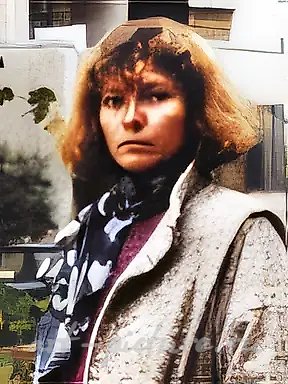
Born in Kamensk-Uralsky in 1958. In 1977, she graduated from the Moscow College of Decorative and Applied Arts (formerly named after M.I. Kalinin) with a specialization in lace artistry. She worked as an artist at the 'Yelets Laces' factory and has never stopped working with lace. In 1986, she graduated from the Moscow Polytechnic Institute. She works in the field of book design and has illustrated books by Nabokov, Bunin, Volkov, and others. Her main passions are painting and graphics.
Works in collections
Her lace works are in the museums of Lipetsk, Yelets, and St. Petersburg.
Her paintings and graphic works are in the Lipetsk Museum of Decorative and Applied Arts, Gwangju City Art Museum in Seoul, Lipetsk Regional Art Gallery, Yelets Art Gallery, and private collections in Russia, France, Germany, Austria, Switzerland, Spain, Japan, South Korea, and Belgium.
Exhibitions and auctions
1988 Graphic Art Exhibition, Prague;
1991 28th International Art Salon d’Antoni, France;
1997 Moscow International Art Salon, Central Exhibition Hall 'Manezh', Moscow;
1997 Exhibition, Kechem, Cologne, Germany;
1997 Group Exhibition, Moscow;
1998 Moscow International Art Salon 'CDH 98', Central House of Artists, Moscow;
1998 Exhibition, Kechem, Cologne, Germany;
1998 Group Exhibition, Moscow;
1998 Exhibition, Gwangju, Seoul;
1998 Moscow International Art Fair 'ARTMANEZH 98', Manezh, Moscow;
1999 Group Exhibition, Moscow;
1999 Moscow International Art Salon, Manezh, Moscow;
1999 Exhibition, Geneva, Switzerland;
1999 Exhibition, Nuremberg, Germany;
1999 Exhibition, 'Graal' Gallery, Moscow;
2000 Moscow International Art Salon, Manezh, Moscow;
2000 Moscow International Art Salon, Manezh, Moscow;
2000 Group Exhibition, Moscow;
2000 Exhibition, 'Les Oreads' Gallery, Moscow;
2000 Moscow International Art Fair 'ARTMANEZH 2000', Manezh, Moscow;
2001 Moscow International Art Salon, Manezh, Moscow;
2001 Group Exhibition, Moscow;
Solo exhibitions:
1992 Yelets, Russia;
1993 Moscow;
1994 Lipetsk, Russia;
1998 Serpukhov, Russia;
2000 Central House of Artists, Moscow;
2000 'U Yara' Gallery, Moscow;
2001 UN Headquarters, Geneva, Switzerland;
2001 UN Information Center, Moscow;
2001 Author's Television Studio, Moscow.
Critic
The Light Breathing of Lena Nenastina.
Remember in Max Frisch's 'I'm Not Stiller', the schema of the protagonist's relationship with the world? Sunglasses help convince everyone he is blind, and everything seen and imagined forms a model that starts with the words: "I imagine." This isn't about Frisch per se, but sometimes it's pleasing to think and express oneself in complex ways — there is harmony in that complexity. Because sometimes "to live more complicated" means to live more interesting. And the artist Lena Nenastina, as a true artist, is not a simple person.
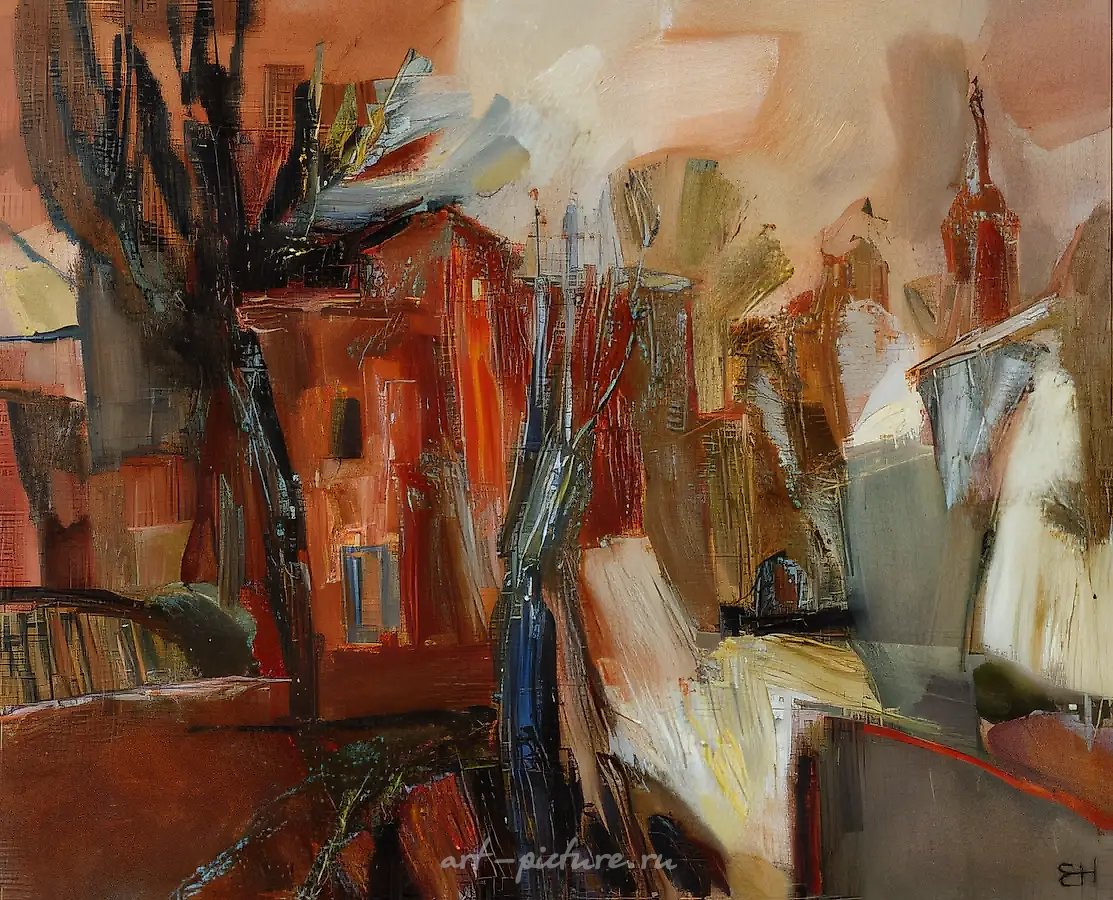
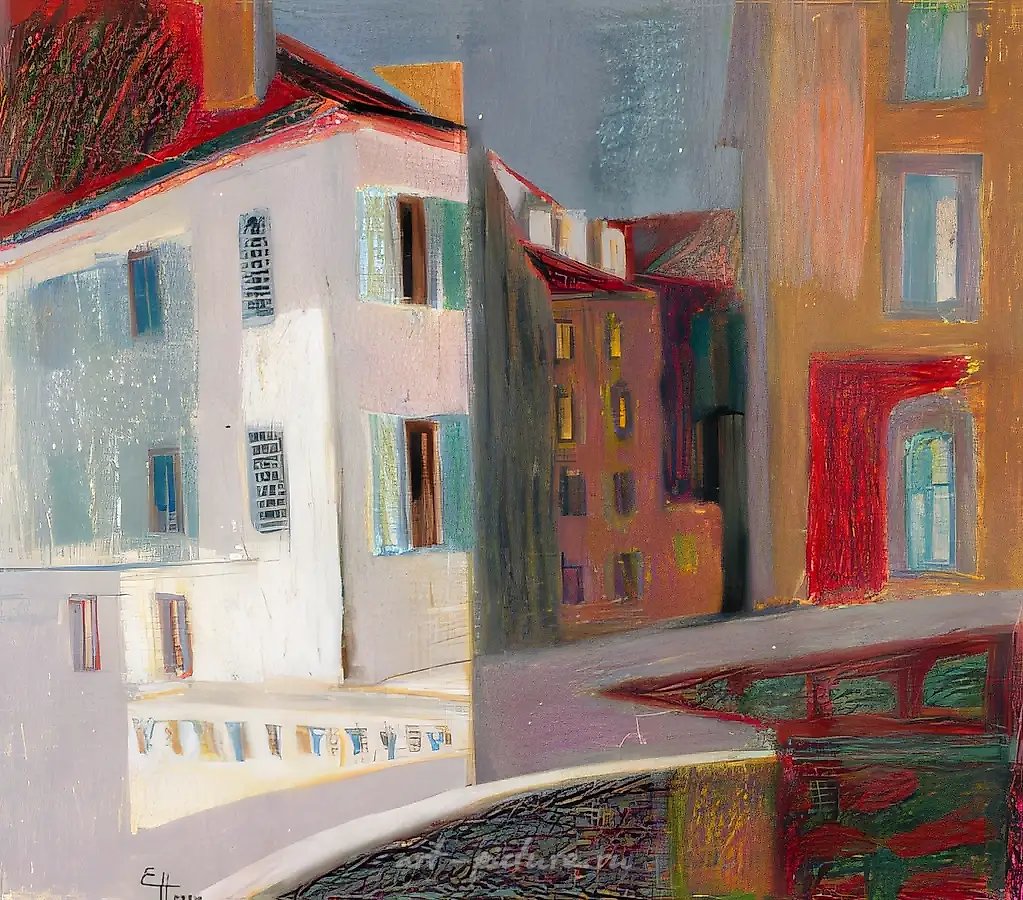
When I hear 'Lena Nenastina', I imagine: an old oak sideboard, more precisely, its edge; a twisted filigree against a homespun lace curtain. A fragment of a gone era and its long-faded aromas. And through an open window, the bustle of the city and cottonwood fluff floats in... Two scenes—one modern and urban, one a remnant of previous lives—merge into a single whole. It turns out Lena often thought about this. About the density of space, so to speak. She has her own theory about it. That’s why at the Manezh I was drawn to her wall of artworks.
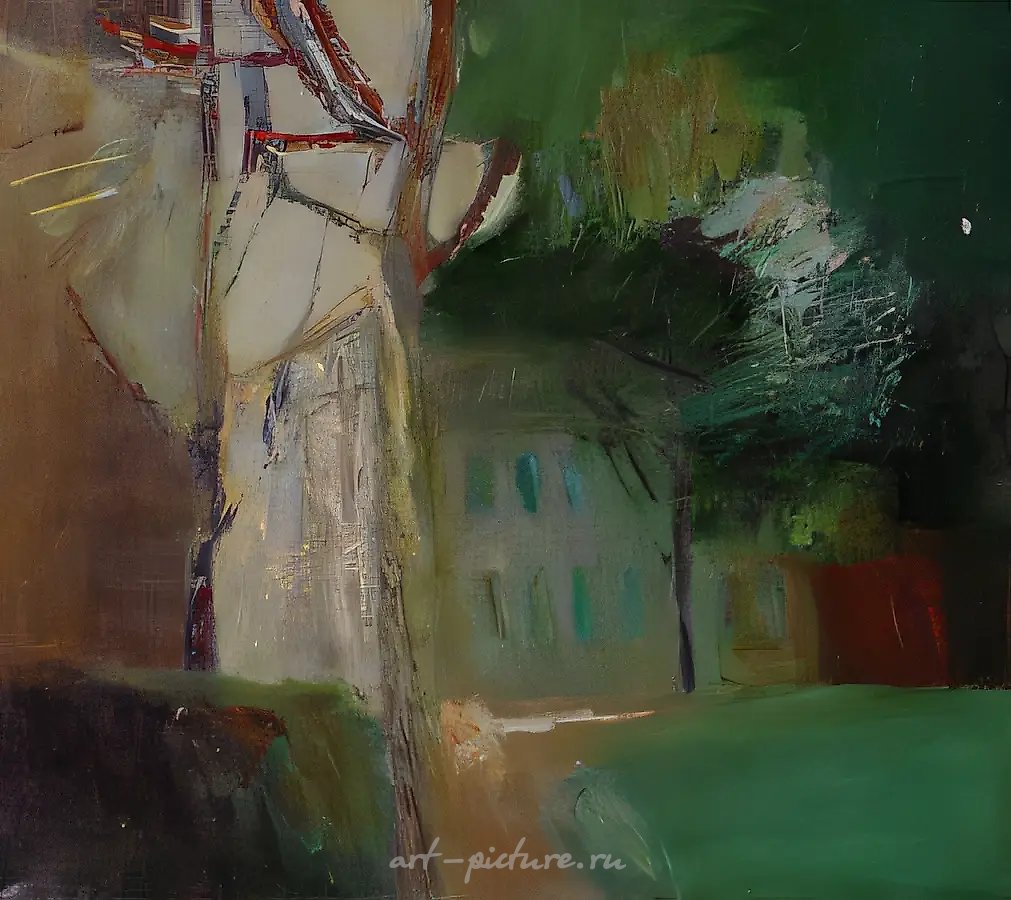
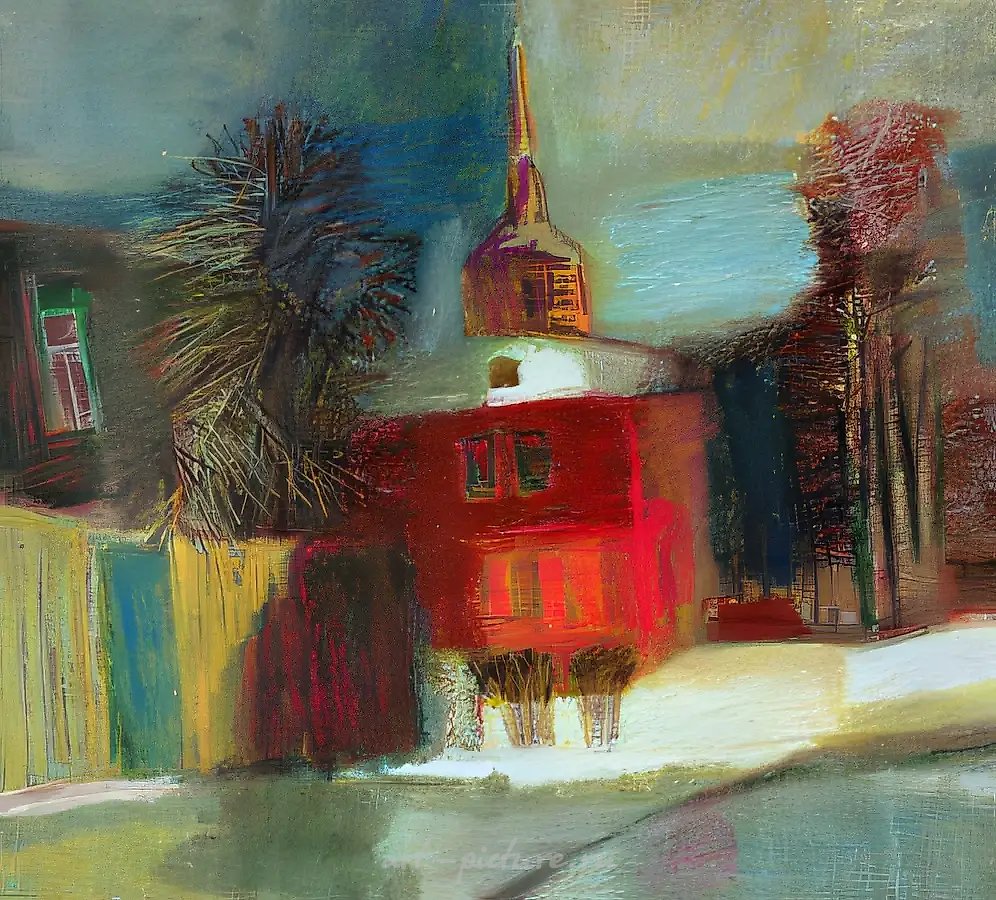
The courtyards of Paris, rooftops of Geneva, streets of Madrid, the golden foliage of Serpukhov, the shady alleys of Yelets fascinated with their mystery and silent presence—maybe even yours? As if I, and no one else, were there in a Parisian courtyard: around the corner, in the shade of an old plane tree, on a bench that's not shown in the painting but easily imagined—you're sitting on it, or perhaps standing by a peeling wall, with someone warm and dear nearby.
A man approached: "Do you like it?"—"Very much. And the technique is unusual. Looks like pastel..."—"Oil pastel," he clarified. "She has three children—all artists. And her husband is an artist," he added, offering a plate of canapés. "Are you the husband?" The man blushed.
For Lena, it all started in Yelets. She walked through the cozy merchant city, was shown "look, that's the lady's house, and there was the carriage house...", and she felt that departed people and destroyed houses had not disappeared but remained in this space. She entered the famous church of Michael the Archangel, celebrated by Bunin, and when coming out, her eyes caught living poplar arches... And the columns of the church forming arches became replaced by these green, poplar ones. Once, she stood in a small church with broken windows, the doors open, rain pouring, a woman fervently singing prayers—and it seemed the murals had come off the walls and spilled out into the tearful cityscape outside. Visitors sheltering from the rain etched themselves on the walls, creating new stories. She reflected on how to convey the movement of time. She certainly wasn't the first to think of this—Favorskij thought about it, whose painterly traditions are still revered at her institute. And Favorskij was inspired by the brilliant Florensky. Bulgakov thought about it too... Azazello with Woland's gift—a bottle of red Falernian wine. After drinking, the Master and Margarita die in their basement. Meanwhile, in the mansion where Margarita lives with Natasha, she dies of a heart attack. And at the clinic, Bezdomny is uneasy as a patient dies in the next room. That patient is the Master.
Several realities merge. There's reason to be uneasy. Who said life is simple and clear? It's multidimensional, and an inquisitive mind always wants at least to attempt to comprehend one's experience. Such art sparks a flame within a person. Only such artists are interesting. Like how Mark Chagall and Vincent Van Gogh are interesting to Lena herself.
"A table, a simple still life—a vase, fruits, a rather ordinary landscape. Suddenly above all this, a couple floats. When I saw this Chagall in real life, I felt dizzy," Lena says. "I had the same effect with Van Gogh's painting in Paris—a table and wall, same color, a jug with flowers. The table is separated from the background by a single line, yet space lies on the table—one becomes immersed; that's magic!"
In Yelets, Lena gathered pupils and practically founded an art school. She found it interesting to work with children. Explaining aloud, she understood much herself. She once invited their parents, set up a simple still life, and asked: imagine it's not two separate objects, but a unified whole. The chemist father, a scientist, couldn't grasp how two objects could be one. "You mix two substances in a test tube—you get a third, new one, right?"
She arrived at this complexity, present in her works with lightness of breath (as Bunin might say about something else), not immediately.
A daughter of artists, she first graduated as a lace artist from the Kalinin College. What she does in this field is remarkable. Recently, her volumetric (read: spatial) lace was exhibited at the Tropinin Museum.
No one specially taught Lena in childhood. Her mother, classically trained in Kharkov and working as a theater artist in Zlatoust, took Lena everywhere: plein airs, work, and to artists' studios. Lena soaked up the spirit of restless people, searching for self-expression. Now the same happens with her children and their friends—they are steeped in this environment. The eldest daughter finished her third year at the Polytechnic, the younger is just entering, her son will also be an artist—no doubt.
Nenastina is well-known in Moscow and Russia, and is quite 'saleable' abroad, meaning there is demand for her there too. On her first trip to Switzerland to visit physicist friends, she quickly succeeded. She exhibited in one gallery, then another, and at the UN. She was invited to Germany, many works were sold. Financial freedom means freedom of choice—one can travel anywhere dreamed. She painted Venice and Florence with abandon, hardly even looking.
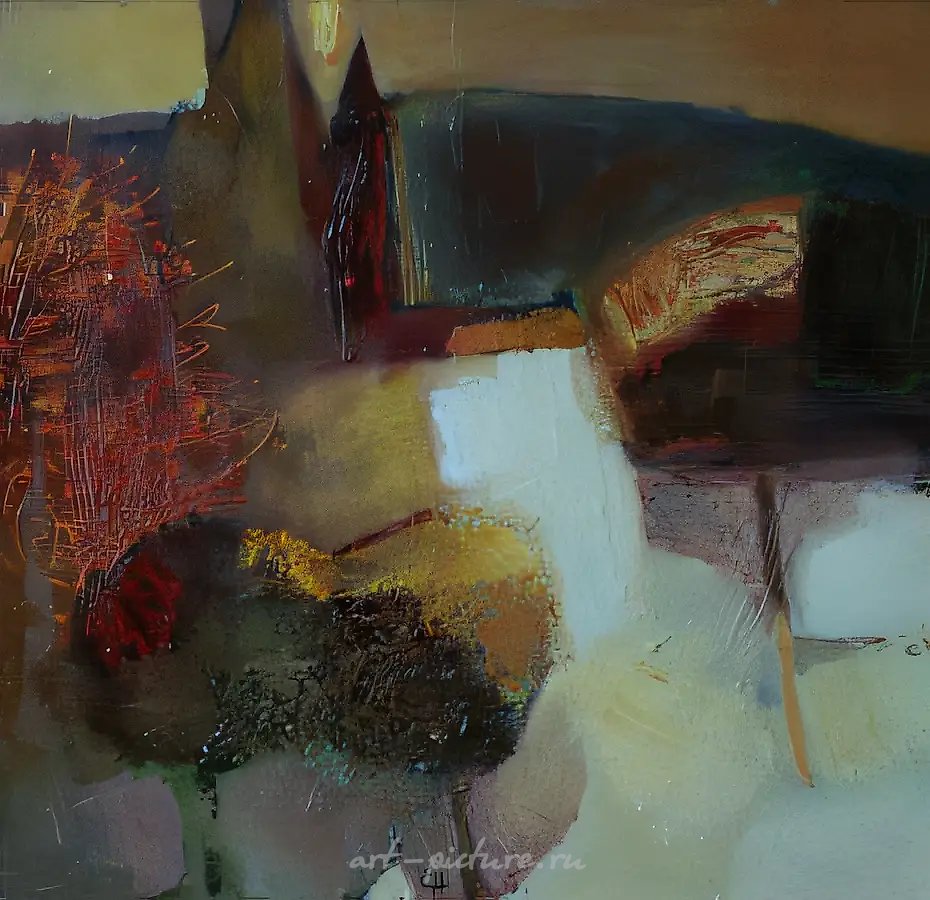
"Now it's not so easy to buy her works—they've become expensive," whispered the salon owner. Although that's not quite true—Nenastina isn't bought by 'new Russians;' she's too refined and indirect for the 'fat cats'. Her buyers are well-educated people who have a subtle sense and can appreciate this in others. One elderly lady recently purchased her eighth Nenastina work. But I didn't know that at the time. I just received a call and heard an enthusiastic confession: "Lena, I find myself craning my neck. I sit opposite your painting—the one with the white arch, remember? And I always want to look around the corner—what is there?..."
I imagine a woman in a rocking chair. On the wall—a painting. There—a house, an arch, scents, intriguing rustles. A quickening of the heart and sharpening of feelings. And above all—a light breath.
Guzel Agisheva.
P.S. Elena Nenastina’s exhibition is currently on in the Central House of Artists.
Bibliography
Journal 'Rabotnitsa', No.9, 1999; Newspaper 'Kultura', No.32, 24-30 August 2000; Newspaper 'Moskovskaya Pravda', 22.09.2000; Journal 'Yat', October 2000; G. Agisheva, 'The Light Breathing of Lena Nenastina', newspaper 'Tribuna', No.125, 17.07.2001, Moscow.