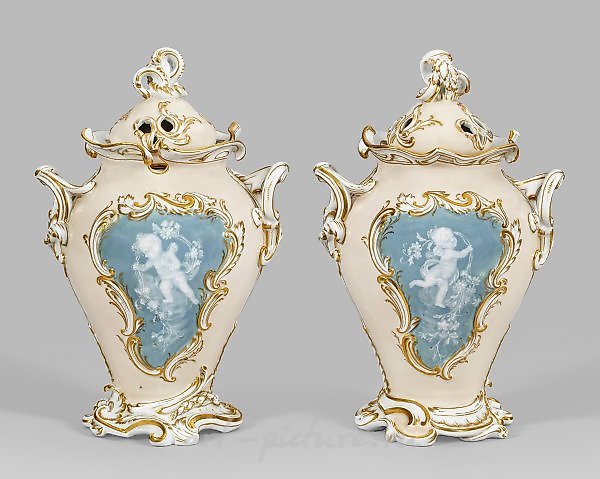
With pâte-sur-pâte painting displayed on a pedestal adorned with relief sculpted rocailles, the baluster-shaped body transitions into a curved rim. The domed lid, intricately worked and pierced, features a plastic rocaille knob. The sides are adorned with vertical profile lines and appliquéd with leaf rocaille handles. On both sides of the wall, a delicate, pastel-toned apricot-colored background is spared, surrounded by relief cartouches adorned with leaf rocailles, within which a floating putto with garlands of flowers is depicted in raised pâte-sur-pâte painting on a bluish-gray background. Partially restored; sword mark. Height 29 cm. The pâte-sur-pâte painting technique used here is a type of slip painting, where an elevated cameo-like relief is created by layering liquid, partially translucent slips. This high-quality painting technique was first presented at the London World Exhibition in 1851 by the Sèvres manufactory. The breakthrough on Meissen porcelain occurred in 1878 by the chemist Dr. Heintze and reached its peak at the 1893 World Exhibition in Chicago with approximately 1000 exhibited pieces. See catalog of the Royal Saxon Porcelain Manufactory, 1904, page 61, number H 147; Jedding, number 94ff., page 176. A splendid lidded potpourri porcelain vase with cupid decor painted in pâte-sur-pâte. Partly restored. Crossed swords mark. Meissen. End of the 19th century.